



Fats are an essential part of every diet and play a vital role in cooking, nutrition, and food production. Whether preparing a home-cooked meal or manufacturing food products on an industrial scale, choosing the right type of fat can significantly influence flavor, texture, nutritional quality, and cooking performance.
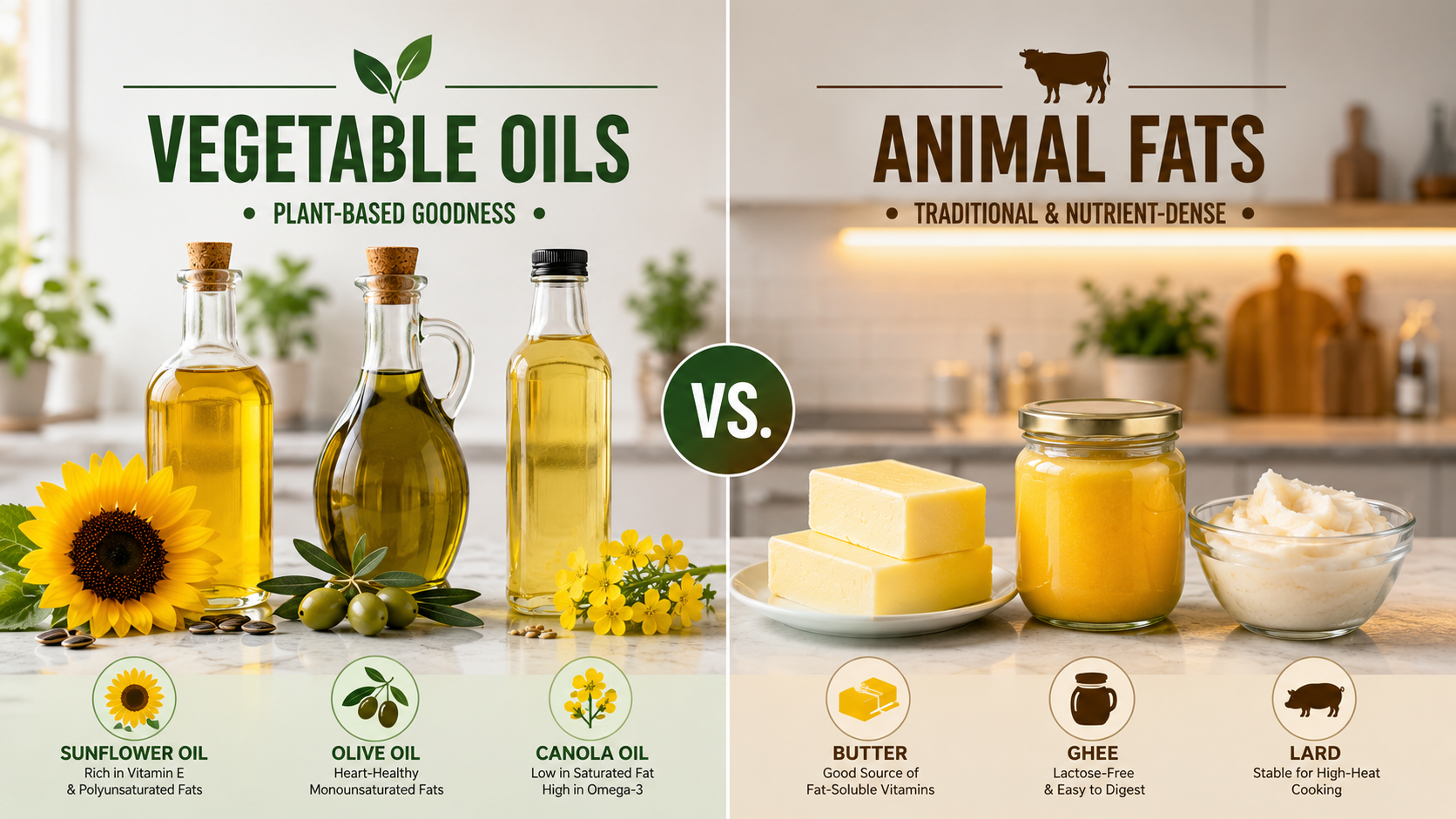
The two primary categories of dietary fats are vegetable oils and animal fats. Although both provide energy and contribute important fatty acids, they differ considerably in origin, composition, nutritional profile, stability, and culinary applications.
Understanding these differences helps consumers make informed choices based on their dietary preferences, cooking methods, and nutritional goals.
What Are Vegetable Oils?
Vegetable oils are edible fats extracted from plants, seeds, fruits, or nuts. Modern extraction methods include mechanical pressing and solvent extraction, followed by refining when necessary.
Common vegetable oils include:
- Sunflower Oil
- Olive Oil
- Canola Oil
- Soybean Oil
- Corn Oil
- Peanut Oil
- Rice Bran Oil
- Avocado Oil
Most vegetable oils are naturally rich in unsaturated fatty acids, making them popular choices for everyday cooking.
What Are Animal Fats?
Animal fats are obtained from animal tissues or dairy products. They have been used in cooking for centuries and remain important ingredients in many traditional cuisines.
Common examples include:
- Butter
- Ghee
- Lard
- Beef Tallow
- Duck Fat
- Chicken Fat
Many animal fats contain higher proportions of saturated fat, although their exact composition varies by source.
Main Differences Between Vegetable Oils and Animal Fats
| Feature | Vegetable Oils | Animal Fats |
|---|---|---|
| Source | Plants, seeds, fruits | Animals and dairy |
| Main Fat Type | Mostly unsaturated fats | Higher saturated fat content |
| Cholesterol | Naturally cholesterol-free | Contains cholesterol |
| State at Room Temperature | Usually liquid | Often solid or semi-solid |
| Typical Flavor | Neutral to mild | Rich and distinctive |
| Suitable for Vegan Diet | Yes | No |
| Common Uses | Frying, baking, salads | Baking, roasting, traditional cooking |
Fatty Acid Composition
One of the most important differences lies in fatty acid composition.
Vegetable Oils
Most vegetable oils contain:
- Monounsaturated fats
- Polyunsaturated fats
- Essential fatty acids
- Vitamin E (many varieties)
Sunflower oil, for example, is naturally rich in vitamin E and unsaturated fatty acids.
Animal Fats
Animal fats generally contain:
- Saturated fats
- Monounsaturated fats
- Small amounts of polyunsaturated fats
- Cholesterol
Some animal fats, such as duck fat, contain a relatively higher proportion of monounsaturated fats compared to butter or beef tallow.
Nutritional Considerations
Both vegetable oils and animal fats can be included in a balanced diet when consumed appropriately.
Many health authorities recommend replacing part of the saturated fat intake with unsaturated fats as part of an overall healthy dietary pattern. However, overall diet quality, portion size, and lifestyle remain more important than focusing on a single ingredient.
Rather than labeling one category as universally “good” or “bad,” it is better to choose fats according to nutritional needs, cooking methods, and dietary preferences.
Cooking Performance
Different fats perform differently under heat.
Vegetable Oils
Suitable for:
- Deep frying
- Stir frying
- Baking
- Salad dressings
- Marinades
Refined sunflower oil is especially valued for its clean taste and versatility.
Animal Fats
Commonly used for:
- Roasting
- Traditional recipes
- Pastry production
- Flavor enhancement
Butter, for example, provides a distinctive flavor that many baked goods rely on.
Smoke Point Comparison
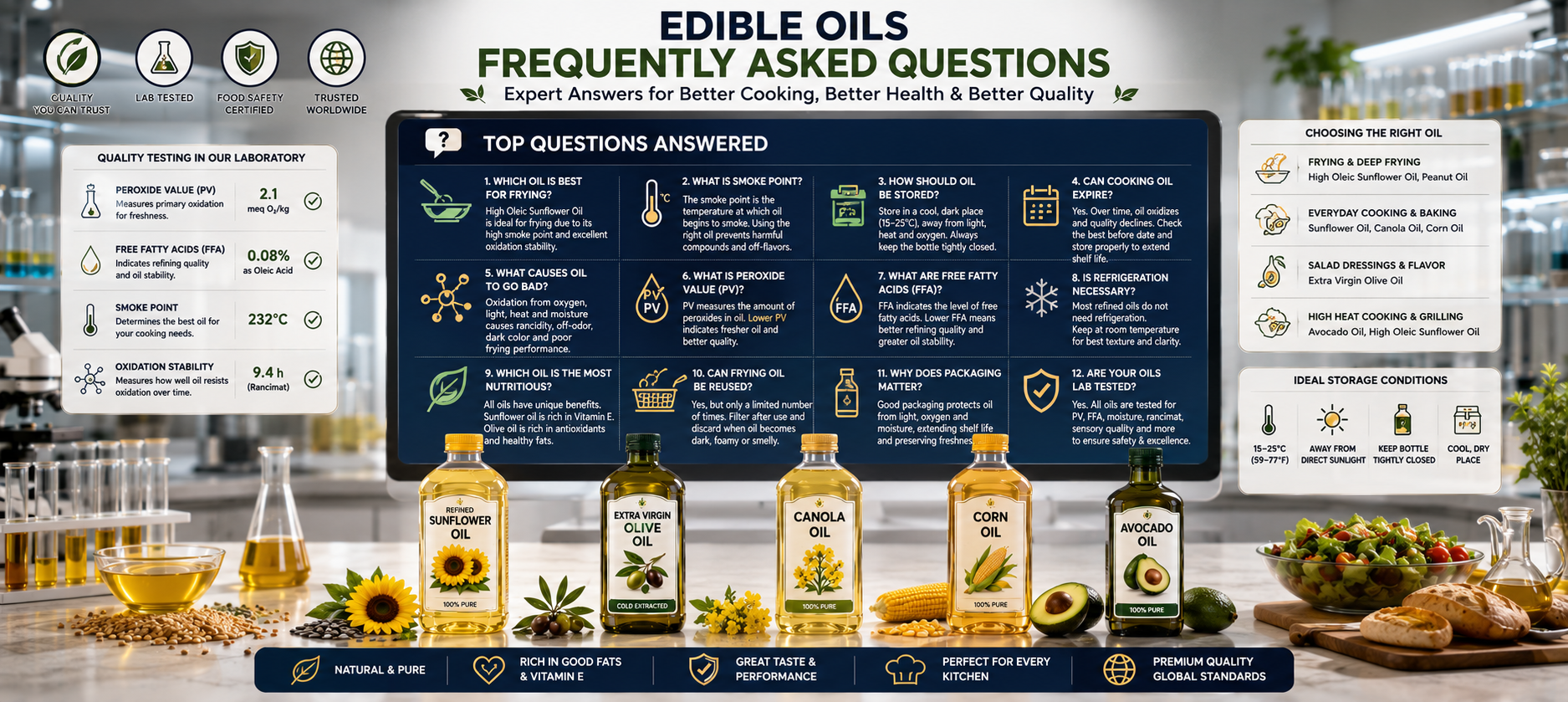
The smoke point is the temperature at which fat begins to break down and produce visible smoke.
Approximate smoke points:
| Fat | Smoke Point |
|---|---|
| Refined Sunflower Oil | ~230°C |
| Canola Oil | ~204°C |
| Olive Oil (Refined) | ~240°C |
| Butter | ~175°C |
| Ghee | ~250°C |
| Beef Tallow | ~205°C |
Choosing a cooking fat with an appropriate smoke point helps maintain quality during high-temperature cooking.
Environmental and Sustainability Considerations
Vegetable oils and animal fats have different production systems and environmental footprints.
Responsible sourcing, efficient agricultural practices, and sustainable production methods contribute to reducing environmental impacts across both categories. Consumers increasingly value transparency, traceability, and certified supply chains when selecting edible oils and fats.
Which One Is Better?
There is no single answer that fits every situation.
Vegetable oils may be preferred when:
- Preparing everyday meals
- Making salad dressings
- Frying foods
- Following vegetarian or vegan diets
- Seeking lighter flavor profiles
Animal fats may be preferred when:
- Creating traditional recipes
- Baking pastries
- Adding rich flavor
- Slow roasting meats
The best choice depends on cooking technique, desired flavor, nutritional goals, and personal preference.
Common Myths
Myth 1: All vegetable oils are unhealthy.
False. Different vegetable oils have different nutritional compositions. Their quality depends on factors such as processing, intended use, and overall dietary context.
Myth 2: Animal fats should never be consumed.
False. Animal fats can be part of a balanced diet when consumed in moderation and within recommended dietary guidelines.
Myth 3: Butter is always healthier than vegetable oil.
False. Neither is universally healthier. Each has different nutritional characteristics and culinary uses.
Quick Comparison Table
| Criteria | Vegetable Oils | Animal Fats |
|---|---|---|
| Plant-Based | ✔ | ✘ |
| Cholesterol-Free | ✔ | ✘ |
| Rich in Unsaturated Fats | ✔ | Limited |
| Rich Flavor | Moderate | ✔ |
| High-Temperature Cooking | Many varieties suitable | Some varieties suitable |
| Vegan Friendly | ✔ | ✘ |
Frequently Asked Questions (FAQ)
Are vegetable oils healthier than animal fats?
Many vegetable oils contain higher amounts of unsaturated fats, while many animal fats contain more saturated fat. A balanced diet can include either, depending on overall nutritional goals and recommended dietary guidance.
Can I replace butter with vegetable oil?
Yes. Many baking recipes allow vegetable oil as a substitute, although the final texture and flavor may differ.
Which fat is best for frying?
Refined sunflower oil is widely used because of its high smoke point, neutral flavor, and cooking stability.
Do vegetable oils contain cholesterol?
No. Vegetable oils are naturally cholesterol-free.
Are all animal fats the same?
No. Butter, ghee, duck fat, lard, and beef tallow all have different fatty acid compositions and culinary characteristics.
Related Articles
- What Are Edible Oils?
- Types of Edible Oils
- Saturated vs Unsaturated Fats
- Everything About Sunflower Oil
- Which Oil Is Best for Everyday Cooking?
Conclusion
Vegetable oils and animal fats each have unique nutritional properties and culinary advantages. Understanding their differences allows consumers to choose the most appropriate option for specific cooking methods, dietary preferences, and health goals.
Rather than viewing one category as superior to the other, the most effective approach is to prioritize quality, proper usage, moderation, and a well-balanced diet.
Leave a Reply