



Choosing the right cooking oil often raises many questions. Consumers want to know which oil is healthiest, which performs best for frying, how oils should be stored, and how to recognize high-quality products.
This comprehensive FAQ brings together answers to the most common questions about edible oils based on food science, quality control principles, and internationally accepted industry practices.
Whether you cook at home, work in food service, or source edible oils for international trade, these answers will help you make informed decisions.
1. What are edible oils?
Edible oils are fats extracted from plants or, less commonly, animal sources that are safe for human consumption.
Common vegetable oils include:
- Sunflower oil
- Olive oil
- Canola oil
- Corn oil
- Soybean oil
- Avocado oil
- Peanut oil
They are widely used for frying, baking, roasting, salad dressings, and food manufacturing.
2. What is refined cooking oil?
Refined oil has undergone several purification processes to remove unwanted compounds such as:
- Free fatty acids
- Moisture
- Waxes
- Phospholipids
- Odor-causing substances
- Color pigments
The result is a clean, stable oil with a neutral flavor and improved shelf life.
3. What is cold-pressed oil?
Cold-pressed oil is extracted mechanically with minimal heat and limited processing.
It generally retains more naturally occurring compounds but often has:
- Stronger flavor
- Lower smoke point
- Shorter shelf life
It is commonly preferred for salad dressings and cold applications.
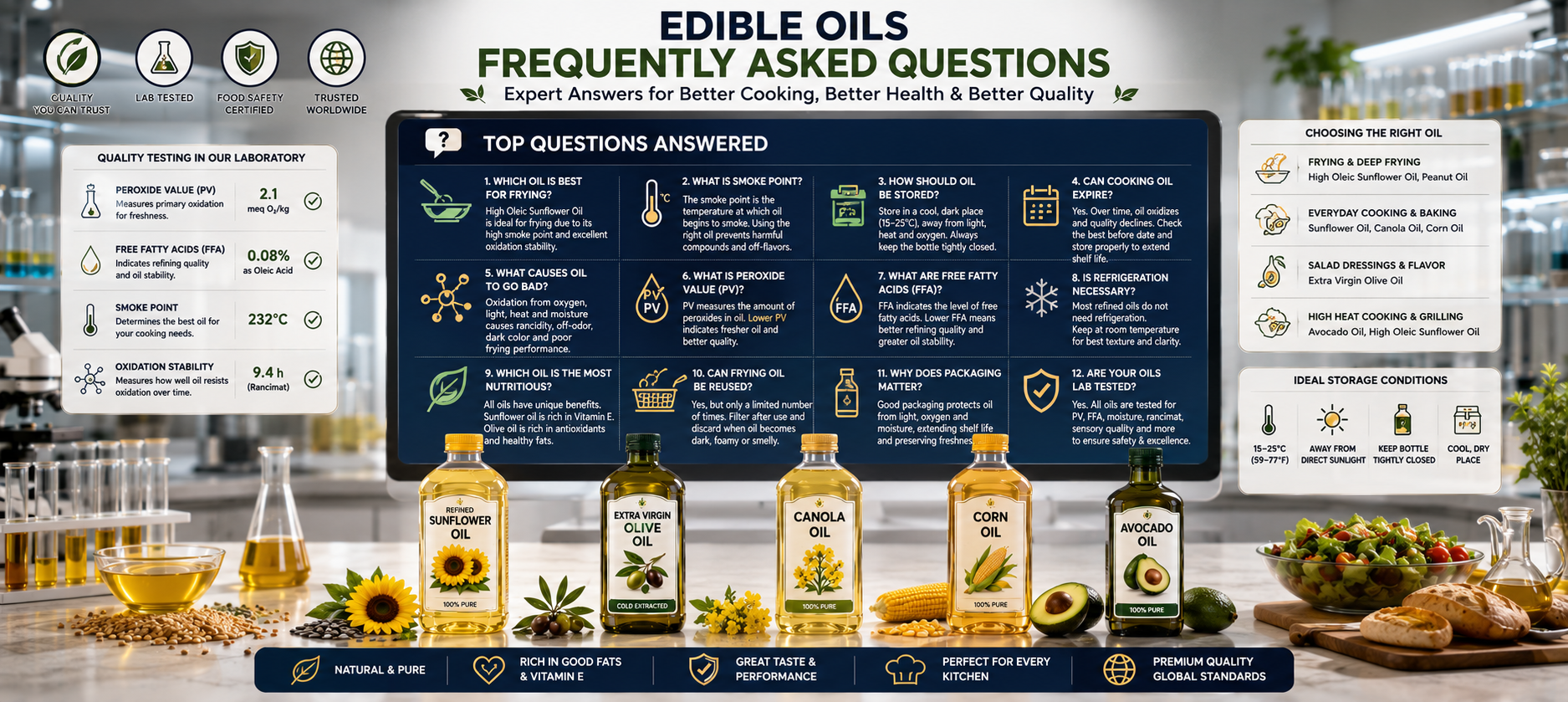
4. Which oil is best for frying?
High Oleic Sunflower Oil is widely regarded as one of the best choices for deep frying due to its:
- High smoke point
- Excellent oxidation stability
- Long frying life
- Neutral flavor
Other suitable frying oils include refined sunflower oil, peanut oil, corn oil, and refined canola oil.
5. What is a smoke point?
The smoke point is the temperature at which an oil begins producing visible smoke.
Choosing an oil with an appropriate smoke point helps maintain flavor, nutritional quality, and frying performance during high-temperature cooking.
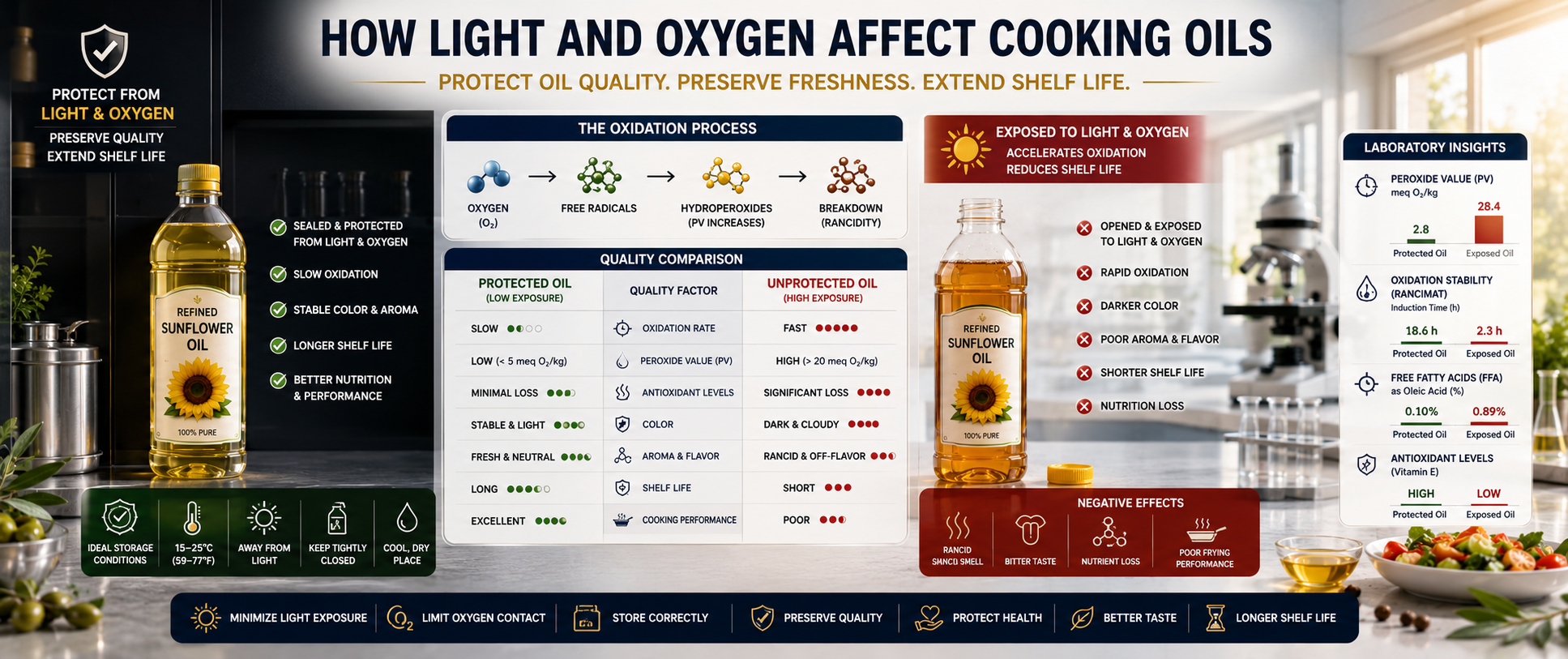
6. What is oxidation?
Oxidation is a natural chemical reaction between oil and oxygen.
Over time it causes:
- Rancidity
- Flavor deterioration
- Nutrient loss
- Reduced shelf life
Proper storage significantly slows oxidation.
7. What is Peroxide Value (PV)?
Peroxide Value measures the amount of primary oxidation products present in edible oil.
Lower PV generally indicates fresher oil.
It is one of the most important laboratory quality indicators.
8. What are Free Fatty Acids (FFA)?
FFA measures the amount of fatty acids released through hydrolysis.
Lower FFA values generally indicate:
- Better refining
- Improved freshness
- Higher product quality
9. How should cooking oil be stored?
For best results:
- Store between 15–25°C (59–77°F).
- Keep bottles tightly sealed.
- Avoid direct sunlight.
- Store in a cool, dry location.
- Follow manufacturer instructions.
10. Can cooking oil expire?
Yes.
Although oils do not spoil like fresh foods, they gradually deteriorate through oxidation.
Proper storage helps maximize shelf life.
11. How can I tell if cooking oil has gone bad?
Signs include:
- Rancid smell
- Bitter taste
- Darker color
- Sticky texture
- Excessive smoke
- Poor frying performance
These changes indicate declining quality.
12. Is refrigeration necessary?
Most refined vegetable oils do not require refrigeration.
Cold temperatures may temporarily cause cloudiness or crystallization, but these changes usually disappear at room temperature.
13. Why are some bottles dark?
Dark bottles help protect oils from ultraviolet light.
Reducing light exposure slows oxidation and extends shelf life.
14. Which oil contains the most Vitamin E?
Sunflower oil is one of the richest natural dietary sources of Vitamin E.
Vitamin E functions as an antioxidant and helps protect both the oil and the body’s cells from oxidative damage.
15. Which oil is healthiest?
There is no single healthiest cooking oil for every situation.
The best choice depends on:
- Cooking method
- Nutritional goals
- Flavor preference
- Overall dietary pattern
Different oils offer different nutritional advantages.
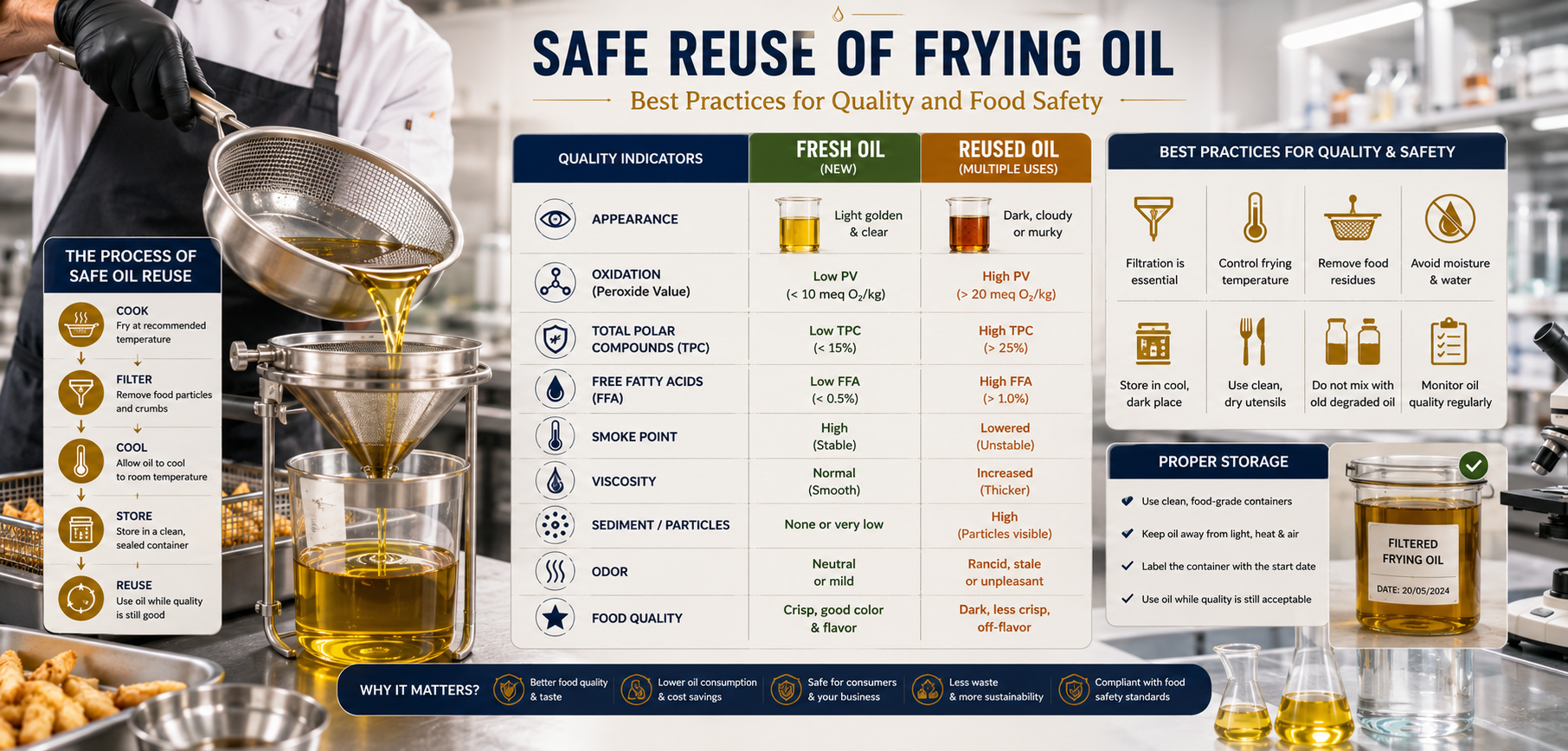
16. Can frying oil be reused?
Yes, but only to a limited extent.
Oil should be filtered after use and discarded once it develops:
- Excessive smoke
- Dark color
- Strong odor
- Heavy foaming
- Thick consistency
Repeated heating gradually reduces quality.
17. What is High Oleic sunflower oil?
High Oleic sunflower oil is a specially developed variety containing higher levels of oleic acid.
Advantages include:
- Better oxidation stability
- Longer frying life
- Higher heat resistance
- Excellent commercial frying performance
18. Why do manufacturers perform laboratory testing?
Quality laboratories evaluate oils using tests such as:
- Peroxide Value (PV)
- Free Fatty Acids (FFA)
- Oxidation Stability (Rancimat)
- Moisture analysis
- Sensory evaluation
These tests help ensure product consistency and food safety.
19. What certifications should premium edible oils have?
Depending on the market, manufacturers may hold certifications such as:
- ISO 22000
- FSSC 22000
- HACCP
- Halal Certification
- GMP
- BRCGS
These demonstrate compliance with internationally recognized food safety and quality management systems.
20. Why is packaging important?
Good packaging protects oil from:
- Oxygen
- Light
- Moisture
- Physical damage
High-quality packaging significantly extends shelf life.
Quick Reference Table
| Question | Short Answer |
|---|---|
| Best frying oil | High Oleic Sunflower Oil |
| Best storage temperature | 15–25°C |
| Should oil be refrigerated? | Usually No |
| Can cooking oil expire? | Yes |
| Richest Vitamin E source | Sunflower Oil |
| Main cause of deterioration | Oxidation |
| Important quality test | Peroxide Value (PV) |
| Best protection | Cool, dark storage |
Related Articles
- What Are Edible Oils?
- Refined Oil vs Cold-Pressed Oil
- Smoke Point of Sunflower Oil
- Oxidation Stability of Cooking Oils
- Best Temperature for Oil Storage
- How Light and Oxygen Affect Oils
- Shelf Life of Edible Oils
- Which Oil Is Best for Frying?
Conclusion
Understanding edible oils becomes much easier when the most common questions are answered clearly and scientifically. From refining methods and storage conditions to oxidation, smoke point, and quality testing, every aspect influences how an oil performs in the kitchen and throughout its shelf life. Choosing high-quality products, storing them correctly, and understanding their intended applications helps consumers enjoy better flavor, improved cooking performance, and greater confidence in every bottle.
Call to Action
Explore our premium range of refined edible oils, produced under internationally recognized food safety and quality standards. Whether you are cooking at home, supplying restaurants, or sourcing products for global markets, our oils are designed to deliver exceptional quality, reliable performance, and long-lasting freshness from production to every meal.
Leave a Reply