



Cooking oils are remarkably stable when stored under proper conditions, but they are not immune to environmental influences. Among the many factors that affect edible oil quality, light and oxygen are the two most significant contributors to oxidation and long-term deterioration.
Even premium-quality refined oils gradually lose freshness when repeatedly exposed to air and sunlight. Understanding how these environmental factors influence edible oils helps consumers, food manufacturers, and distributors preserve quality throughout the product’s shelf life.
Proper protection from light and oxygen is one of the most effective ways to maintain freshness, flavor, nutritional value, and cooking performance.
Why Oils Deteriorate Over Time
Edible oils consist primarily of fatty acids.
When these fatty acids react with oxygen, a natural chemical process called oxidation begins.
Oxidation occurs slowly under ideal storage conditions but accelerates dramatically when oils are exposed to:
- Air
- Sunlight
- Heat
- Metal contaminants
- Repeated heating
Over time, oxidation reduces both quality and stability.
The Role of Oxygen
Oxygen is essential for oxidation to occur.
Every time an oil container is opened, oxygen enters the bottle and begins reacting with the oil.
Initially, these reactions are slow, but repeated exposure gradually leads to measurable chemical changes.
Manufacturers therefore work to minimize oxygen contact throughout production, packaging, transportation, and storage.
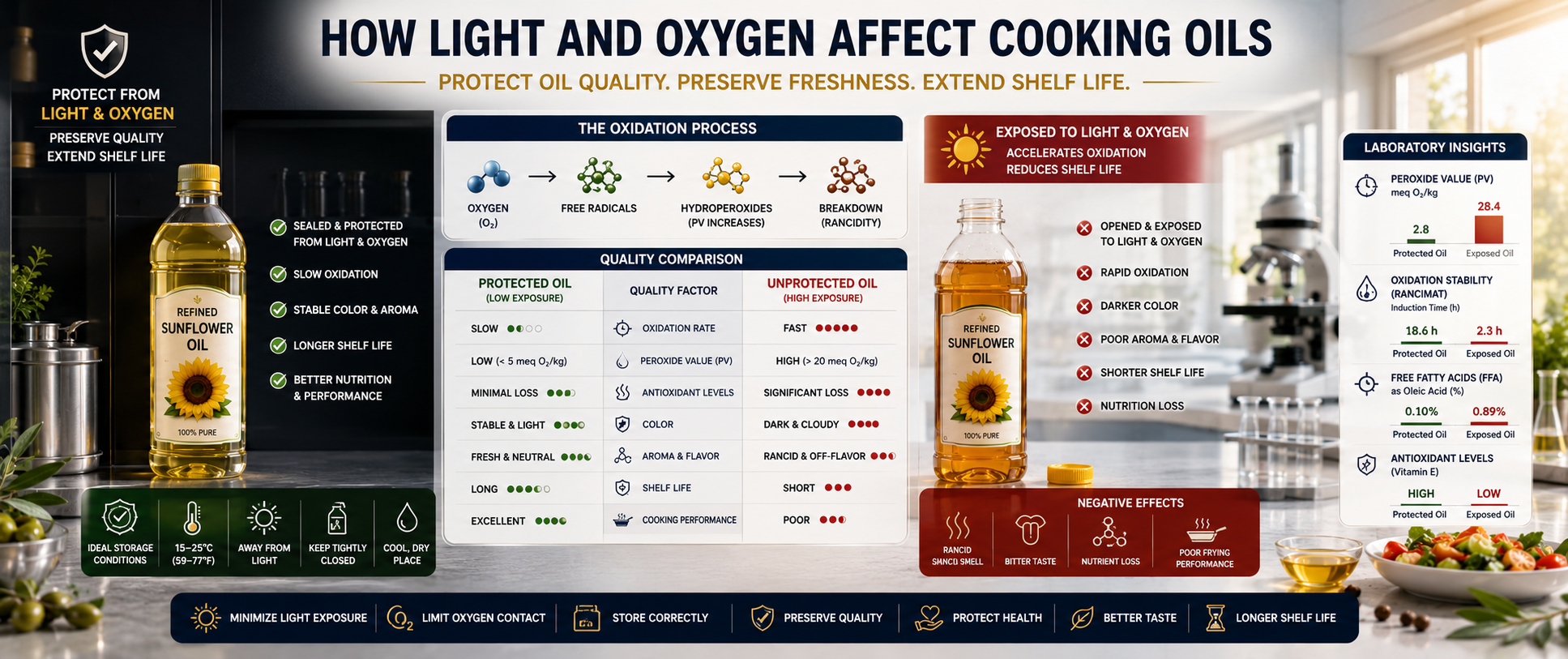
How Oxidation Develops
Oil oxidation occurs in three general stages.
Stage 1 – Initiation
Oxygen molecules react with unsaturated fatty acids.
Free radicals begin forming.
Stage 2 – Primary Oxidation
Hydroperoxides are produced.
These are measured through the Peroxide Value (PV) test.
Stage 3 – Secondary Oxidation
Hydroperoxides decompose into:
- Aldehydes
- Ketones
- Organic acids
- Alcohols
These compounds produce the unpleasant odor and flavor associated with rancid oil.
Why Light Accelerates Oxidation
Light—especially ultraviolet (UV) radiation—provides the energy needed to accelerate oxidation.
Exposure to sunlight may:
- Destroy natural antioxidants
- Increase peroxide formation
- Accelerate nutrient degradation
- Reduce shelf life
- Alter color
- Change aroma
Transparent bottles exposed to direct sunlight deteriorate much faster than properly protected products.
Natural Antioxidants
Many edible oils naturally contain antioxidant compounds.
Examples include:
- Vitamin E (Tocopherols)
- Phenolic compounds (especially in olive oil)
These compounds help slow oxidation by neutralizing free radicals.
However, prolonged exposure to light gradually destroys these protective substances.
Which Oils Are Most Sensitive?
Sensitivity varies according to fatty acid composition.
General tendency:
- Oils rich in polyunsaturated fats → More susceptible
- Oils rich in monounsaturated fats → More stable
- Oils rich in saturated fats → Most stable
For example:
- Conventional sunflower oil oxidizes faster than High Oleic sunflower oil.
- Extra Virgin Olive Oil benefits from naturally occurring phenolic antioxidants.
Oxygen Exposure After Opening
Once a bottle has been opened, oxidation begins to accelerate.
Consumers can reduce oxygen exposure by:
- Closing the cap immediately.
- Avoiding unnecessary opening.
- Purchasing appropriately sized containers.
- Using clean dispensing equipment.
Reducing headspace inside partially used bottles also slows oxidation.
Packaging Protection
Modern packaging is specifically designed to reduce exposure to both light and oxygen.
Common protective packaging includes:
- UV-resistant PET bottles
- Amber glass bottles
- Metal containers
- Airtight seals
- Oxygen-barrier materials
High-quality packaging plays an important role in maintaining freshness.
Industrial Protection Methods
Professional manufacturers use advanced technologies to minimize oxidation.
Examples include:
- Nitrogen blanketing
- Closed production systems
- Oxygen-controlled storage tanks
- Automated filling equipment
- Temperature-controlled warehouses
These practices help preserve oil quality from production to distribution.
Storage Recommendations
To minimize oxidation:
- Store in a cool location.
- Keep containers tightly sealed.
- Avoid direct sunlight.
- Protect from excessive heat.
- Follow manufacturer storage instructions.
Simple household practices significantly improve shelf life.
Signs of Oxidation
As oxidation progresses, consumers may observe:
- Rancid smell
- Bitter flavor
- Darker color
- Reduced frying performance
- Increased smoke
- Sticky texture
These changes indicate declining quality.
Light vs Oxygen
Both factors contribute to deterioration but in different ways.
| Light | Oxygen |
|---|---|
| Accelerates oxidation | Causes oxidation |
| Destroys antioxidants | Reacts with fatty acids |
| Increases peroxide formation | Produces free radicals |
| Reduces shelf life | Gradually degrades oil |
| Promotes color changes | Produces rancid compounds |
Both should be minimized whenever possible.
Why Dark Bottles Matter
Many premium edible oils are packaged in dark containers.
Dark bottles:
- Block UV radiation
- Slow antioxidant loss
- Reduce oxidation rate
- Extend shelf life
Packaging color is therefore more than a marketing choice—it contributes to quality preservation.
Common Consumer Mistakes
Consumers often unknowingly accelerate oxidation by:
- Leaving bottles uncapped.
- Storing oil beside windows.
- Keeping oil near the stove.
- Purchasing oversized containers.
- Transferring oil to unsuitable containers.
These practices shorten product life.
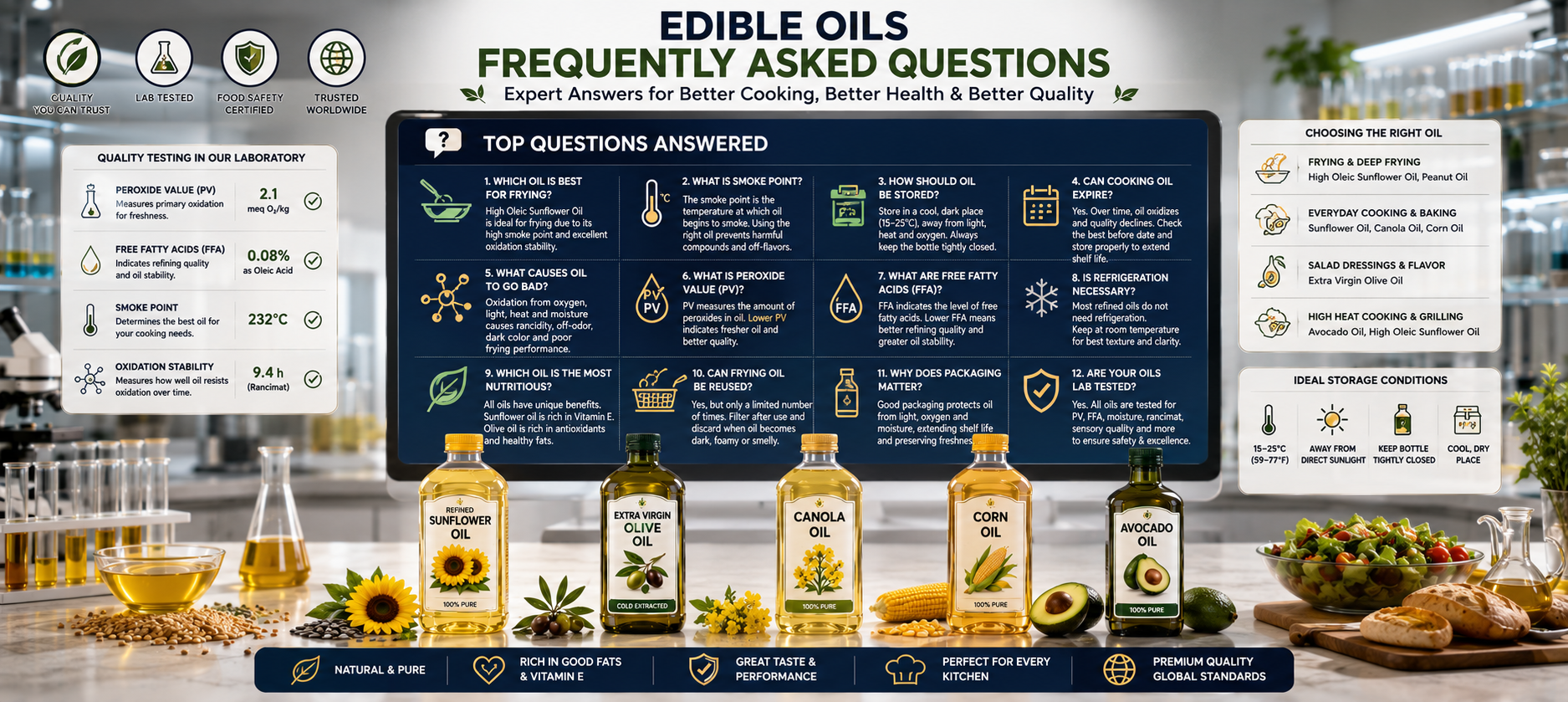
Frequently Asked Questions (FAQ)
Why does oxygen damage cooking oil?
Oxygen reacts with unsaturated fatty acids, initiating oxidation and gradually reducing oil quality.
Does sunlight really affect edible oils?
Yes. Ultraviolet light accelerates oxidation and destroys natural antioxidants.
Why are some oil bottles dark?
Dark bottles reduce light exposure and help preserve freshness by slowing oxidation.
Can oxidation be stopped completely?
No. Oxidation is a natural process, but proper storage and packaging can significantly slow it.
What is the best way to protect cooking oil?
Store oil in a cool, dark place, keep the container tightly sealed, and minimize exposure to oxygen and sunlight.
Comparison Table
| Proper Protection | Poor Protection |
|---|---|
| Low oxidation | Rapid oxidation |
| Longer shelf life | Shorter shelf life |
| Better flavor | Rancid flavor |
| Stable color | Darkening |
| Better nutritional retention | Antioxidant loss |
| Higher cooking performance | Reduced frying quality |
Related Articles
- Best Temperature for Oil Storage
- Storage Conditions for Cooking Oils
- Shelf Life of Edible Oils
- Peroxide Value Explained
- Oxidation Stability of Cooking Oils
- Signs That Oil Has Gone Bad
Conclusion
Light and oxygen are two of the most important factors affecting the long-term quality of edible oils. While oxidation cannot be completely prevented, proper packaging, careful storage, and minimizing exposure to air and sunlight can dramatically slow the deterioration process. Whether at home or in industrial production, protecting oils from these environmental factors helps preserve freshness, nutritional value, flavor, and cooking performance throughout their intended shelf life.
Call to Action
Choose premium edible oils packaged with advanced oxygen- and light-protection technologies and produced under internationally recognized quality management systems. Proper packaging and storage ensure every bottle delivers exceptional freshness, stability, and consistent cooking performance from the refinery to your kitchen.
Leave a Reply