



Deep frying is one of the most popular cooking methods worldwide, producing crispy textures and appealing flavors. In homes, restaurants, and food manufacturing facilities, frying oil is often reused to improve efficiency and reduce waste.
However, every heating cycle gradually changes the chemical and physical properties of the oil. Exposure to high temperatures, oxygen, moisture, and food particles accelerates oxidation and thermal degradation, reducing oil quality over time.
Reusing frying oil safely requires proper handling, filtration, storage, and regular quality assessment. Understanding these best practices helps maintain food quality, extend oil life, and support safe cooking operations.
Can Frying Oil Be Reused?
Yes. Frying oil can often be reused if it has been properly handled and still maintains acceptable quality.
Whether oil is suitable for reuse depends on several factors, including:
- Frying temperature
- Cooking duration
- Type of food fried
- Moisture content
- Filtration practices
- Storage conditions
- Overall oil quality
There is no universal number of times that an oil can be safely reused, as its lifespan depends on how it is used and maintained.
Why Frying Oil Deteriorates
Every frying session exposes oil to conditions that promote degradation.
The primary causes include:
High Heat
Repeated heating gradually breaks down fatty acids and reduces oxidative stability.
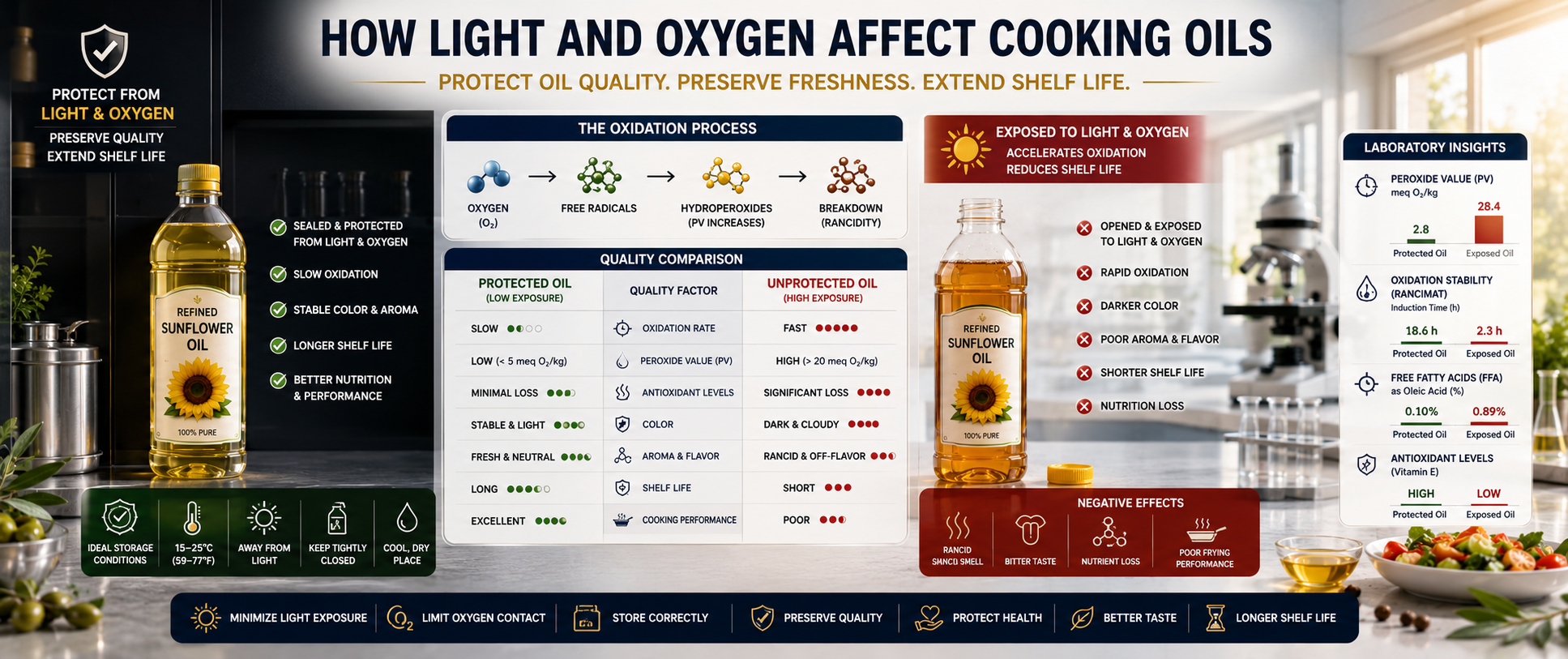
Oxygen Exposure
Contact with air accelerates oxidation, especially when oil is left uncovered.
Moisture
Water released from food speeds hydrolysis and contributes to the formation of free fatty acids.
Food Particles
Small crumbs left in the fryer continue to cook and burn, accelerating oil degradation and affecting flavor.
What Happens During Oil Degradation?
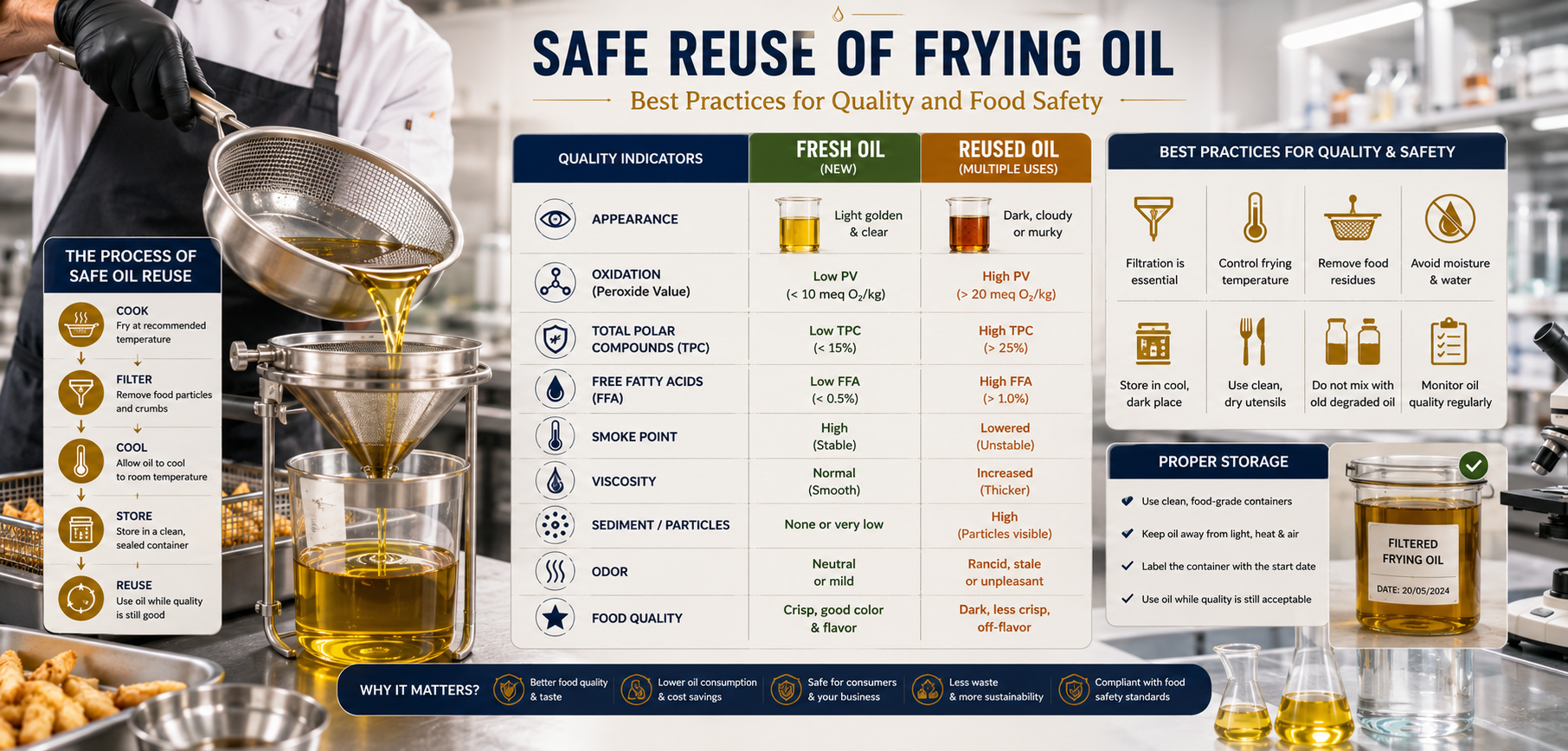
As frying oil ages, several measurable changes occur:
- Increased oxidation
- Formation of free fatty acids (FFA)
- Higher peroxide values (during early oxidation)
- Increased total polar compounds (TPC)
- Darker color
- Greater viscosity
- Lower smoke point
- Reduced frying performance
These changes gradually reduce both food quality and oil stability.
Signs That Frying Oil Should Not Be Reused
Oil should be replaced when it shows clear signs of deterioration, including:
- Strong rancid or burnt odor
- Excessive darkening
- Persistent foaming
- Thick or sticky texture
- Heavy smoke at normal frying temperatures
- Excessive food residue that cannot be removed
- Bitter or unpleasant flavor transferred to food
If multiple warning signs are present, replacing the oil is the best option.
Importance of Filtration
Filtration is one of the most effective ways to extend frying oil life.
Removing food particles helps:
- Slow oxidation
- Reduce burning of residues
- Improve food appearance
- Maintain flavor
- Preserve frying performance
Commercial kitchens often filter oil daily or even after each service period.
Best Practices for Reusing Frying Oil
1. Avoid Overheating
Maintain frying temperatures within the recommended range for the food being prepared.
Excessively high temperatures accelerate oil breakdown.
2. Filter Oil Regularly
Remove crumbs and suspended particles after cooking.
Clean oil degrades more slowly than oil containing burnt food residue.
3. Cool Before Storage
Allow oil to cool before transferring it to a storage container.
Never seal extremely hot oil in airtight containers.
4. Store Properly
Store filtered oil in:
- Clean containers
- Cool locations
- Dry environments
- Away from direct sunlight
Limiting exposure to light and oxygen helps preserve freshness.
5. Keep Water Away
Even small amounts of water can accelerate oil deterioration and increase splattering during future frying.
Ensure containers and utensils are completely dry.
6. Avoid Mixing Fresh and Heavily Degraded Oil
Combining fresh oil with severely deteriorated oil may reduce the quality of the entire batch.
When topping up oil, ensure the remaining oil is still in good condition.
Which Oils Perform Best for Reuse?
Some oils naturally resist degradation better than others because of their fatty acid composition.
| Oil Type | Relative Frying Stability |
|---|---|
| High Oleic Sunflower Oil | Excellent |
| Refined Olive Oil | Excellent |
| Avocado Oil | Very Good |
| Refined Peanut Oil | Very Good |
| Canola Oil | Good |
| Corn Oil | Good |
| Standard Sunflower Oil | Good |
| Soybean Oil | Moderate |
High oleic oils generally provide longer frying life because they contain more monounsaturated fats, which are more resistant to oxidation than polyunsaturated fats.
Quality Testing in Commercial Kitchens
Professional food manufacturers and large food service operations often monitor oil quality using laboratory and field tests.
Common indicators include:
Free Fatty Acids (FFA)
Measure hydrolytic degradation.
Peroxide Value (PV)
Measures primary oxidation products during the early stages of oxidation.
Total Polar Compounds (TPC)
Widely used to evaluate the overall degradation of frying oil during prolonged use.
Oil Color
Progressive darkening often reflects continued degradation, although color alone is not sufficient to determine oil quality.
Home Frying Tips
Home cooks can help maintain oil quality by:
- Frying similar foods together.
- Avoiding excessive frying temperatures.
- Filtering cooled oil before storage.
- Using clean containers.
- Checking smell and appearance before reuse.
- Discarding oil that shows obvious signs of spoilage.
Fresh Oil vs Reused Oil
| Characteristic | Properly Maintained Reused Oil | Degraded Oil |
|---|---|---|
| Color | Slightly darker | Very dark |
| Odor | Neutral | Burnt or rancid |
| Clarity | Relatively clear | Cloudy with residue |
| Smoke Point | Stable | Reduced |
| Frying Performance | Consistent | Excessive foaming |
| Flavor Transfer | Minimal | Bitter or unpleasant |
Environmental Considerations
Proper oil management also helps reduce waste.
Instead of pouring used oil into drains:
- Allow it to cool completely.
- Store it in a sealed container.
- Follow local recycling or disposal guidelines.
- Use designated collection programs where available.
Responsible disposal helps protect plumbing systems and the environment.
Frequently Asked Questions (FAQ)
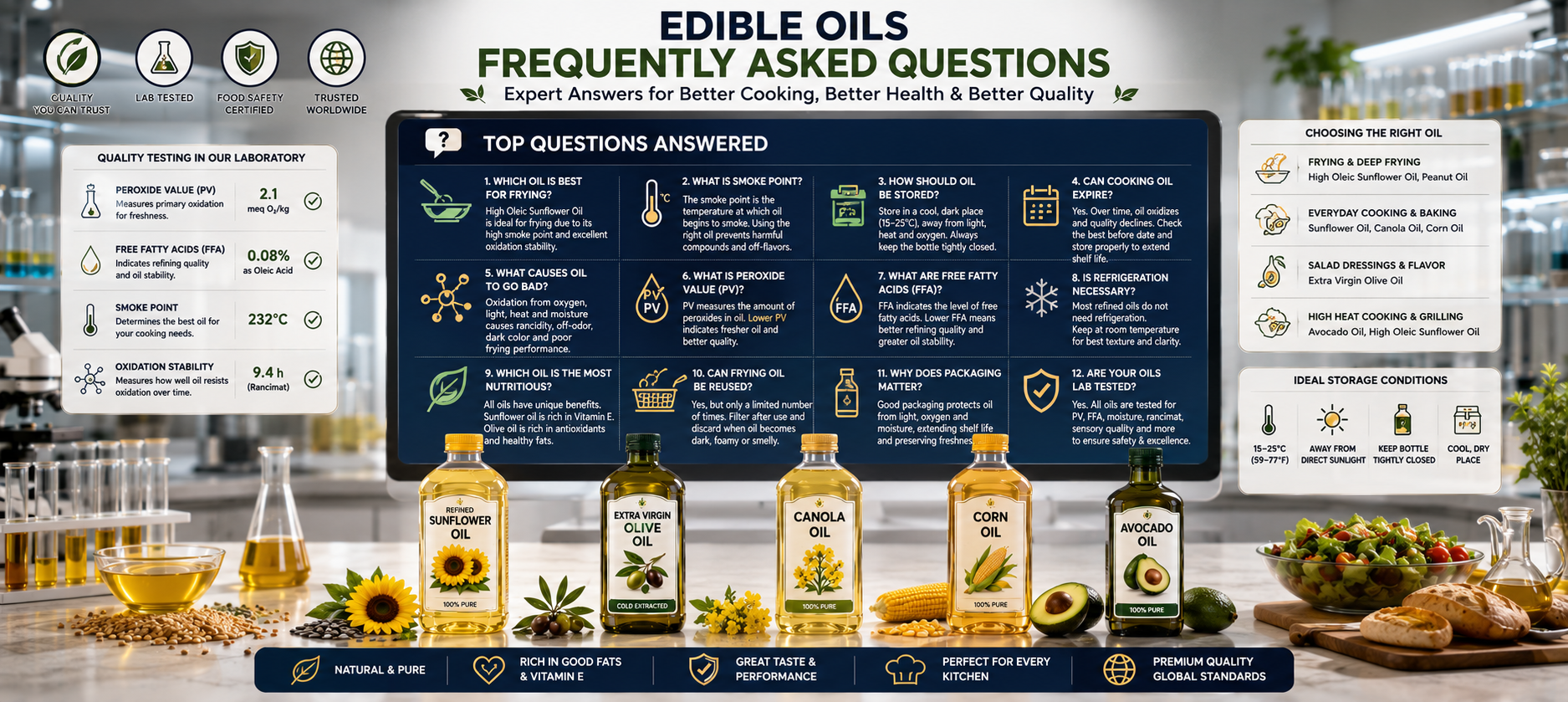
How many times can frying oil be reused?
There is no fixed number. The usable life depends on the type of oil, frying conditions, filtration, storage, and the oil’s overall quality.
Should frying oil be refrigerated?
For most refined vegetable oils, refrigeration is not necessary. A cool, dark, and dry storage location is generally sufficient unless otherwise recommended by the manufacturer.
Why does reused oil become darker?
Repeated heating and contact with food particles gradually darken the oil due to chemical changes and residue accumulation.
Can I mix new oil with old oil?
It is acceptable to top up oil that is still in good condition. However, fresh oil should not be mixed with oil that has clearly deteriorated.
What is the best frying oil for repeated use?
High oleic sunflower oil, refined olive oil, and refined avocado oil are among the oils known for their good oxidative stability under high-temperature cooking.
Related Articles
- Signs That Cooking Oil Has Gone Bad
- Can Cooking Oil Expire?
- Oxidation Stability of Cooking Oils
- Shelf Life of Edible Oils
- How Light and Oxygen Affect Oils
- Best Temperature for Oil Storage
Conclusion
Reusing frying oil can be both practical and safe when proper quality management practices are followed. Regular filtration, correct storage, temperature control, and routine inspection help maintain frying performance while slowing the natural degradation process.
Whether cooking at home or operating a commercial kitchen, monitoring changes in color, odor, clarity, and cooking behavior allows you to make informed decisions about when oil remains suitable for reuse and when it should be replaced. Choosing high-quality, oxidation-resistant oils and following good handling practices leads to better food quality, greater efficiency, and improved food safety.
Call to Action
Discover our premium refined edible oils engineered for superior frying performance, excellent oxidative stability, and reliable quality. Whether for home cooking, food service, or industrial production, our oils are designed to deliver consistent results, extended frying life, and international quality standards.
Leave a Reply