



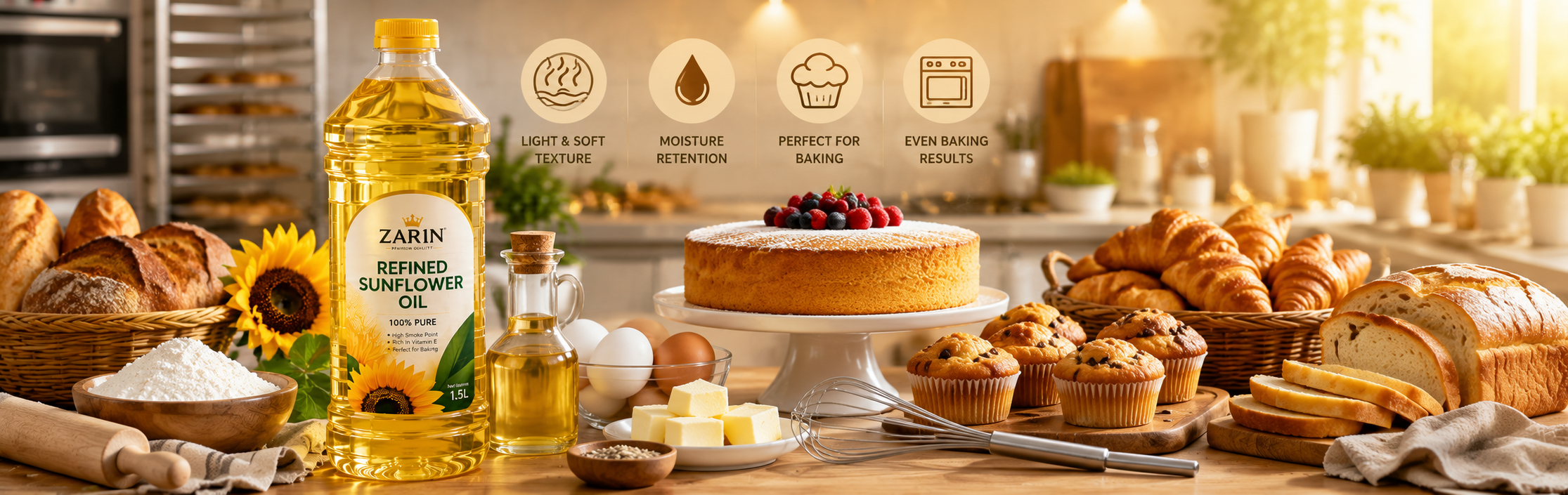
When people think about sunflower oil, frying is often the first application that comes to mind. However, sunflower oil has become one of the most widely used ingredients in modern baking due to its light texture, neutral flavor, and ability to produce soft, moist baked goods.
From artisan bakeries to industrial food manufacturers, refined sunflower oil is commonly used in cakes, muffins, cookies, breads, pastries, and other baked products because it delivers consistent quality without overpowering the flavor of the ingredients.
In this guide, we’ll explore why sunflower oil is an excellent choice for baking, how it compares with butter and other vegetable oils, and how to achieve the best baking results.
Why Oil Is Used in Baking
Oil performs several important functions beyond simply adding fat.
It helps:
- Improve texture
- Retain moisture
- Extend freshness
- Increase softness
- Enhance mouthfeel
- Improve volume
- Distribute ingredients evenly
The type of oil selected can significantly influence the final quality of baked products.
Why Sunflower Oil Is Ideal for Baking
Refined sunflower oil offers several advantages that make it particularly suitable for baked goods.
Neutral Flavor
One of the biggest advantages of sunflower oil is its mild taste.
Unlike stronger oils, it does not compete with ingredients such as:
- Vanilla
- Chocolate
- Fruits
- Nuts
- Cinnamon
- Cocoa
- Citrus
This allows the intended flavor profile of the recipe to remain unchanged.
Moist and Tender Texture
Sunflower oil remains liquid at room temperature.
Because of this, baked goods often stay:
- Softer
- More tender
- Moist for longer
- Less likely to dry out
This is especially beneficial for cakes and muffins.
Even Mixing
Liquid oils blend easily into batters, helping create:
- Smooth consistency
- Uniform crumb structure
- Even baking results
Attractive Appearance
Sunflower oil contributes to:
- Golden crusts
- Soft interiors
- Fine crumb texture
- Uniform color
Nutritional Benefits
Compared with butter and some animal fats, sunflower oil contains:
- Lower saturated fat
- Higher unsaturated fats
- Natural Vitamin E
- No cholesterol
While baking is still an indulgent process, choosing a high-quality vegetable oil can contribute to a more balanced fat profile.
Best Baked Goods for Sunflower Oil
Sunflower oil performs exceptionally well in:
Cakes
Produces:
- Moist texture
- Soft crumb
- Excellent rise
Muffins
Helps muffins remain tender even after several days.
Cupcakes
Creates light, fluffy cakes with consistent moisture.
Brownies
Adds richness without making brownies excessively heavy.
Cookies
Produces cookies with a pleasant texture and balanced crispness.
Sweet Breads
Works well in:
- Banana bread
- Pumpkin bread
- Zucchini bread
- Lemon loaf
Yeast Breads
Sunflower oil contributes to:
- Softer crumb
- Improved shelf life
- Better slicing
Cakes Made with Sunflower Oil
Many professional pastry chefs prefer sunflower oil for sponge cakes because it creates:
- Higher volume
- Better moisture retention
- Lighter texture
- More delicate crumb
These characteristics are especially important for celebration cakes and layered desserts.
Industrial Baking Applications
Commercial bakeries frequently use refined sunflower oil in the production of:
- Sandwich bread
- Hamburger buns
- Croissants
- Danish pastries
- Cookies
- Crackers
- Biscuits
- Sponge cakes
- Snack cakes
- Filled pastries
Its consistency and availability make it suitable for large-scale production.
Sunflower Oil vs Butter in Baking
| Characteristic | Sunflower Oil | Butter |
|---|---|---|
| Flavor | Neutral | Rich dairy flavor |
| Texture | Soft and moist | Rich and dense |
| Saturated Fat | Lower | Higher |
| Moisture Retention | Excellent | Good |
| Shelf Life of Baked Goods | Longer | Moderate |
| Cholesterol | None | Present |
Both ingredients have their place in baking.
Butter provides a distinctive buttery flavor, while sunflower oil excels in moisture retention and lighter textures.
Sunflower Oil vs Other Vegetable Oils
| Oil | Flavor | Baking Performance |
|---|---|---|
| Sunflower Oil | Neutral | Excellent |
| Canola Oil | Mild | Excellent |
| Corn Oil | Slightly stronger | Very Good |
| Olive Oil | Fruity | Best for savory baking |
| Coconut Oil | Strong | Specialized recipes |
Sunflower oil offers one of the most balanced flavor profiles for everyday baking.
Can Sunflower Oil Replace Butter?
In many recipes, yes.
A common guideline is:
- Use approximately 80–85% of the butter quantity when substituting with oil, since butter contains water while oil is nearly 100% fat.
For example:
- 100 g butter ≈ 80–85 ml sunflower oil
Always adjust according to the specific recipe.
Tips for Baking with Sunflower Oil
Use Refined Sunflower Oil
Its neutral flavor makes it the preferred choice for most baked goods.
Measure Accurately
Using too much oil may produce dense or greasy textures.
Mix Evenly
Add the oil gradually to ensure a smooth batter.
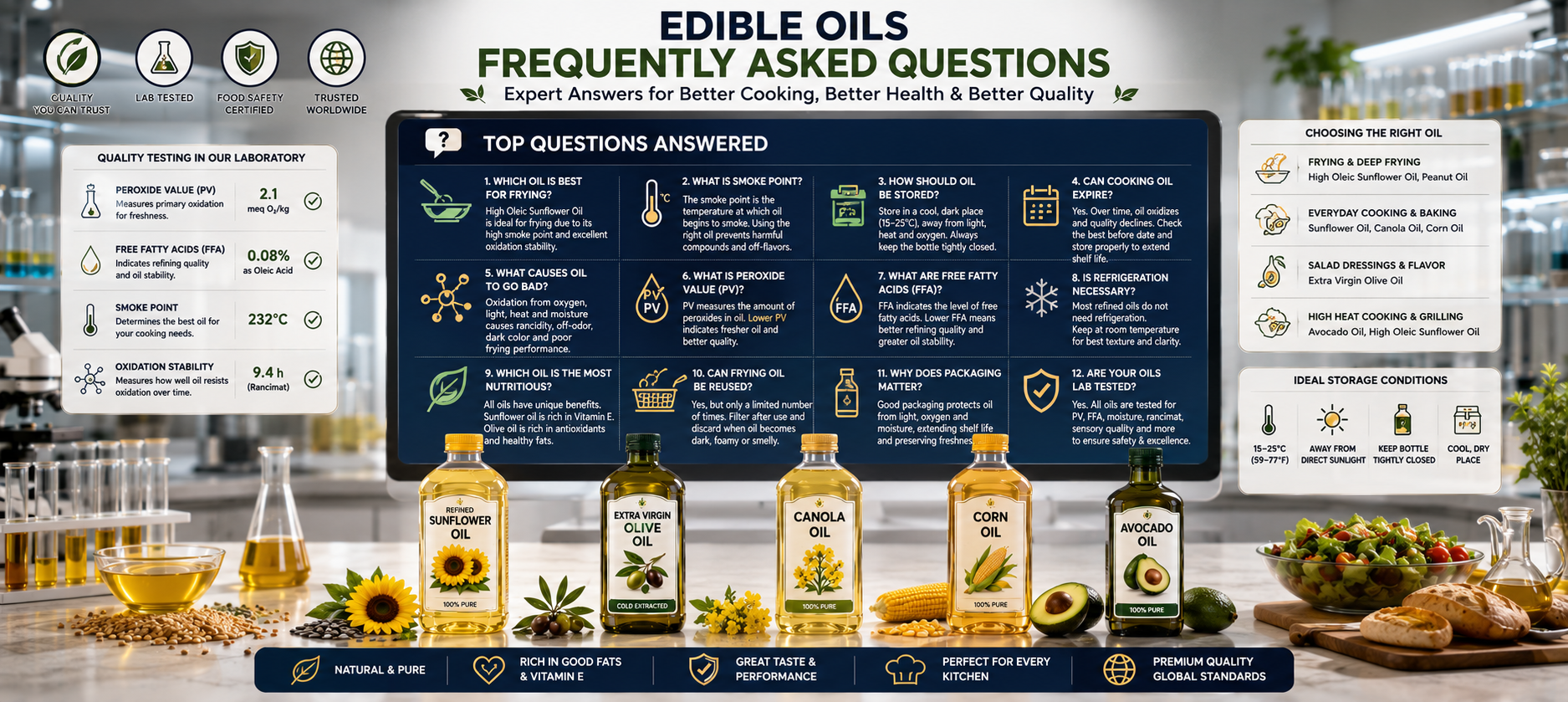
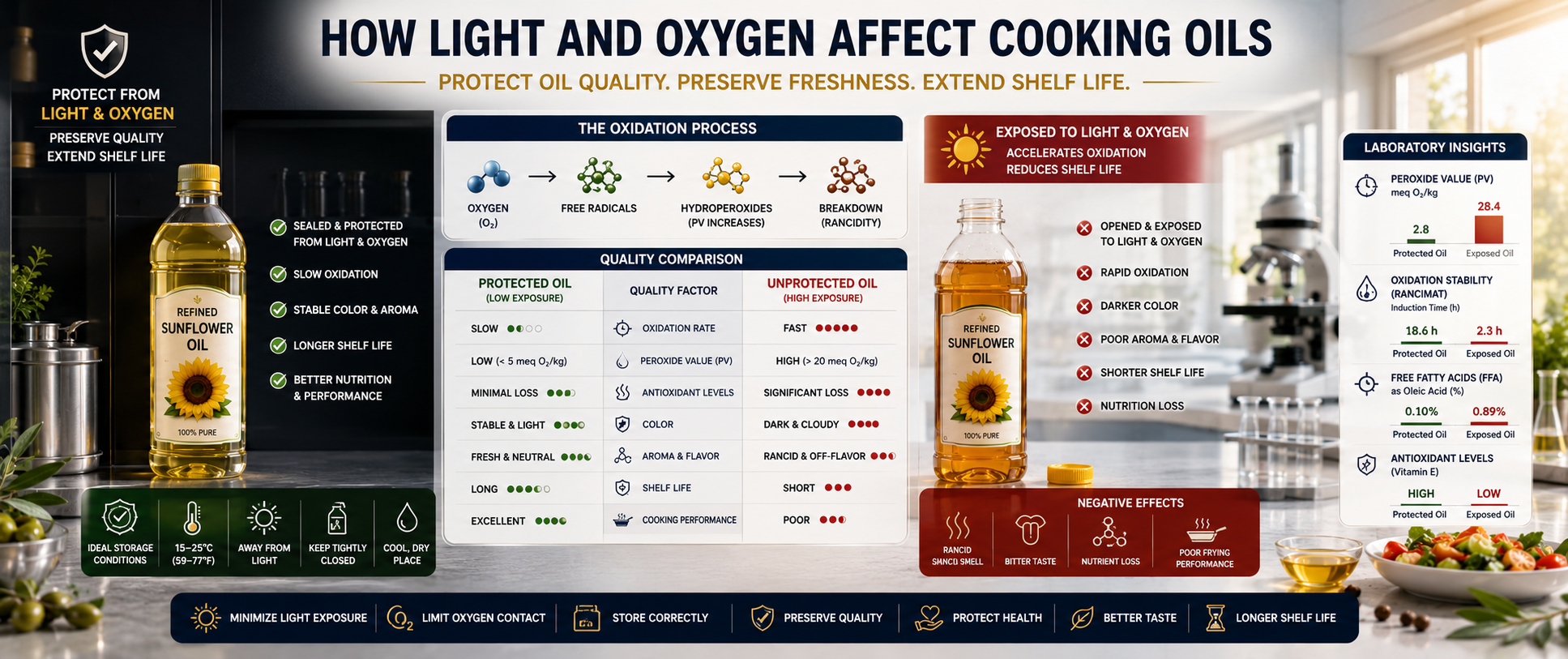
Store Properly
Keep sunflower oil:
- In a cool place
- Away from direct sunlight
- In a tightly sealed container
Proper storage helps preserve freshness and flavor.
Common Baking Mistakes
Avoid:
- Using rancid oil
- Overmixing the batter
- Substituting butter without adjusting quantities
- Storing oil near heat sources
- Using cold-pressed sunflower oil when a neutral flavor is desired
Sustainability Considerations
Many food manufacturers value sunflower oil because:
- Sunflowers are widely cultivated.
- Modern production systems are highly efficient.
- The oil is available in large commercial volumes.
- It supports a wide range of food applications.
When sourced responsibly, sunflower oil contributes to a reliable and sustainable global food supply.
Frequently Asked Questions (FAQ)
Is sunflower oil good for baking cakes?
Yes. It produces cakes that are soft, moist, and light while allowing the natural flavors of the ingredients to shine.
Can sunflower oil replace butter?
In many recipes, yes. Oil generally requires a slightly smaller quantity than butter due to its higher fat content.
Does sunflower oil change the taste of baked goods?
Very little. Refined sunflower oil has a neutral flavor, making it suitable for both sweet and savory recipes.
Is sunflower oil healthier than butter?
Sunflower oil contains less saturated fat and no cholesterol, but the overall nutritional value of baked goods also depends on the other ingredients used.
Which sunflower oil is best for baking?
Refined sunflower oil is generally preferred because of its neutral taste, light color, and consistent baking performance.
Related Articles
- Everything About Sunflower Oil
- Smoke Point of Sunflower Oil
- Health Benefits of Sunflower Oil
- How Sunflower Oil Is Produced
- Choosing the Right Cooking Oil
- Sunflower Oil in the Food Industry
Conclusion
Sunflower oil has earned its place as one of the most trusted baking oils in both home kitchens and commercial bakeries. Its neutral flavor, excellent moisture retention, smooth mixing properties, and balanced nutritional profile make it a versatile ingredient for a wide variety of baked products.
Whether you’re preparing cakes, breads, muffins, pastries, or cookies, refined sunflower oil helps deliver consistent texture, longer freshness, and professional-quality results.
Call to Action
Looking for premium refined sunflower oil for bakery production, food manufacturing, or retail distribution?
ZAR1N supplies high-quality sunflower oil that meets international standards and is available for bulk export, food service, private label, and white label solutions. Contact our team to explore packaging options, technical specifications, and customized supply programs for your business.
Leave a Reply