



Storage Conditions for Cooking Oils
Producing high-quality edible oil is only the first step in delivering a premium product. From the moment oil leaves the refinery until it reaches the consumer’s kitchen, proper storage conditions play a critical role in preserving freshness, nutritional value, flavor, and overall quality.
Even the highest-quality refined sunflower oil can deteriorate prematurely if exposed to unfavorable environmental conditions. Conversely, oils stored correctly can maintain their quality throughout their intended shelf life.
For manufacturers, distributors, retailers, and consumers alike, understanding the principles of proper oil storage is essential to minimizing oxidation and maximizing product performance.
Why Storage Matters
Edible oils are naturally sensitive to environmental factors.
Improper storage accelerates chemical reactions that lead to:
- Oxidation
- Flavor deterioration
- Nutrient loss
- Color changes
- Reduced frying performance
- Shortened shelf life
Proper storage slows these reactions and helps preserve product quality.
The Five Main Factors Affecting Oil Storage
The quality of edible oils is primarily influenced by five environmental factors:
- Temperature
- Light
- Oxygen
- Moisture
- Packaging
Managing these variables significantly improves storage stability.
1. Temperature
Temperature is one of the most important factors affecting edible oil quality.
High temperatures accelerate oxidation and shorten shelf life.
Ideally, cooking oils should be stored in a cool environment with stable temperatures.
Recommended storage conditions:
- Approximately 15–25°C (59–77°F)
- Avoid prolonged exposure above 30°C (86°F)
- Prevent repeated heating and cooling cycles
Temperature fluctuations may also increase condensation inside containers after opening.
2. Protection from Light
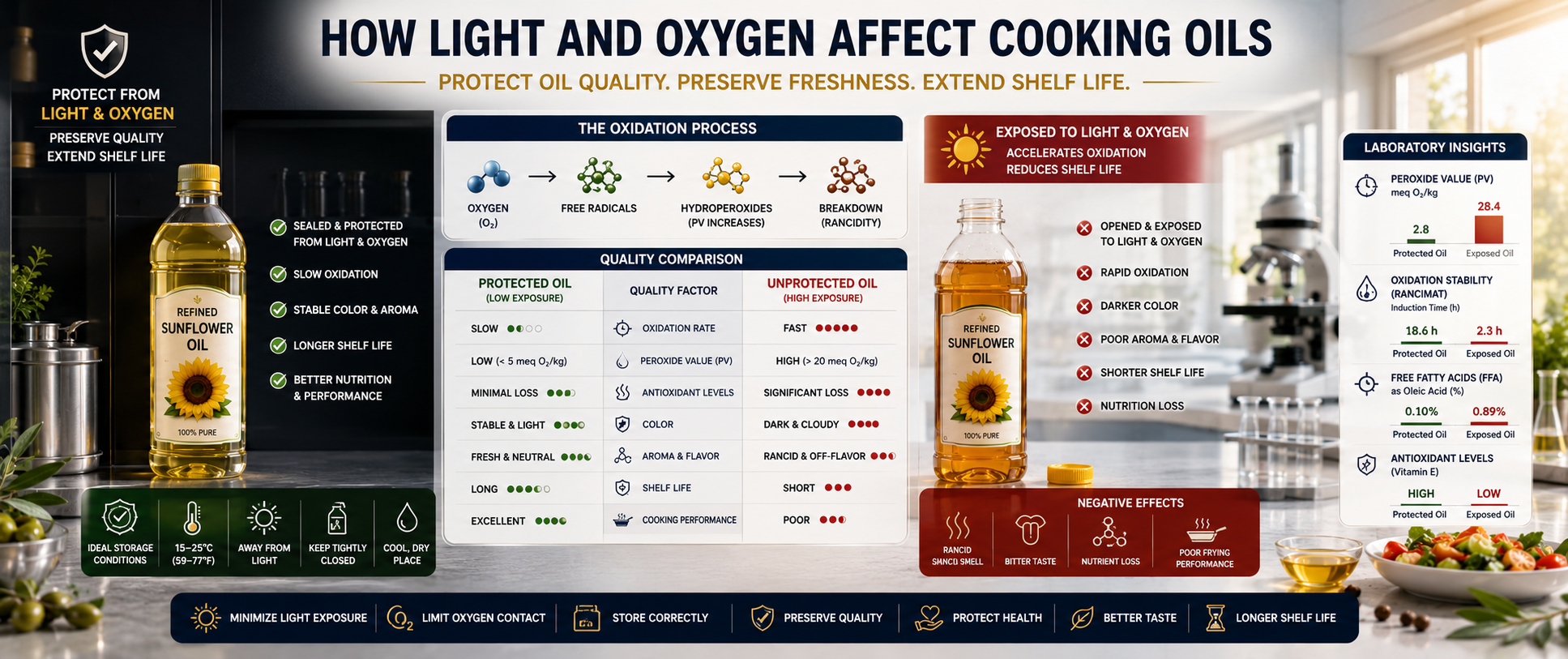
Light, especially ultraviolet (UV) radiation, accelerates the oxidation of edible oils.
Extended exposure to sunlight may:
- Destroy natural antioxidants
- Increase Peroxide Value (PV)
- Reduce shelf life
- Alter color
- Produce undesirable flavors
Premium manufacturers protect oils using:
- UV-resistant PET bottles
- Dark glass bottles
- Opaque metal containers
- Secondary packaging such as cartons
3. Oxygen Exposure
Oxygen is the primary driver of oil oxidation.
Every time a bottle is opened, fresh oxygen enters the container.
To minimize oxidation:
- Close bottles immediately after use.
- Avoid leaving containers open.
- Use airtight caps.
- Store partially used bottles with minimal headspace whenever possible.
Large industrial storage tanks often use nitrogen blanketing to reduce oxygen exposure.
4. Humidity
Although edible oils do not absorb large amounts of water, excessive humidity can create indirect quality problems.
High humidity may contribute to:
- Package deterioration
- Label damage
- Cap corrosion (metal containers)
- Increased risk of contamination during handling
Dry storage environments are recommended for both packaged products and bulk oil storage.
5. Packaging Quality
Packaging acts as the first line of defense against environmental degradation.
High-quality packaging should:
- Prevent oxygen entry
- Block excessive light
- Resist physical damage
- Maintain a reliable seal
- Be made from food-grade materials
Packaging selection directly influences product shelf life.
Storage at Home
Consumers can preserve cooking oil quality by following a few simple practices.
Recommended household storage:
- Store in a cool cupboard.
- Keep away from windows.
- Avoid storing near ovens or stoves.
- Close the cap tightly after every use.
- Use clean utensils when dispensing oil.
- Keep the original container whenever possible.
These habits significantly reduce oxidation.
Storage in Food Manufacturing
Industrial food manufacturers often store edible oils in:
- Stainless steel tanks
- Temperature-controlled warehouses
- Closed transfer systems
- Oxygen-controlled environments
Continuous monitoring ensures consistent product quality throughout production.
Warehouse Storage
Professional warehouse management includes:
- Temperature monitoring
- Humidity monitoring
- First-In, First-Out (FIFO) inventory rotation
- Clean storage areas
- Protection from direct sunlight
- Adequate ventilation
These practices reduce quality losses during long-term storage.
Transportation Conditions
Storage quality must also be maintained during transportation.
Export shipments should avoid:
- Excessive heat
- Long exposure to sunlight
- Damaged packaging
- Poor container ventilation
Temperature-controlled logistics may be required for premium products in hot climates.
Bulk Oil Storage
Large volumes of edible oil require specialized storage systems.
Typical industrial storage includes:
- Stainless steel tanks
- Nitrogen blanketing
- Closed pipelines
- Automated temperature control
- Continuous quality monitoring
These systems help maintain low oxidation rates over extended periods.
How Improper Storage Affects Oil
Poor storage conditions may lead to:
- Higher Peroxide Value (PV)
- Increased Free Fatty Acids (FFA)
- Faster oxidation
- Darker color
- Rancid odor
- Loss of nutritional quality
- Reduced frying stability
The effects become more pronounced over time.
Packaging After Opening
Once opened, cooking oil becomes increasingly vulnerable to oxidation.
Best practices include:
- Reseal immediately after use.
- Avoid transferring oil to unclean containers.
- Purchase bottle sizes appropriate for consumption.
- Finish opened bottles within the recommended usage period.
Common Storage Mistakes
Many consumers unknowingly reduce oil quality by:
- Storing bottles beside the stove
- Leaving caps loose
- Using transparent containers in direct sunlight
- Buying oversized containers that remain open for extended periods
- Storing oil outdoors or in garages during hot weather
These practices significantly shorten shelf life.
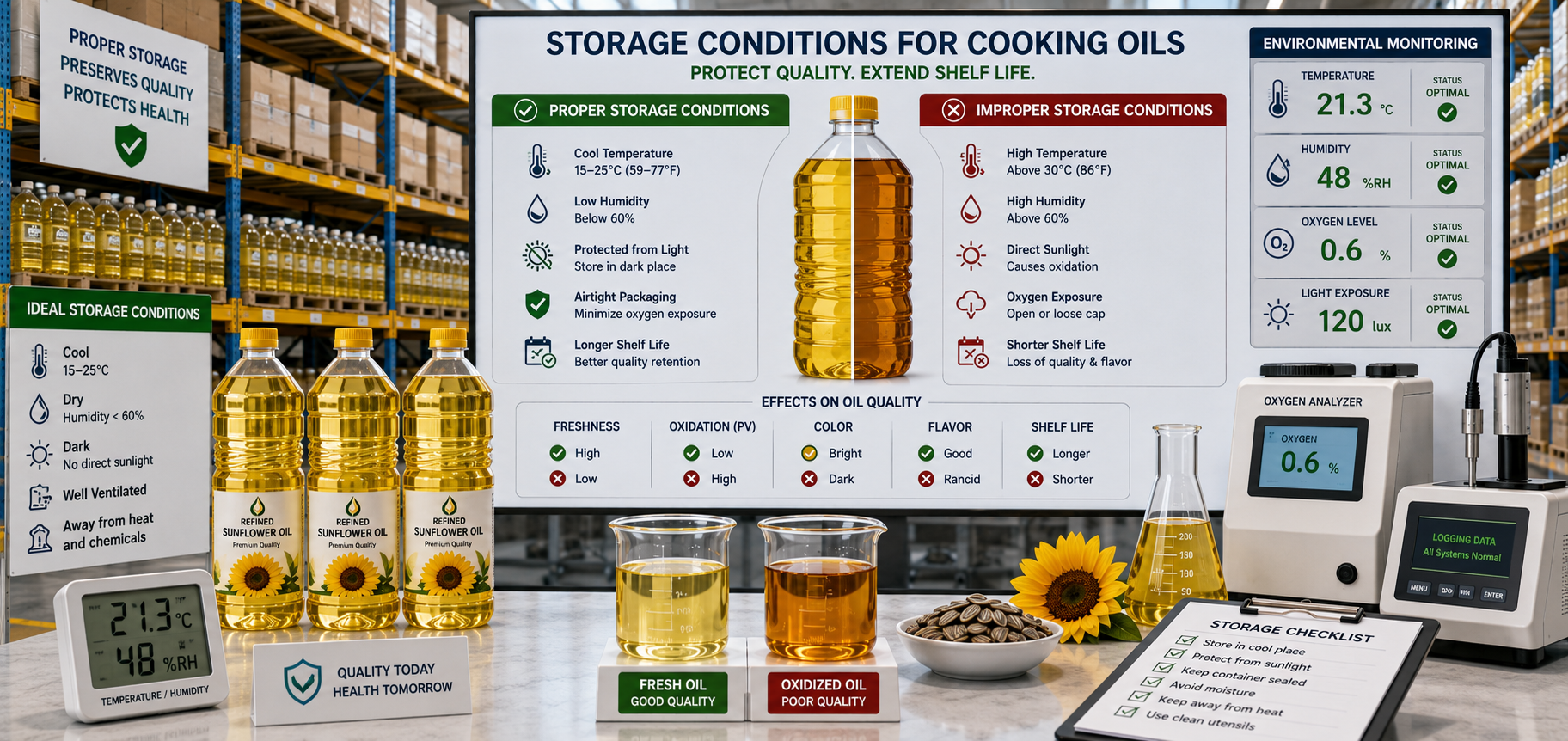
Proper vs. Improper Storage
| Proper Storage | Improper Storage |
|---|---|
| Cool temperature | High temperature |
| Dark environment | Direct sunlight |
| Airtight container | Open container |
| Stable conditions | Frequent temperature changes |
| Dry storage | Humid environment |
| Original packaging | Damaged or unsuitable container |
Best Storage Recommendations
For optimal quality:
- Store between 15–25°C whenever possible.
- Protect from direct sunlight.
- Keep containers tightly sealed.
- Store in a dry location.
- Use clean dispensing equipment.
- Follow the manufacturer’s storage instructions.
- Observe the “Best Before” date.
Frequently Asked Questions (FAQ)
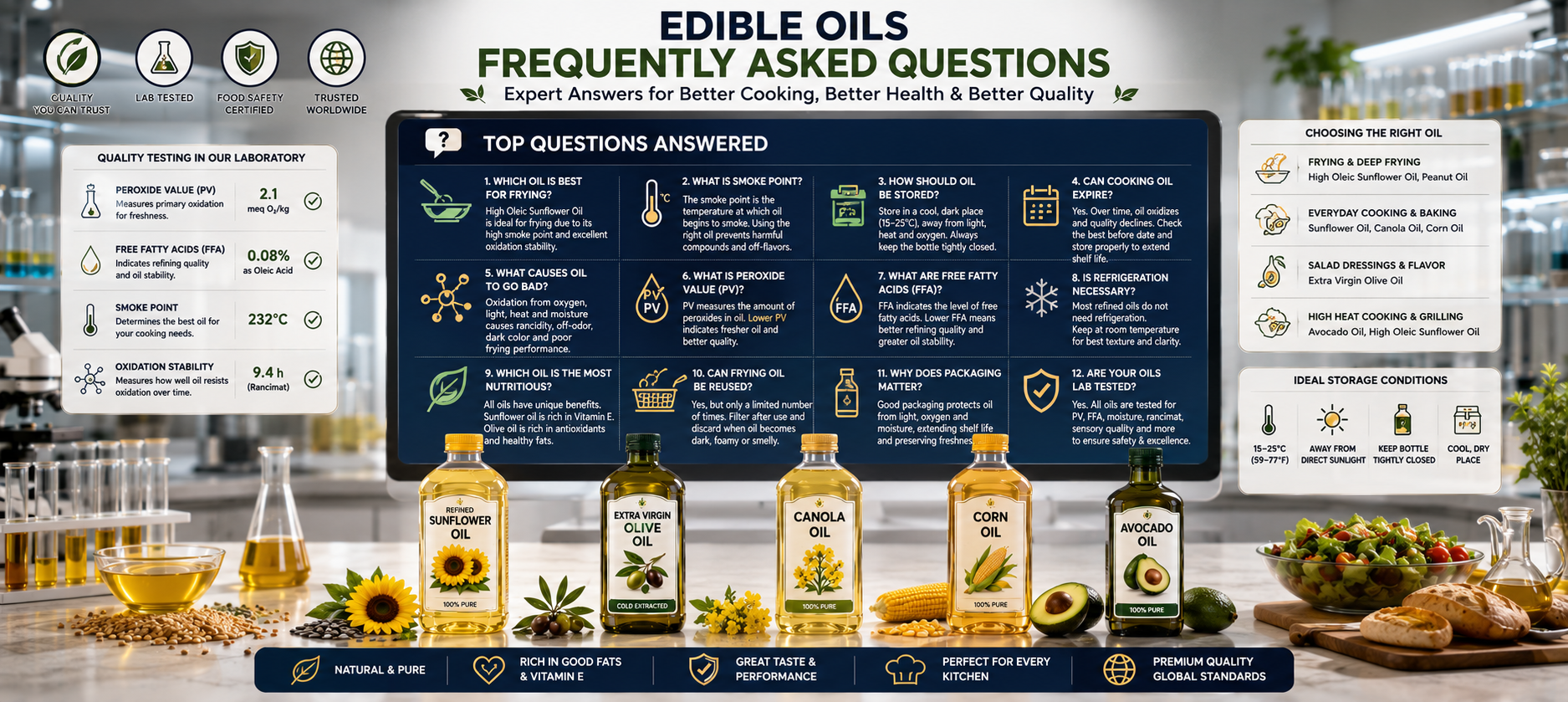
Should cooking oil be refrigerated?
Most refined vegetable oils do not require refrigeration. Cool room-temperature storage is generally sufficient unless otherwise recommended by the manufacturer.
Does sunlight damage edible oils?
Yes. Prolonged exposure to sunlight accelerates oxidation and reduces shelf life.
Can I transfer cooking oil to another bottle?
Only if the new container is clean, food-grade, airtight, and protects the oil from light.
Why should bottles remain tightly closed?
Closing the cap minimizes oxygen exposure, slowing oxidation and preserving freshness.
What is the best place to store cooking oil at home?
A cool, dry cupboard away from heat sources and direct sunlight is typically the best storage location.
Related Articles
- Shelf Life of Edible Oils
- Best Temperature for Oil Storage
- Peroxide Value Explained
- Oxidation Stability of Cooking Oils
- Signs That Oil Has Gone Bad
- How to Identify High-Quality Cooking Oil
Conclusion
Proper storage is essential for preserving the quality, freshness, and safety of edible oils. Factors such as temperature, light, oxygen, humidity, and packaging all influence how quickly an oil deteriorates over time. By following scientifically recommended storage practices, manufacturers, retailers, and consumers can maximize shelf life, maintain nutritional value, and ensure consistent cooking performance.
Call to Action
Choose premium edible oils packaged with advanced protective materials and produced under internationally recognized quality management systems. Proper storage, combined with professional manufacturing and rigorous quality control, ensures that every bottle delivers exceptional freshness, stability, and performance from production to the final meal.
Leave a Reply