



Types of Edible Oils: A Complete Guide
Edible oils are among the most essential ingredients in kitchens and food manufacturing worldwide. They influence the flavor, texture, nutritional value, and cooking performance of countless recipes, from home-cooked meals to industrial food production.
Today, consumers have access to a wide variety of cooking oils, each with its own unique composition, smoke point, flavor profile, and ideal culinary applications. Understanding these differences helps in selecting the most suitable oil for everyday cooking while supporting a balanced and varied diet.
This guide introduces the most common types of edible oils and explains their characteristics, benefits, and best uses.
What Are Edible Oils?
Edible oils are fats extracted from plants, seeds, fruits, or nuts that are processed for human consumption. Depending on the source and production method, they may be refined, cold-pressed, or virgin.
Their composition varies, but most edible oils contain a combination of:
- Saturated fatty acids
- Monounsaturated fatty acids
- Polyunsaturated fatty acids
- Naturally occurring antioxidants
- Fat-soluble vitamins
Each oil offers different functional properties, making it more suitable for certain cooking methods than others.
Why Are There So Many Different Cooking Oils?
Different plants produce oils with distinct nutritional profiles and physical characteristics. Factors such as climate, cultivation methods, refining processes, and intended culinary use all influence the final product.
Some oils are designed for high-temperature frying, while others are best enjoyed fresh in salads or dressings.
No single oil is perfect for every application, which is why many households and food manufacturers use multiple types of edible oils.
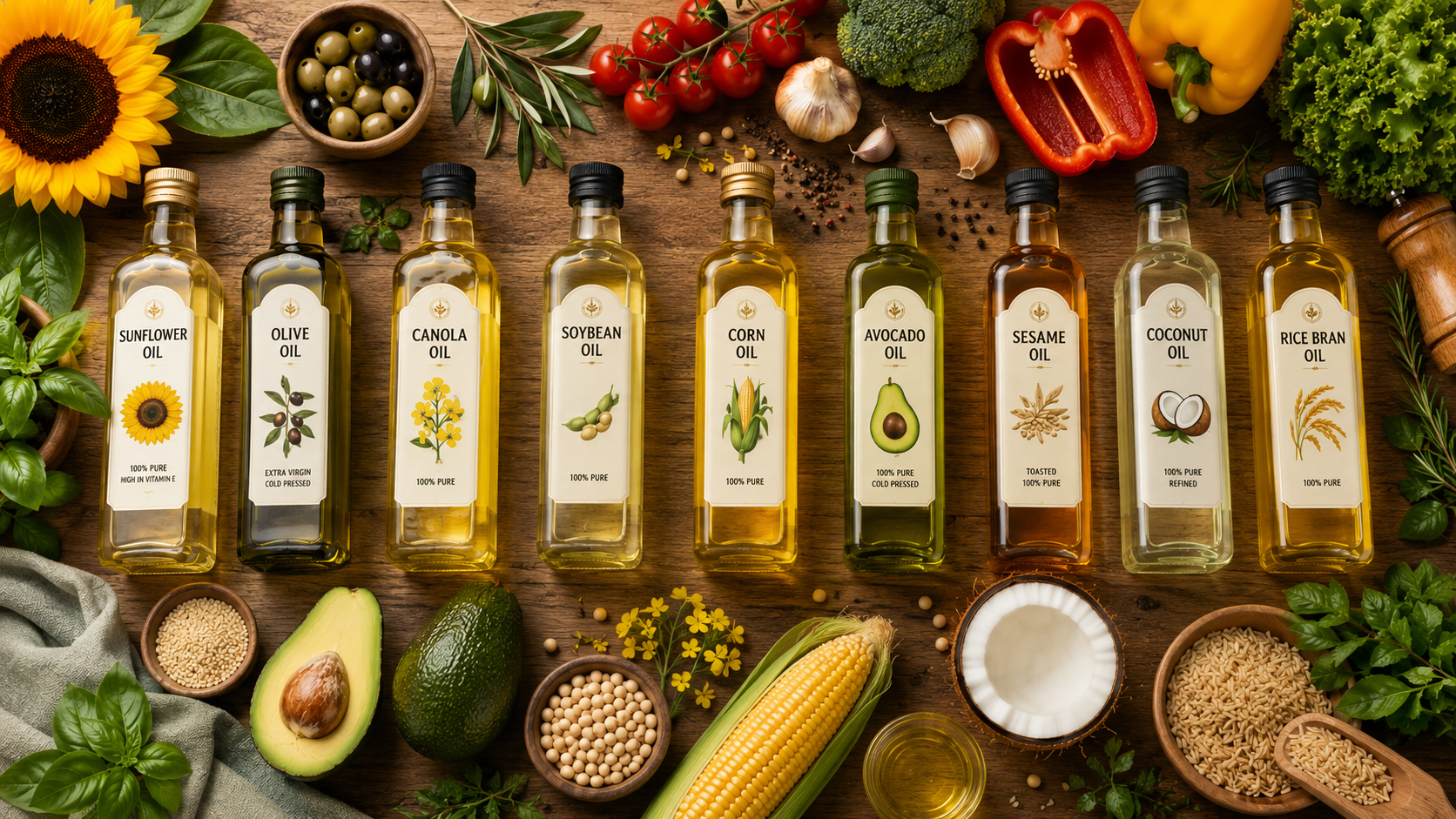
1. Sunflower Oil
Sunflower oil is one of the world’s most widely consumed cooking oils. Extracted from sunflower seeds, it is valued for its neutral taste, light color, and versatility.
Characteristics
- Mild flavor
- Light texture
- High smoke point (refined)
- Rich in vitamin E
- Available in different fatty acid profiles
Best Uses
- Frying
- Deep frying
- Baking
- Sautéing
- General cooking
2. Olive Oil
Produced from olives, olive oil is a cornerstone of Mediterranean cuisine.
It is available in several grades, including:
- Extra Virgin Olive Oil
- Virgin Olive Oil
- Refined Olive Oil
- Olive Pomace Oil
Best Uses
- Salad dressings
- Marinades
- Light sautéing
- Mediterranean recipes
Extra virgin olive oil is especially appreciated for its distinctive flavor and minimal processing.
3. Canola Oil
Canola oil is derived from specially developed rapeseed varieties.
Its neutral taste and balanced fatty acid composition make it popular in both household and commercial kitchens.
Best Uses
- Frying
- Baking
- Roasting
- Salad dressings
4. Soybean Oil
Soybean oil is among the largest-volume edible oils produced globally.
Its affordability and versatility have made it a staple ingredient in food manufacturing.
Common Applications
- Cooking
- Frying
- Margarine production
- Processed foods
- Sauces
5. Corn Oil
Extracted from corn germ, corn oil has a mild flavor and relatively high smoke point.
Best Uses
- Frying
- Stir-frying
- Baking
- Snack food production
6. Rice Bran Oil
Rice bran oil is extracted from the outer layer of rice grains.
It has become increasingly popular because of its clean taste and excellent cooking stability.
Advantages
- Neutral flavor
- High smoke point
- Suitable for deep frying
7. Avocado Oil
Avocado oil is pressed from avocado fruit rather than seeds.
It is recognized for its smooth texture and exceptionally high smoke point.
Best Uses
- Grilling
- High-temperature cooking
- Salads
- Gourmet recipes
8. Sesame Oil
Sesame oil has a distinctive nutty aroma that makes it popular in Asian cuisine.
Two common varieties are:
- Light sesame oil
- Toasted sesame oil
Best Uses
- Stir-fries
- Marinades
- Asian dishes
- Flavor enhancement
Because of its strong flavor, toasted sesame oil is often used in small quantities.
9. Coconut Oil
Coconut oil is extracted from the meat of mature coconuts.
It is solid at room temperature in cooler climates and has a characteristic coconut aroma, depending on the level of refinement.
Best Uses
- Baking
- Certain desserts
- Tropical recipes
- Specialty cooking
10. Peanut Oil
Peanut oil is widely used in commercial kitchens due to its relatively high smoke point.
Common Uses
- Deep frying
- Stir frying
- Asian cuisine
- Restaurant cooking
Refined vs Cold-Pressed Oils
Edible oils are also classified according to how they are produced.
Refined Oils
Refined oils undergo several purification steps to improve stability, consistency, and shelf life.
Advantages include:
- Neutral flavor
- High smoke point
- Longer shelf life
- Excellent for frying
Cold-Pressed Oils
Cold-pressed oils are mechanically extracted without high heat.
They typically retain more of their natural flavor and aroma.
Common examples include:
- Extra Virgin Olive Oil
- Cold-Pressed Sunflower Oil
- Cold-Pressed Sesame Oil
These oils are often preferred for salads, dressings, and low-temperature applications.
Smoke Point Comparison
| Oil | Approximate Smoke Point |
|---|---|
| Refined Sunflower Oil | 230°C |
| Refined Olive Oil | 240°C |
| Extra Virgin Olive Oil | 190°C |
| Canola Oil | 204°C |
| Soybean Oil | 230°C |
| Corn Oil | 230°C |
| Rice Bran Oil | 232°C |
| Avocado Oil | 270°C |
| Peanut Oil | 225°C |
| Butter | 175°C |
Choosing the Right Oil
When selecting a cooking oil, consider:
Cooking Method
Different techniques require different levels of heat stability.
Flavor
Neutral oils allow ingredients to stand out, while oils like olive or sesame add distinctive flavor.
Nutritional Profile
Different oils contain different proportions of saturated, monounsaturated, and polyunsaturated fats.
Intended Application
Some oils perform better in frying, while others are better suited for fresh consumption.
Comparison Table
| Oil | Flavor | Smoke Point | Best Uses |
|---|---|---|---|
| Sunflower Oil | Neutral | High | Frying, baking |
| Olive Oil | Fruity | Medium-High | Salads, sautéing |
| Canola Oil | Neutral | High | Everyday cooking |
| Soybean Oil | Mild | High | Commercial cooking |
| Corn Oil | Mild | High | Frying |
| Rice Bran Oil | Neutral | High | Deep frying |
| Avocado Oil | Mild | Very High | High-heat cooking |
| Sesame Oil | Nutty | Medium | Asian cuisine |
| Coconut Oil | Coconut | Medium | Baking |
| Peanut Oil | Mild | High | Deep frying |
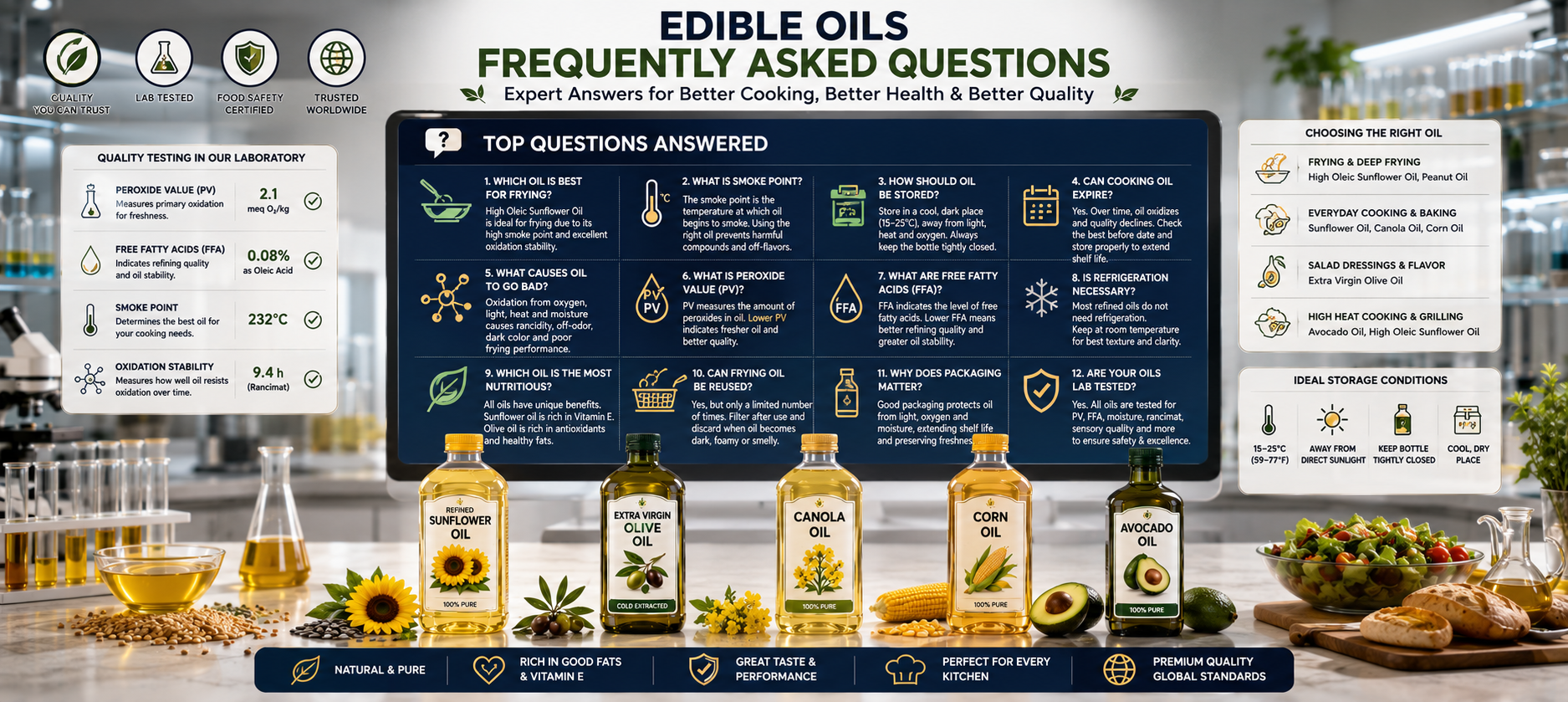
Frequently Asked Questions (FAQ)
Which edible oil is the most versatile?
Refined sunflower oil is widely regarded as one of the most versatile oils because of its neutral taste, high smoke point, and suitability for various cooking methods.
Can I use one oil for every type of cooking?
While some oils are versatile, using different oils for frying, baking, salads, and finishing dishes often delivers the best culinary results.
Which oil is best for deep frying?
Refined sunflower oil, rice bran oil, peanut oil, and avocado oil are commonly used because of their high smoke points and cooking stability.
Do all edible oils taste the same?
No. Oils such as sesame and extra virgin olive oil have distinctive flavors, while sunflower and canola oils are generally more neutral.
Why do professional kitchens use different oils?
Commercial kitchens select oils based on cooking temperature, flavor requirements, cost efficiency, product consistency, and the specific application.
Related Articles
- What Are Edible Oils?
- Vegetable Oils vs Animal Fats
- Refined Oil vs Cold-Pressed Oil
- Choosing the Right Cooking Oil
- Everything About Sunflower Oil
Conclusion
The world of edible oils is diverse, with each oil offering unique characteristics and culinary advantages. From the versatility of sunflower oil to the rich flavor of olive oil and the exceptional heat resistance of avocado oil, understanding these differences helps consumers and food professionals make informed choices.
Rather than relying on a single type of oil, using the right oil for the right purpose can improve cooking performance, enhance flavor, and support a balanced approach to nutrition.
Leave a Reply