



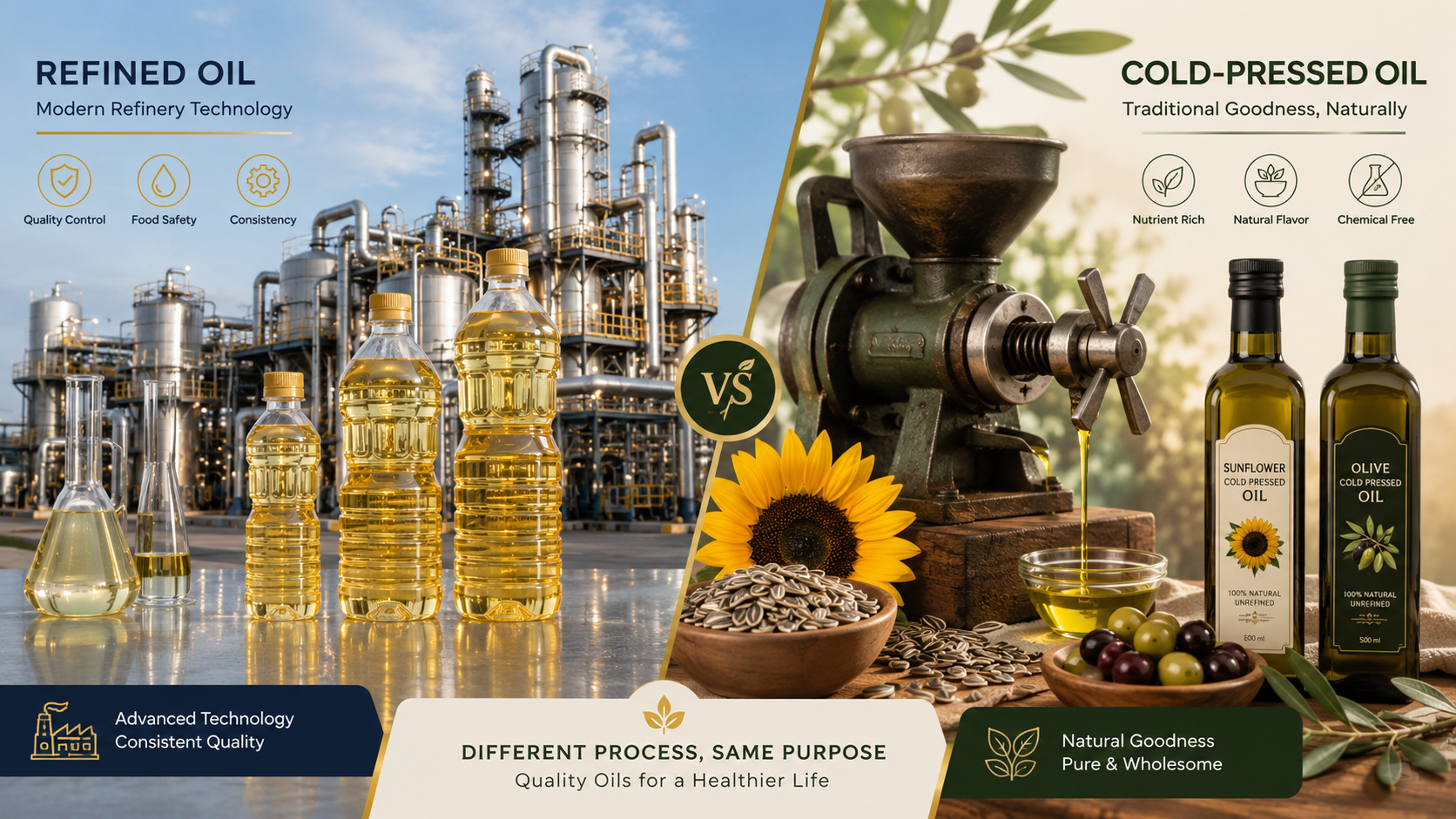
Choosing the right cooking oil involves more than selecting a particular plant source. One of the most important distinctions is how the oil is produced. Production methods influence an oil’s flavor, appearance, cooking performance, shelf life, and ideal applications.
The two most common production methods are refining and cold pressing. Both produce safe, edible oils, but each offers different advantages depending on how the oil will be used.
Understanding these differences helps consumers, chefs, food manufacturers, and distributors select the right product for their needs.
What Is Refined Oil?
Refined oil is produced through a series of purification processes designed to improve quality, stability, consistency, and shelf life.
After extraction, the crude oil naturally contains impurities such as waxes, pigments, phospholipids, moisture, and free fatty acids. Refining removes these components to create a cleaner, more stable product.
Typical refining steps include:
- Degumming
- Neutralization
- Bleaching
- Deodorization
- Filtration
The result is an oil with a light color, neutral taste, improved stability, and excellent performance in high-temperature cooking.
What Is Cold-Pressed Oil?
Cold-pressed oil is extracted mechanically without the use of high temperatures during pressing.
This gentle process preserves much of the oil’s natural aroma, color, and flavor.
Because it undergoes minimal processing, cold-pressed oil often reflects the characteristics of its original seed or fruit more strongly than refined oil.
Common cold-pressed oils include:
- Extra Virgin Olive Oil
- Cold-Pressed Sunflower Oil
- Sesame Oil
- Flaxseed Oil
- Walnut Oil
Production Process Comparison
Refined Oil Production
- Cleaning the raw material
- Oil extraction
- Degumming
- Neutralization
- Bleaching
- Deodorization
- Filtration
- Packaging
Cold-Pressed Oil Production
- Cleaning the raw material
- Mechanical pressing at controlled temperatures
- Filtration
- Packaging
The cold-press process is simpler and involves fewer processing steps.
Appearance
Refined Oils
- Clear
- Light in color
- Uniform appearance
- Highly consistent
Cold-Pressed Oils
- Richer natural color
- Slightly cloudy in some cases
- More distinctive appearance
- Natural variations may occur
Flavor and Aroma
One of the most noticeable differences is flavor.
Refined Oils
Refining removes many compounds responsible for strong aromas and flavors, resulting in:
- Neutral taste
- Mild aroma
- Greater versatility in cooking
Cold-Pressed Oils
Cold pressing preserves many naturally occurring aromatic compounds, giving these oils:
- Rich flavor
- Distinct aroma
- More pronounced character
This makes them particularly popular in gourmet cooking.
Nutritional Characteristics
Both refined and cold-pressed oils contain fats that provide energy and essential fatty acids. The refining process is designed primarily to improve stability and remove impurities, while cold pressing preserves more of the oil’s natural sensory characteristics.
Cold-pressed oils may retain higher levels of certain naturally occurring compounds such as plant pigments and antioxidants, depending on the oil type. Refined oils, on the other hand, offer greater consistency and are specifically optimized for cooking performance.
Regardless of processing method, the overall nutritional contribution depends on the type of oil, portion size, and the overall dietary pattern.
Smoke Point Comparison
One of the biggest practical differences is heat tolerance.
| Oil Type | Approximate Smoke Point |
|---|---|
| Refined Sunflower Oil | 230°C |
| Cold-Pressed Sunflower Oil | 160–180°C |
| Refined Olive Oil | 240°C |
| Extra Virgin Olive Oil | 190°C |
Higher smoke points generally make refined oils more suitable for frying and other high-temperature cooking methods.
Best Cooking Applications
Refined Oils
Ideal for:
- Deep frying
- Commercial kitchens
- High-temperature cooking
- Baking
- Food manufacturing
Cold-Pressed Oils
Best suited for:
- Salad dressings
- Dips
- Marinades
- Finishing dishes
- Low to medium heat cooking
Shelf Life
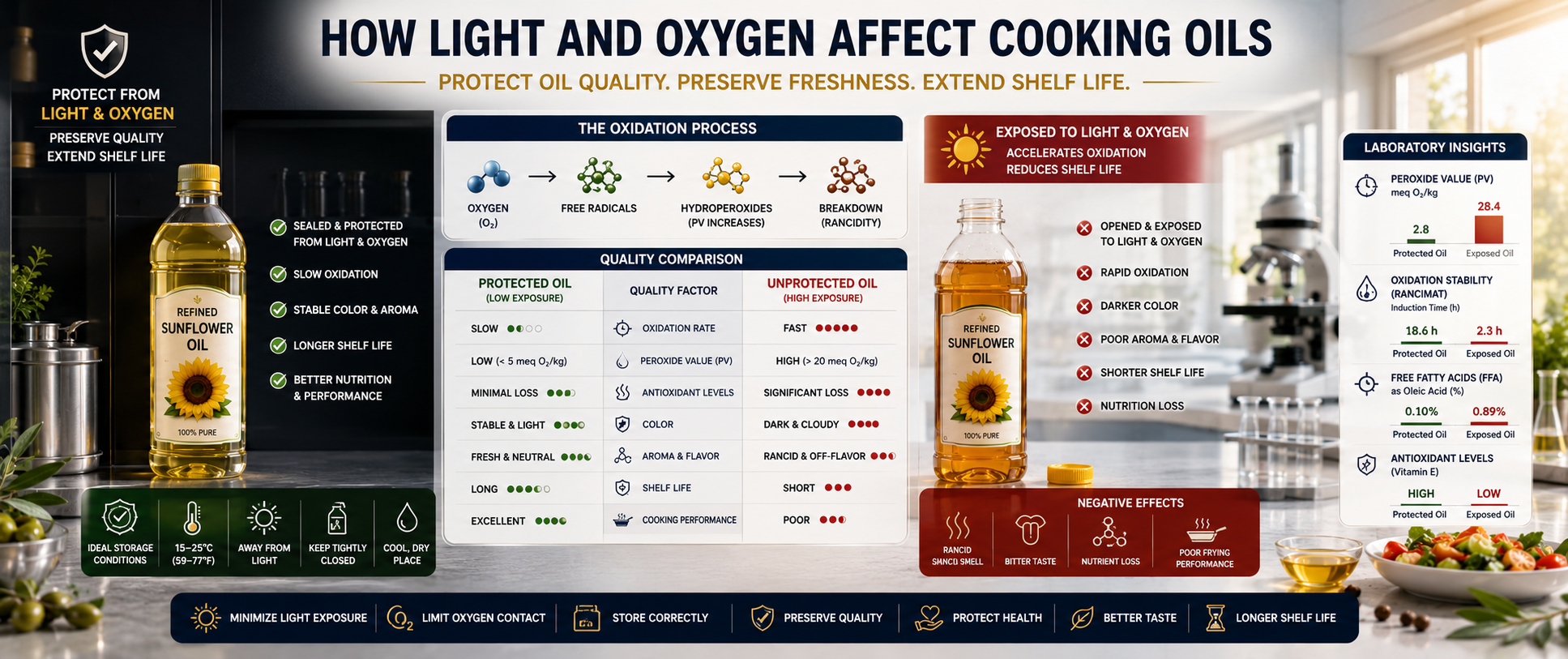
Refined oils generally have a longer shelf life because the refining process removes many compounds that can accelerate oxidation.
Cold-pressed oils, due to their minimal processing, often require:
- Cooler storage
- Protection from light
- Tightly sealed containers
- Earlier consumption after opening
Proper storage is important for both types to maintain quality.
Cost Comparison
Cold-pressed oils are often more expensive because:
- Production yields are lower.
- Mechanical extraction is less efficient than industrial refining.
- They are typically produced in smaller batches.
- They are marketed as premium products.
Refined oils are generally more cost-effective for everyday cooking and large-scale food production.
Environmental Considerations
Both production methods can be sustainable when supported by responsible agricultural practices and efficient manufacturing.
Cold pressing typically requires fewer processing steps, while modern refining technologies continue to improve energy efficiency and reduce waste in large-scale production.
The environmental impact depends more on farming practices, resource management, and supply chain efficiency than on the extraction method alone.
Common Misconceptions
Myth 1: Refined oil contains harmful chemicals.
Reality: Food-grade refining is a carefully controlled industrial process designed to improve purity, stability, and safety. Properly refined edible oils meet strict quality and food safety standards.
Myth 2: Cold-pressed oil is always healthier.
Reality: Cold-pressed oils retain more natural flavor and certain naturally occurring compounds, but this does not automatically make them the best choice for every cooking method. For high-temperature cooking, refined oils are often more appropriate.
Myth 3: Refined oil has no nutritional value.
Reality: Refined oils still provide energy and essential fatty acids. Refining changes some characteristics of the oil but does not eliminate its nutritional role.
Comparison Table
| Feature | Refined Oil | Cold-Pressed Oil |
|---|---|---|
| Processing | Multiple purification steps | Mechanical extraction only |
| Flavor | Neutral | Rich and natural |
| Aroma | Mild | Stronger |
| Color | Light | More natural |
| Smoke Point | Higher | Lower |
| Frying | Excellent | Limited |
| Salads | Good | Excellent |
| Shelf Life | Longer | Shorter |
| Cost | More economical | Usually premium |
How to Choose the Right Oil
Choose refined oil if you:
- Frequently fry foods
- Cook at high temperatures
- Need a neutral taste
- Want longer shelf life
- Purchase oil in bulk for commercial use
Choose cold-pressed oil if you:
- Prefer natural flavor
- Make salads and dressings
- Enjoy gourmet cooking
- Use oil without prolonged heating
- Appreciate minimally processed products
Many households benefit from keeping both types on hand—using refined oils for frying and cold-pressed oils for fresh or lightly cooked dishes.
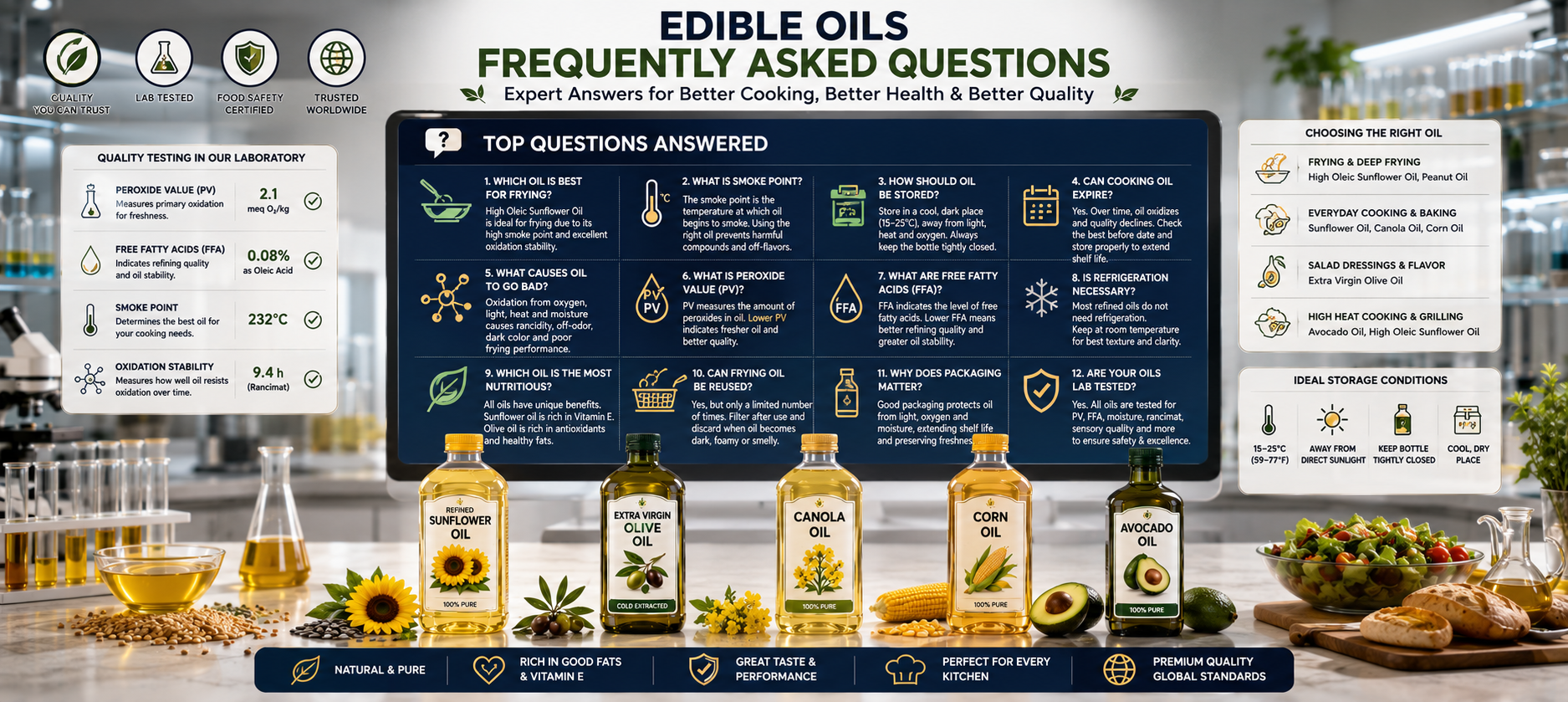
Frequently Asked Questions (FAQ)
Is refined oil safe?
Yes. Refined edible oils are produced under strict food safety standards and are widely used in households and the food industry.
Can I fry food with cold-pressed oil?
Some cold-pressed oils can tolerate moderate heat, but refined oils are generally better suited for deep frying and prolonged high-temperature cooking.
Does refining remove all nutrients?
No. Refining primarily removes impurities and improves stability. The nutritional profile still depends largely on the original oil source.
Why is cold-pressed oil more expensive?
It typically has lower production yields, involves less intensive processing, and is often positioned as a premium product.
Which oil should I use every day?
The best choice depends on your cooking style. Refined oils are ideal for everyday high-heat cooking, while cold-pressed oils are excellent for salads, dressings, and finishing dishes.
Related Articles
- What Are Edible Oils?
- Types of Edible Oils
- Saturated vs Unsaturated Fats
- How Cooking Oils Are Produced
- Choosing the Right Cooking Oil
Conclusion
Refined and cold-pressed oils each have distinct strengths. Refined oils offer excellent stability, consistency, and performance for high-temperature cooking, making them the preferred choice for everyday kitchens and food manufacturers. Cold-pressed oils preserve more of the natural flavor and aroma of their source ingredients, making them ideal for fresh preparations and gourmet applications.
Rather than choosing one over the other, understanding their characteristics allows consumers to select the most suitable oil for each culinary purpose.
Leave a Reply