



Dietary fats are essential nutrients that play a fundamental role in human health. They provide energy, help the body absorb fat-soluble vitamins, contribute to hormone production, and support the structure of every cell in the body.
However, not all fats are the same. The two primary categories found in foods are saturated fats and unsaturated fats. Understanding the differences between them can help consumers make informed dietary choices without relying on common myths or oversimplified advice.
This article explains what these fats are, where they come from, and how they fit into a balanced diet.
What Are Dietary Fats?
Fats are one of the three main macronutrients, alongside carbohydrates and proteins.
Each gram of fat provides approximately 9 calories, making fat the body’s most energy-dense nutrient.
Dietary fats contribute to:
- Energy production
- Cell membrane structure
- Hormone synthesis
- Brain and nervous system function
- Absorption of vitamins A, D, E, and K
- Protection of internal organs
- Thermal insulation
Rather than eliminating fat, the goal is to choose appropriate types and consume them in balanced amounts.
What Are Saturated Fats?
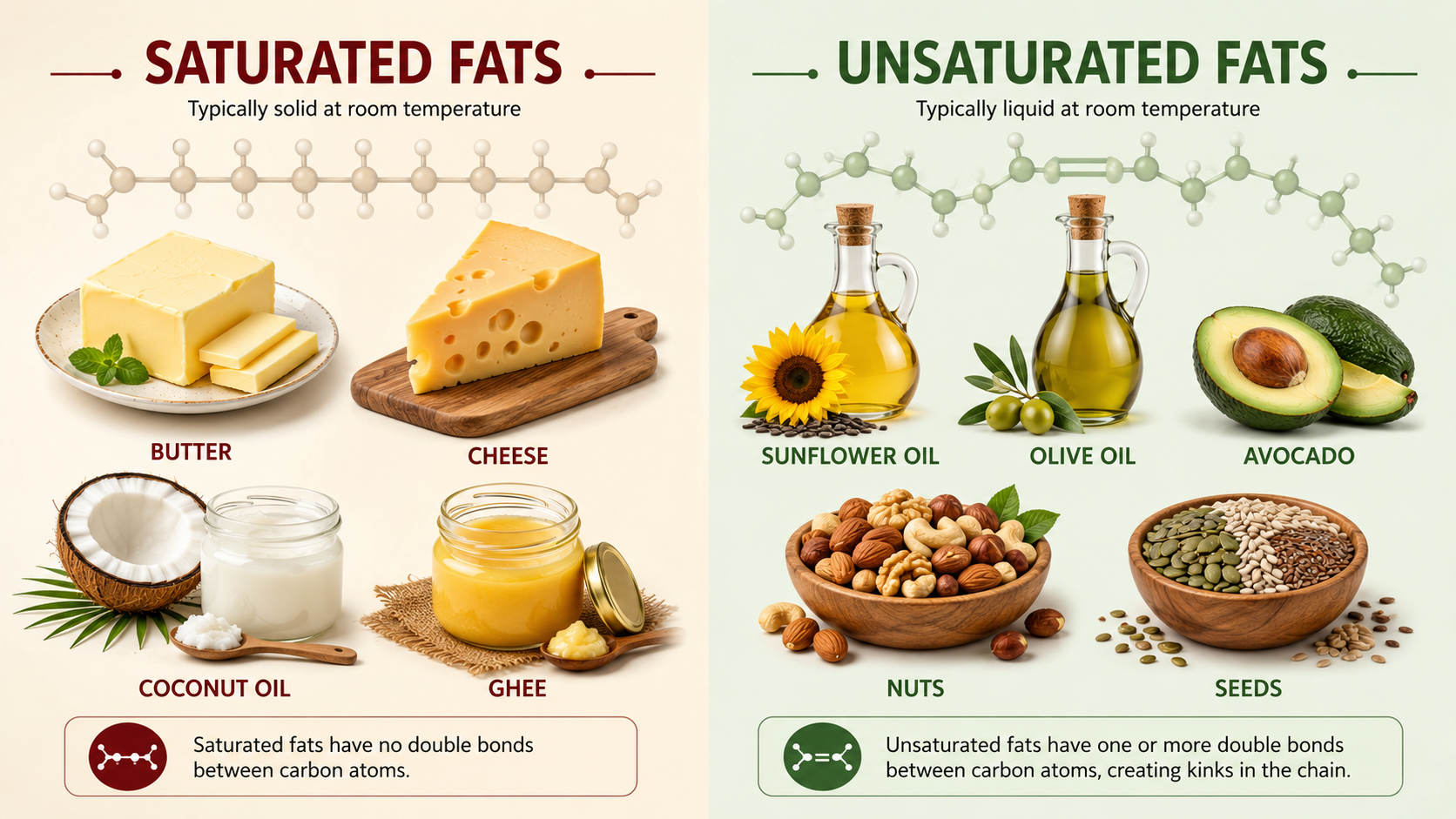
Saturated fats are fatty acids whose carbon atoms are fully bonded with hydrogen atoms. This structure makes them more stable and generally solid at room temperature.
Common Sources
Animal-based foods:
- Butter
- Cheese
- Whole milk
- Cream
- Beef fat (tallow)
- Lamb fat
- Lard
Plant-based sources:
- Coconut oil
- Palm oil
- Cocoa butter
Not all saturated fats come from animal products.
What Are Unsaturated Fats?
Unsaturated fats contain one or more double bonds within their molecular structure.
These fats are usually liquid at room temperature and are widely found in vegetable oils, nuts, seeds, and certain fruits.
Unsaturated fats are divided into two main groups:
- Monounsaturated fats (MUFAs)
- Polyunsaturated fats (PUFAs)
Monounsaturated Fats (MUFAs)
Monounsaturated fats contain one double bond.
Common sources include:
- Olive oil
- Avocado
- Canola oil
- High Oleic Sunflower Oil
- Almonds
- Hazelnuts
- Peanuts
These fats are valued for their versatility and are commonly used in everyday cooking.
Polyunsaturated Fats (PUFAs)
Polyunsaturated fats contain two or more double bonds.
Examples include:
- Sunflower oil
- Soybean oil
- Corn oil
- Flaxseed oil
- Walnuts
- Chia seeds
This group includes essential fatty acids such as Omega-3 and Omega-6, which the body cannot produce on its own and must obtain through the diet.
Physical Differences
| Property | Saturated Fat | Unsaturated Fat |
|---|---|---|
| Molecular Structure | No double bonds | One or more double bonds |
| Room Temperature | Usually solid | Usually liquid |
| Common Sources | Butter, ghee, coconut oil | Vegetable oils, nuts, seeds |
| Stability | Higher | Lower (varies by type) |
Nutritional Roles
Both saturated and unsaturated fats contribute to:
- Providing energy
- Supporting cell function
- Assisting vitamin absorption
- Maintaining overall health
The key difference lies not in whether fats are “good” or “bad,” but in the balance and overall dietary pattern.
Health Considerations
Many international nutrition organizations recommend that most dietary fat intake come from unsaturated fats, while limiting excessive consumption of saturated fats as part of a balanced eating pattern.
Current research emphasizes that overall diet quality is more important than focusing on a single nutrient. Foods should be evaluated within the context of the entire diet rather than being judged solely by their fat content.
Which Oils Contain More Unsaturated Fat?
Several commonly used edible oils are naturally rich in unsaturated fats.
| Oil | Predominant Fat Type |
|---|---|
| Sunflower Oil | Polyunsaturated |
| Olive Oil | Monounsaturated |
| Canola Oil | Monounsaturated |
| Avocado Oil | Monounsaturated |
| Soybean Oil | Polyunsaturated |
| Corn Oil | Polyunsaturated |
Which Foods Contain More Saturated Fat?
Foods typically higher in saturated fat include:
- Butter
- Ghee
- Cheese
- Cream
- Fatty cuts of meat
- Coconut oil
- Palm oil
These foods can be enjoyed in moderation within a varied and balanced diet.
Smoke Point and Cooking Performance
Fat composition influences cooking performance.
Oils Rich in Unsaturated Fats
Many refined vegetable oils have high smoke points, making them suitable for:
- Frying
- Sautéing
- Baking
- Roasting
Examples include refined sunflower oil and refined canola oil.
Saturated Fats
Some saturated fats, such as ghee, are also highly heat-stable and widely used in traditional cuisines.
The choice of cooking fat should consider both heat stability and the intended culinary application.
Common Misconceptions
Myth 1: All saturated fats are harmful.
Reality: Saturated fats are naturally present in many foods. Current dietary guidance focuses on moderation and replacing excessive saturated fat with unsaturated fats where appropriate, rather than complete elimination.
Myth 2: All unsaturated fats are automatically healthy.
Reality: Unsaturated fats can contribute to a balanced diet, but portion size, overall dietary quality, and food preparation methods remain important.
Myth 3: Fat-free diets are healthier.
Reality: Fat is an essential nutrient. Extremely low-fat diets may reduce the intake of important nutrients and fat-soluble vitamins.
Practical Tips for Everyday Cooking
Consider these general recommendations:
- Use refined vegetable oils for high-temperature cooking.
- Choose extra virgin olive oil or cold-pressed oils for salads and dressings.
- Include a variety of fat sources rather than relying on only one type.
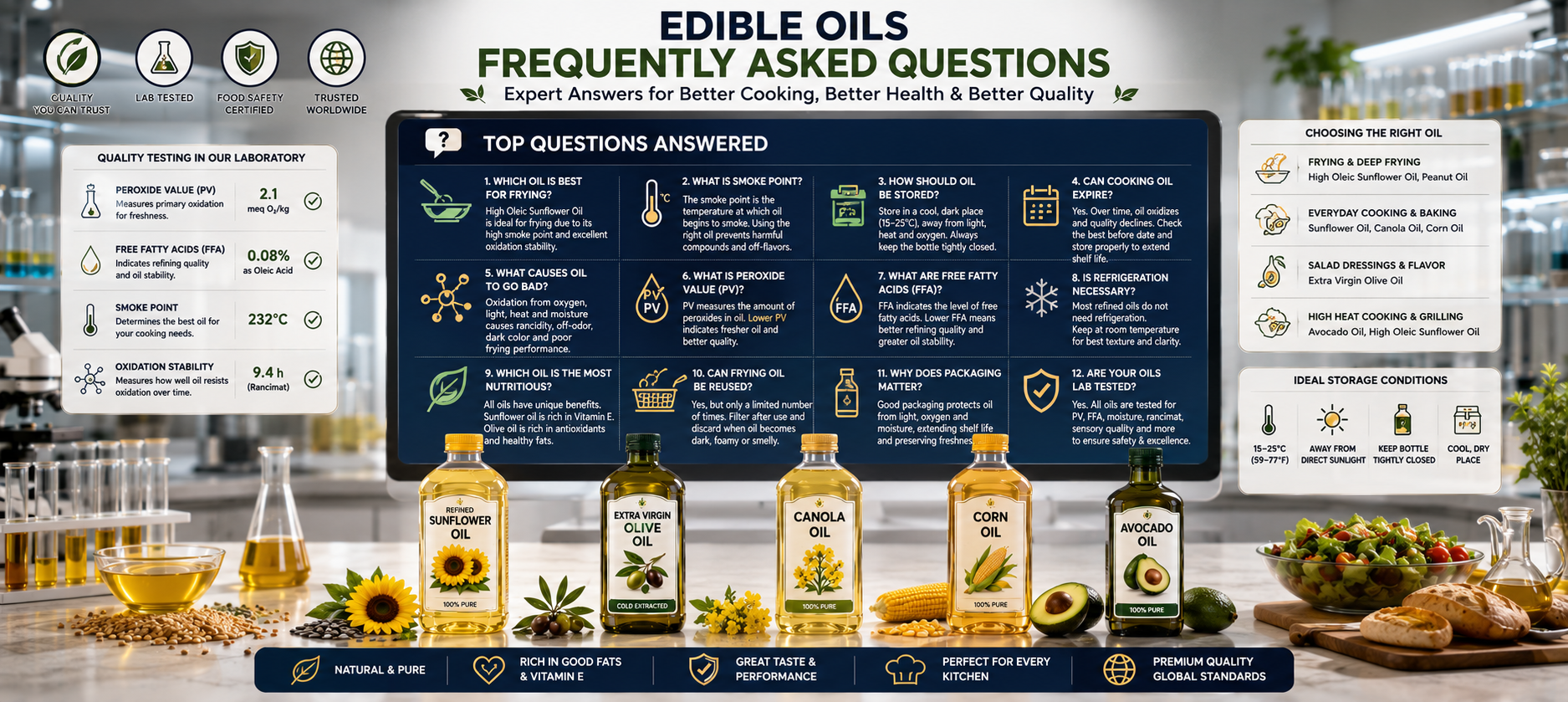
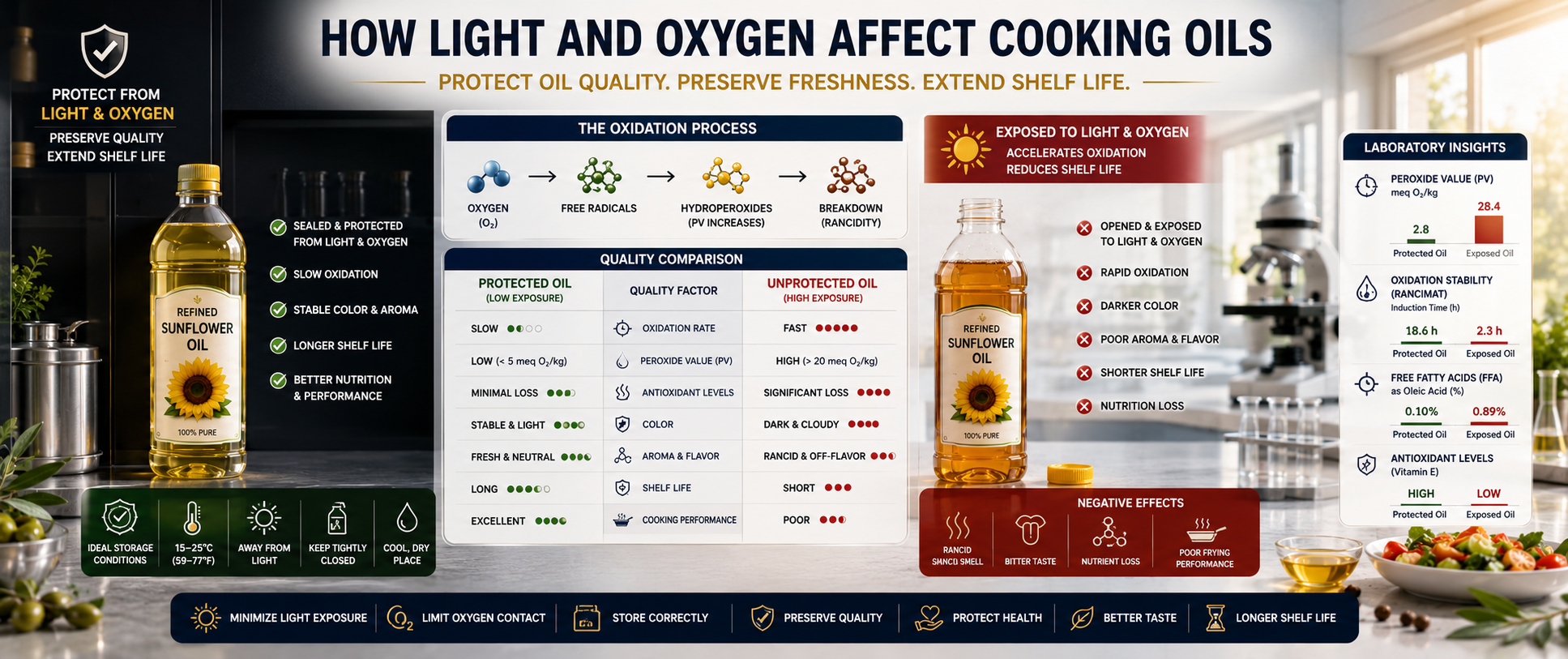
- Store oils properly to maintain freshness.
- Pay attention to overall dietary balance instead of individual ingredients.
Comparison Table
| Feature | Saturated Fats | Unsaturated Fats |
|---|---|---|
| Structure | No double bonds | One or more double bonds |
| Room Temperature | Usually solid | Usually liquid |
| Common Sources | Butter, ghee, coconut oil | Vegetable oils, nuts, seeds |
| Includes Essential Fatty Acids | No | Yes (Omega-3 & Omega-6) |
| Typical Cooking Uses | Baking, roasting | Frying, salads, everyday cooking |
Frequently Asked Questions (FAQ)
Are saturated fats bad for health?
Saturated fats can be part of a balanced diet. Most dietary guidelines recommend consuming them in moderation while emphasizing a greater proportion of unsaturated fats.
What is the healthiest type of fat?
There is no single healthiest fat. A balanced diet typically includes a variety of fat sources, with an emphasis on unsaturated fats from foods such as vegetable oils, nuts, seeds, and fish.
Does sunflower oil contain saturated fat?
Yes. Like all edible oils, sunflower oil contains a mixture of different fatty acids, but the majority consists of unsaturated fats.
Why are unsaturated fats liquid?
Their molecular structure contains double bonds that prevent the molecules from packing tightly together, making them liquid at room temperature.
Should I avoid all saturated fat?
Most nutrition experts recommend moderation rather than complete avoidance. Dietary choices should be based on overall eating patterns rather than individual nutrients.
Related Articles
- What Are Edible Oils?
- Vegetable Oils vs Animal Fats
- Types of Edible Oils
- Refined Oil vs Cold-Pressed Oil
- Choosing the Right Cooking Oil
Conclusion
Saturated and unsaturated fats both play important roles in nutrition. The key is understanding their differences and incorporating them thoughtfully into a balanced diet. Unsaturated fats, found in many vegetable oils such as sunflower and olive oil, are commonly recommended as the primary source of dietary fat, while saturated fats can also be included in moderation.
By choosing high-quality oils, using appropriate cooking methods, and maintaining overall dietary balance, consumers can make informed decisions that support both culinary enjoyment and nutritional well-being.
Leave a Reply