



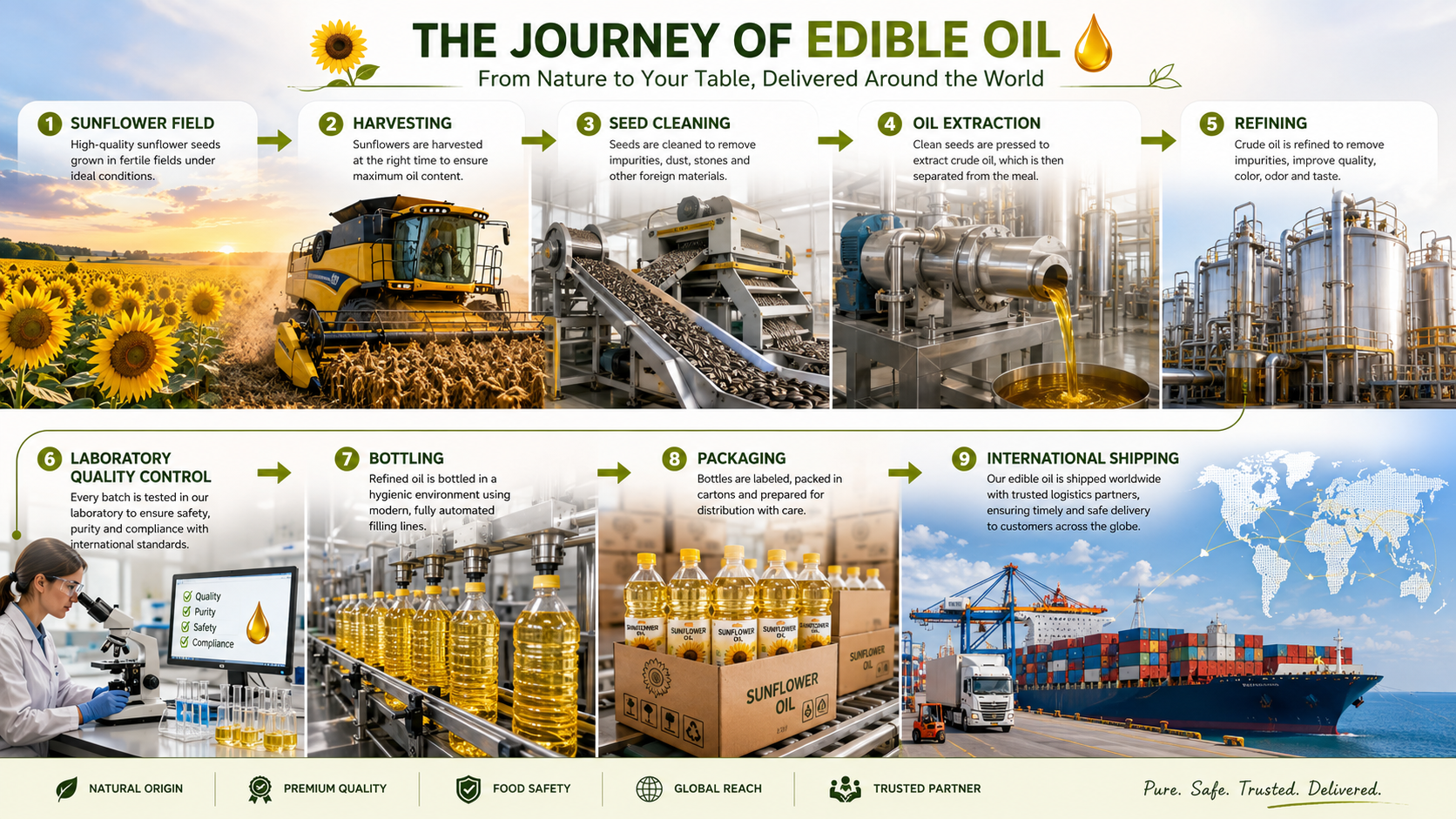
Cooking oils are among the most widely consumed food products in the world. Every bottle of edible oil represents a carefully managed production process that begins long before it reaches supermarket shelves.
From selecting high-quality oilseeds to refining, laboratory testing, packaging, and global distribution, modern edible oil production combines advanced technology with rigorous quality control to ensure food safety, consistency, and performance.
Understanding how cooking oils are produced helps consumers appreciate the science and precision behind one of the world’s most essential food ingredients.
Step 1: Selecting the Raw Materials
Every high-quality edible oil starts with premium agricultural raw materials.
Depending on the type of oil, the source may include:
- Sunflower seeds
- Soybeans
- Rapeseed (Canola)
- Corn germ
- Olives
- Rice bran
- Peanuts
- Sesame seeds
- Coconut
The quality of these raw materials directly affects the flavor, stability, nutritional characteristics, and shelf life of the final product.
Manufacturers carefully inspect incoming crops for:
- Moisture content
- Foreign materials
- Damaged seeds
- Mold contamination
- Purity
- Storage condition
Only raw materials meeting strict quality specifications proceed to production.
Step 2: Cleaning the Seeds
Before oil extraction begins, the seeds must be thoroughly cleaned.
Modern cleaning systems remove:
- Dust
- Stones
- Sand
- Plant residues
- Metal particles
- Broken seeds
This step protects processing equipment while ensuring food safety and product quality.
Step 3: Conditioning and Preparation
Depending on the seed type, additional preparation may include:
- Drying
- Dehulling
- Crushing
- Flaking
- Heating under controlled conditions
These processes improve oil recovery and production efficiency while preserving product quality.
Step 4: Oil Extraction
There are two primary methods of extracting edible oil.
Mechanical Pressing
Mechanical presses apply high pressure to release oil from seeds.
Advantages include:
- Minimal processing
- Natural flavor retention
- Suitable for premium oils
- Commonly used for cold-pressed products
Examples include:
- Extra Virgin Olive Oil
- Cold-Pressed Sunflower Oil
- Sesame Oil
Solvent Extraction
Large-scale industrial production often uses food-grade solvents to maximize oil recovery from oilseeds.
After extraction, the solvent is completely removed through controlled industrial processes, leaving purified crude oil for refining.
Advantages include:
- High extraction efficiency
- Maximum oil yield
- Cost-effective production
- Suitable for large-scale manufacturing
Step 5: Crude Oil Storage
Freshly extracted oil is known as crude oil.
At this stage it still contains naturally occurring substances such as:
- Phospholipids
- Waxes
- Pigments
- Moisture
- Free fatty acids
- Natural odors
Crude oil is temporarily stored in stainless steel tanks before refining.
Step 6: Oil Refining
Refining transforms crude oil into a stable, high-quality cooking oil suitable for consumers and food manufacturers.
The refining process typically includes several carefully controlled stages.
Degumming
Removes phospholipids and gums that may reduce stability.
Benefits:
- Improved clarity
- Better filtration
- Increased shelf life
Neutralization
Removes excess free fatty acids.
Benefits:
- Improved flavor
- Reduced acidity
- Better storage stability
Bleaching
Natural clay materials remove pigments and trace impurities.
Benefits:
- Lighter color
- Cleaner appearance
- Improved quality
Deodorization
Steam distillation under vacuum removes unwanted odors and volatile compounds.
Benefits:
- Neutral aroma
- Consistent flavor
- Improved consumer acceptance
Winterization (When Required)
Certain oils undergo winterization to remove waxes that could become cloudy under refrigeration.
This process improves clarity, especially for bottled oils sold in cooler climates.
Step 7: Quality Control
Quality assurance is one of the most important stages of edible oil production.
Every production batch undergoes laboratory testing before packaging.
Typical analyses include:
- Moisture content
- Free Fatty Acid (FFA)
- Peroxide Value (PV)
- Color
- Odor
- Clarity
- Density
- Viscosity
- Fatty acid composition
- Oxidative stability
Only products meeting quality standards proceed to bottling.
Step 8: Packaging
Modern edible oils are packaged using automated filling systems.
Common packaging options include:
Retail Packaging
- 500 ml
- 1 L
- 2 L
- 3 L
- 5 L PET bottles
Food Service
- 10 L
- 18 L
- 20 L containers
Industrial Packaging
- Steel drums
- IBC tanks
- Flexitanks
- Bulk tankers
Packaging materials are selected to preserve freshness and protect the oil from contamination.
Step 9: Labeling
Product labels typically include:
- Product name
- Ingredients
- Net volume
- Nutritional information
- Production date
- Best-before date
- Batch number
- Storage instructions
- Country of origin
- Certifications
Accurate labeling supports traceability and regulatory compliance.
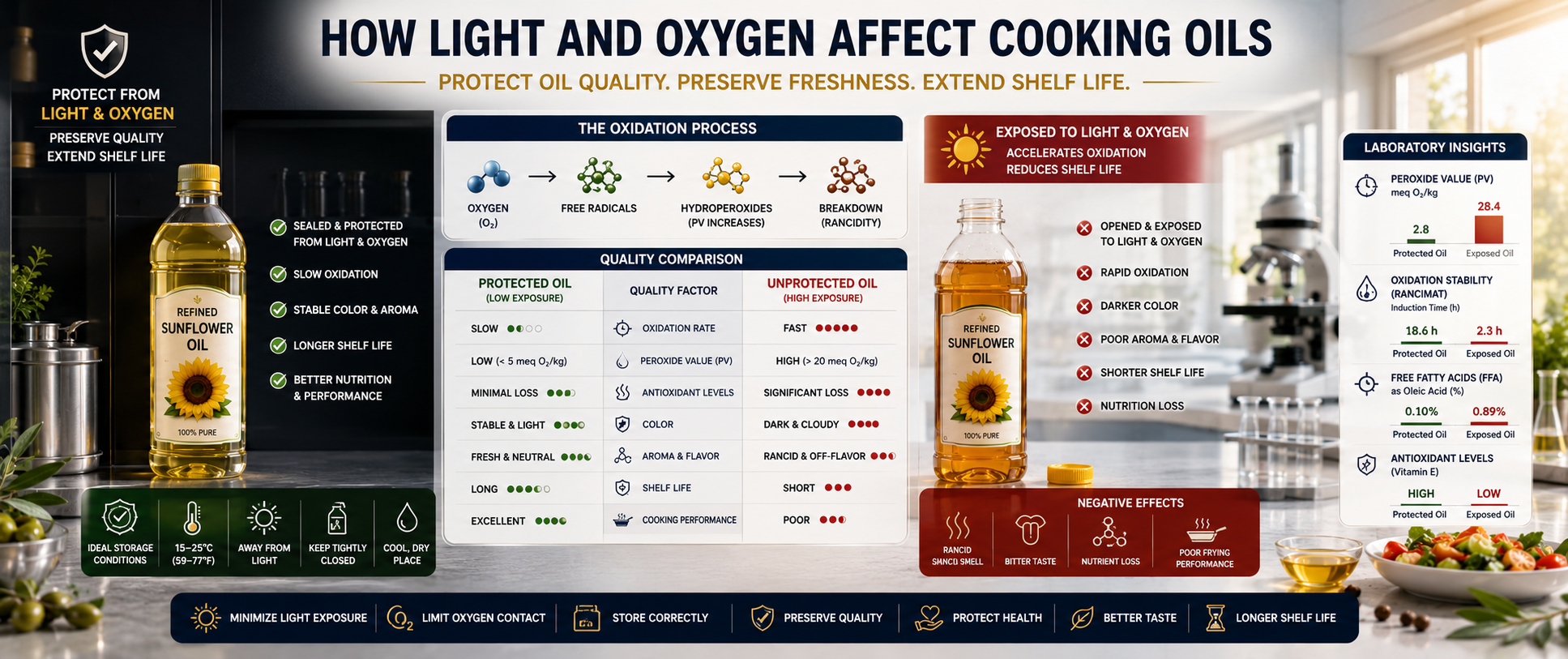
Step 10: Storage
Finished products are stored in controlled warehouse conditions.
Recommended conditions include:
- Cool temperatures
- Low humidity
- Limited light exposure
- Clean storage environment
Proper storage helps preserve freshness throughout the product’s shelf life.
Step 11: Distribution
Edible oils are distributed through international supply chains.
Products may be shipped via:
- Containers
- Pallets
- Flexitanks
- Bulk tankers
Export shipments often include documentation such as:
- Commercial Invoice
- Packing List
- Certificate of Origin
- Health Certificate
- Bill of Lading
- Certificate of Analysis (when required)
International Food Safety Standards
Leading edible oil manufacturers operate under internationally recognized quality systems.
Common certifications include:
- ISO 22000
- FSSC 22000
- HACCP
- GMP
- Halal Certification
- Kosher Certification (where applicable)
These standards support food safety, traceability, and consistent manufacturing practices.
Sustainability in Oil Production
Modern manufacturers increasingly invest in sustainable practices such as:
- Energy-efficient production
- Water conservation
- Waste reduction
- Responsible sourcing
- Recycling packaging materials
- Sustainable agriculture initiatives
These efforts contribute to long-term environmental and economic sustainability.
Production Flow Overview
Harvesting
      ↓
Cleaning
      ↓
Preparation
      ↓
Oil Extraction
      ↓
Crude Oil Storage
      ↓
Refining
      ↓
Laboratory Testing
      ↓
Packaging
      ↓
Storage
      ↓
Export & Distribution
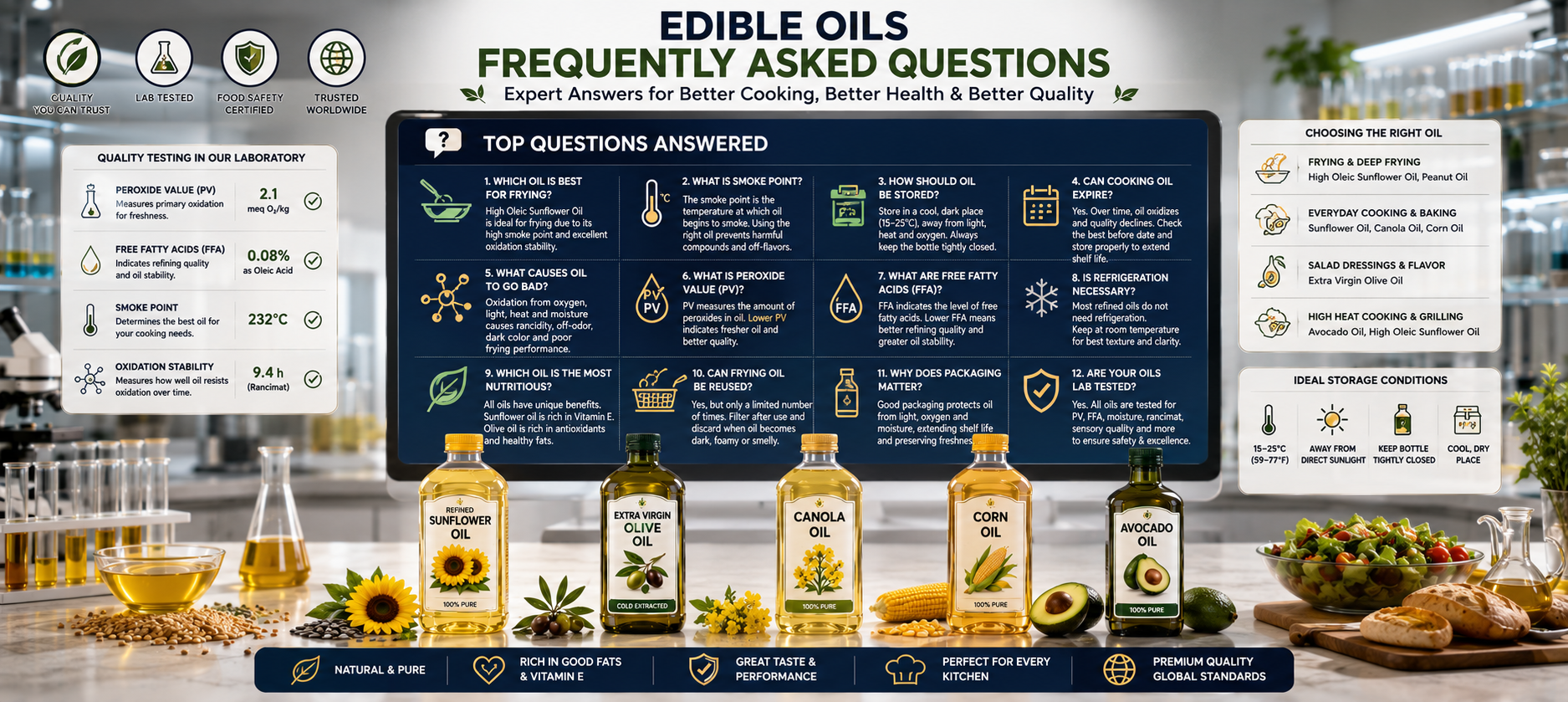
Frequently Asked Questions (FAQ)
Are all cooking oils refined?
No. Some oils, such as extra virgin olive oil and certain cold-pressed oils, undergo minimal processing, while many commercially available vegetable oils are refined.
Why is refining important?
Refining improves stability, removes impurities, enhances clarity, and extends shelf life while ensuring consistent quality.
Is refined oil safe?
Yes. Food-grade refining follows strict international standards to produce safe, high-quality edible oils suitable for human consumption.
How is oil quality tested?
Manufacturers conduct laboratory analyses on factors such as acidity, peroxide value, moisture, color, fatty acid composition, and oxidative stability before releasing products.
Why do some oils cost more?
Factors such as raw material quality, extraction method, production scale, certifications, and packaging all influence the final price.
Related Articles
- What Are Edible Oils?
- Types of Edible Oils
- Refined Oil vs Cold-Pressed Oil
- How to Identify High-Quality Cooking Oil
- Everything About Sunflower Oil
Conclusion
The journey of cooking oil from seed to bottle is a sophisticated process involving advanced engineering, rigorous quality control, and internationally recognized food safety standards. Every stage—from raw material selection and extraction to refining, laboratory testing, and packaging—plays a vital role in ensuring that consumers receive a safe, reliable, and high-quality product.
As global demand for premium edible oils continues to grow, manufacturers that prioritize quality, traceability, sustainability, and innovation will remain at the forefront of the industry.
Leave a Reply