



Smoke Point of Sunflower Oil: Why It Matters for Safe Cooking
Whether you’re frying crispy potatoes, sautéing vegetables, or preparing a gourmet meal, the cooking oil you choose plays a major role in the final result. One of the most important—but often overlooked—properties of any cooking oil is its smoke point.
Sunflower oil is widely recognized for its relatively high smoke point, making it one of the most versatile oils for both home kitchens and commercial food production. Understanding how smoke point works can help you cook more safely, preserve nutritional quality, and extend the life of your cooking oil.
In this guide, we’ll explain what the smoke point is, how it affects cooking performance, and why refined sunflower oil is considered an excellent option for high-temperature cooking.
What Is the Smoke Point?
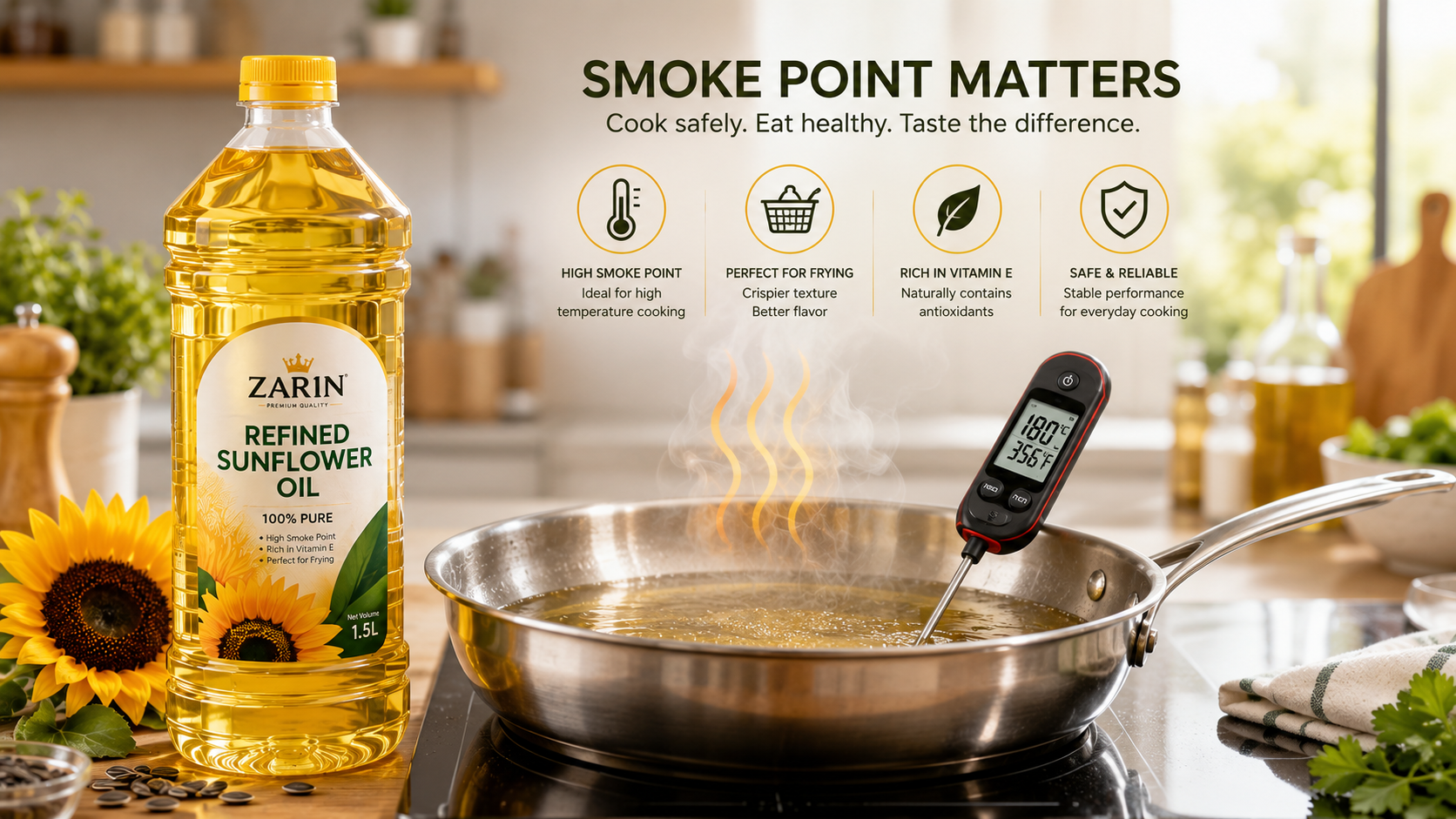
The smoke point is the temperature at which an oil begins to produce continuous visible smoke.
As oil reaches this temperature:
- The oil starts to break down.
- Natural antioxidants begin to degrade.
- Flavor changes become noticeable.
- Nutritional quality decreases.
- Oxidation accelerates.
- Unpleasant odors may develop.
While occasional light smoke is not always harmful, consistently heating oil beyond its smoke point significantly reduces its quality and cooking performance.
Why Does Smoke Point Matter?
Selecting an oil with an appropriate smoke point is essential because it directly affects:
Food Quality
Oil that remains stable during cooking produces:
- Better texture
- Even browning
- Crispier fried foods
- More natural flavor
Oil Stability
Stable oils resist:
- Oxidation
- Polymerization
- Thermal degradation
This results in longer usable frying life.
Kitchen Safety
Oil heated beyond its smoke point produces excessive smoke, making cooking less comfortable and increasing the risk of overheating.
Cost Efficiency
Commercial kitchens benefit from oils that maintain quality over longer frying cycles, reducing waste and replacement frequency.
Smoke Point of Different Types of Sunflower Oil
Not all sunflower oils have the same thermal performance.
| Type of Sunflower Oil | Approximate Smoke Point |
|---|---|
| Cold-Pressed Sunflower Oil | 107–160°C (225–320°F) |
| Refined Sunflower Oil | 225–232°C (437–450°F) |
| High Oleic Sunflower Oil | 230–245°C (446–473°F) |
The refining process removes impurities that would otherwise burn at lower temperatures, resulting in a significantly higher smoke point.
Why Refining Increases Smoke Point
Crude vegetable oils naturally contain:
- Waxes
- Free fatty acids
- Pigments
- Phospholipids
- Moisture
- Trace minerals
These compounds begin degrading before the oil itself.
During refining, these impurities are removed through carefully controlled processing, producing an oil that is:
- Clear
- Stable
- Neutral in flavor
- Better suited for high-temperature cooking
High Oleic Sunflower Oil Performs Even Better
High oleic sunflower oil contains a much higher percentage of oleic acid, a monounsaturated fatty acid known for excellent heat stability.
Compared with conventional sunflower oil, it offers:
- Higher smoke point
- Better oxidation resistance
- Longer frying life
- Improved stability during continuous commercial frying
This is why many restaurants and food manufacturers prefer high oleic sunflower oil for intensive frying operations.
Ideal Cooking Temperatures
Different cooking methods require different temperatures.
| Cooking Method | Typical Temperature |
|---|---|
| Salad Dressing | No heating |
| Low-Heat Cooking | 90–120°C |
| Sautéing | 140–170°C |
| Pan Frying | 170–180°C |
| Deep Frying | 175–190°C |
| Stir Frying | 180–200°C |
Refined sunflower oil comfortably handles all of these applications.
What Happens If Oil Is Overheated?
Repeated overheating causes several undesirable changes.
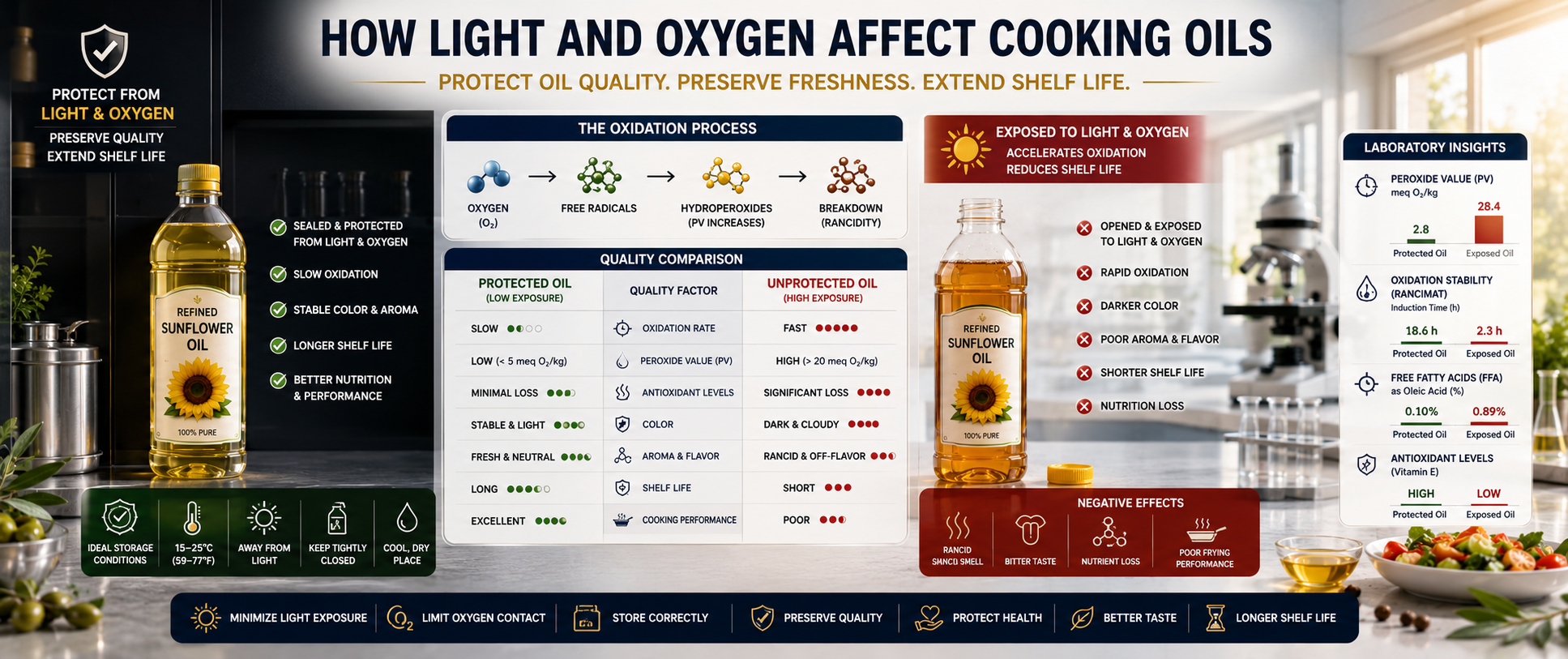
Oxidation
Exposure to heat and oxygen forms oxidation products that gradually reduce oil quality.
Breakdown of Nutrients
Natural compounds such as Vitamin E slowly decline during prolonged heating.
Darkening of Oil
Oil becomes progressively darker after repeated frying cycles.
Flavor Deterioration
Food may develop:
- Bitter taste
- Burnt flavor
- Unpleasant odor
Increased Viscosity
Old frying oil becomes thicker and clings more heavily to food.
Signs That Cooking Oil Has Been Overheated
Replace the oil if you notice:
- Excessive smoke at normal frying temperatures
- Dark brown color
- Sticky consistency
- Strong burnt smell
- Excessive foaming
- Food browning too quickly
These are common indicators that the oil has deteriorated.
Tips for Maintaining Oil Quality
To maximize the performance of sunflower oil:
Maintain Proper Frying Temperature
The ideal frying range is:
170–190°C
Using a kitchen thermometer helps maintain consistent temperatures.
Avoid Heating an Empty Pan Too Long
Oil degrades more quickly when exposed to prolonged heat without food.
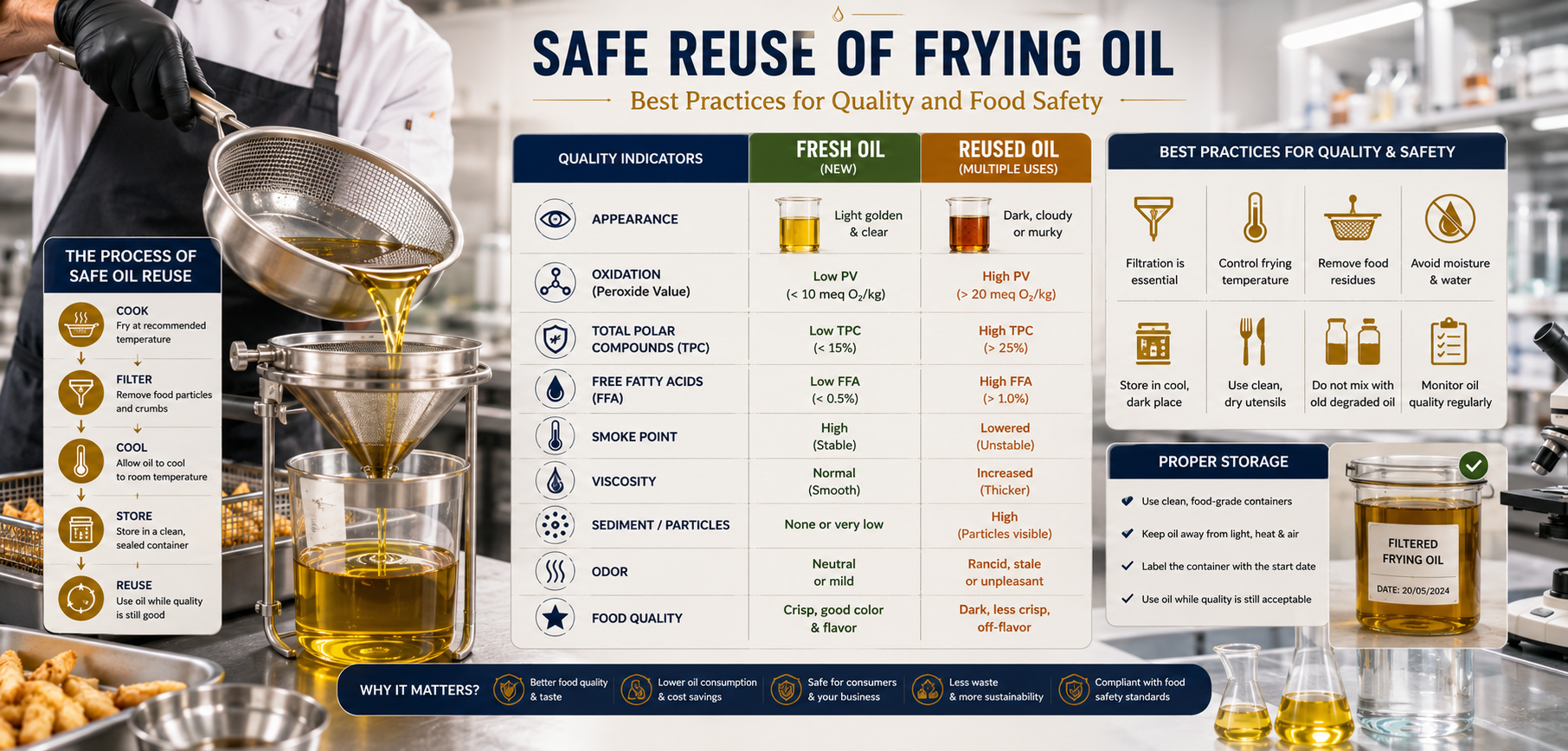
Filter the Oil
Removing food particles after frying slows oxidation and extends usable life.
Store Oil Properly
After cooling:
- Keep oil in a sealed container.
- Protect it from light.
- Avoid excessive air exposure.
- Store in a cool, dry place.
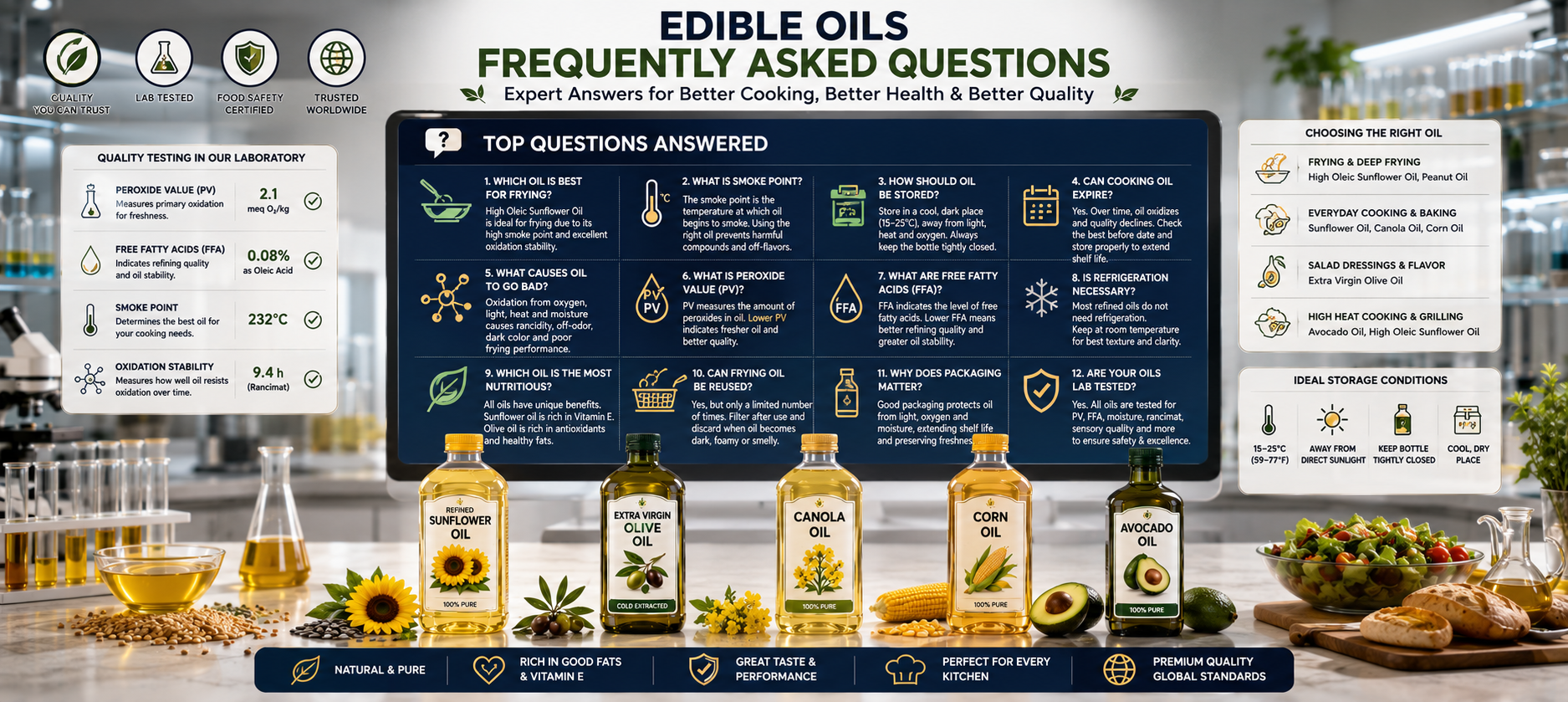
Smoke Point Compared with Other Cooking Oils
| Oil | Smoke Point | Best Uses |
|---|---|---|
| High Oleic Sunflower Oil | 230–245°C | Commercial frying |
| Refined Sunflower Oil | 225–232°C | Everyday frying |
| Canola Oil | 204–230°C | General cooking |
| Corn Oil | 230°C | Frying |
| Peanut Oil | 225–235°C | Deep frying |
| Avocado Oil (Refined) | Up to 270°C | Very high heat cooking |
| Extra Virgin Olive Oil | 190–210°C | Light sautéing, roasting |
Common Myths About Smoke Point
Myth 1: Higher Smoke Point Always Means Healthier
Not necessarily.
Smoke point is only one factor. Fatty acid composition, refining quality, freshness, and storage conditions also influence an oil’s overall performance.
Myth 2: Smoke Point Never Changes
Incorrect.
As oil is repeatedly heated, its smoke point gradually decreases due to chemical changes.
Myth 3: All Sunflower Oils Have the Same Smoke Point
False.
Cold-pressed, refined, and high oleic sunflower oils each have different heat tolerances.
Frequently Asked Questions (FAQ)
What is the smoke point of refined sunflower oil?
Typically between 225°C and 232°C (437°F–450°F), making it suitable for most frying applications.
Is sunflower oil good for deep frying?
Yes. Refined sunflower oil is widely used for deep frying because of its high smoke point and neutral flavor.
Which sunflower oil has the highest smoke point?
High oleic sunflower oil generally offers the highest smoke point and superior thermal stability.
Does smoke mean the oil is bad?
Visible smoke indicates the oil has reached or exceeded its smoke point. Occasional light smoke is not necessarily harmful, but repeated overheating accelerates oil degradation.
Does smoke point affect taste?
Yes. Oils heated beyond their smoke point often produce burnt flavors and unpleasant aromas that can negatively affect food quality.
Related Articles
- Everything About Sunflower Oil
- Is Sunflower Oil Good for Frying?
- High Oleic vs Linoleic Sunflower Oil
- Health Benefits of Sunflower Oil
- How Sunflower Oil Is Produced
- How to Choose Premium Sunflower Oil
Conclusion
The smoke point is one of the most important indicators of an oil’s suitability for cooking at elevated temperatures. Refined sunflower oil offers an excellent balance of high heat tolerance, neutral flavor, and reliable cooking performance, making it a preferred choice for households, restaurants, and food manufacturers worldwide.
For applications requiring prolonged or continuous frying, high oleic sunflower oil provides even greater oxidative stability and durability. By maintaining proper cooking temperatures, avoiding repeated overheating, and storing oil correctly, you can maximize both food quality and oil performance.
Call to Action
Looking for premium refined sunflower oil with consistent quality and excellent frying performance?
ZAR1N supplies internationally compliant sunflower oil for retail, food service, industrial processing, private label, and global export. Contact our team to discover packaging options, technical specifications, and customized supply solutions.
Leave a Reply