



Cooking oil plays a critical role in determining the taste, texture, nutritional quality, and overall success of fried foods. Among the many edible oils available today, sunflower oil has become one of the world’s most widely used frying oils due to its mild flavor, light texture, and excellent cooking performance.
But is sunflower oil truly a good choice for frying?
The answer depends on several factors, including the type of sunflower oil, frying temperature, cooking duration, and how the oil is handled during use.
This guide explains everything you need to know about frying with sunflower oil from both nutritional and food science perspectives.
Why Sunflower Oil Is Popular for Frying
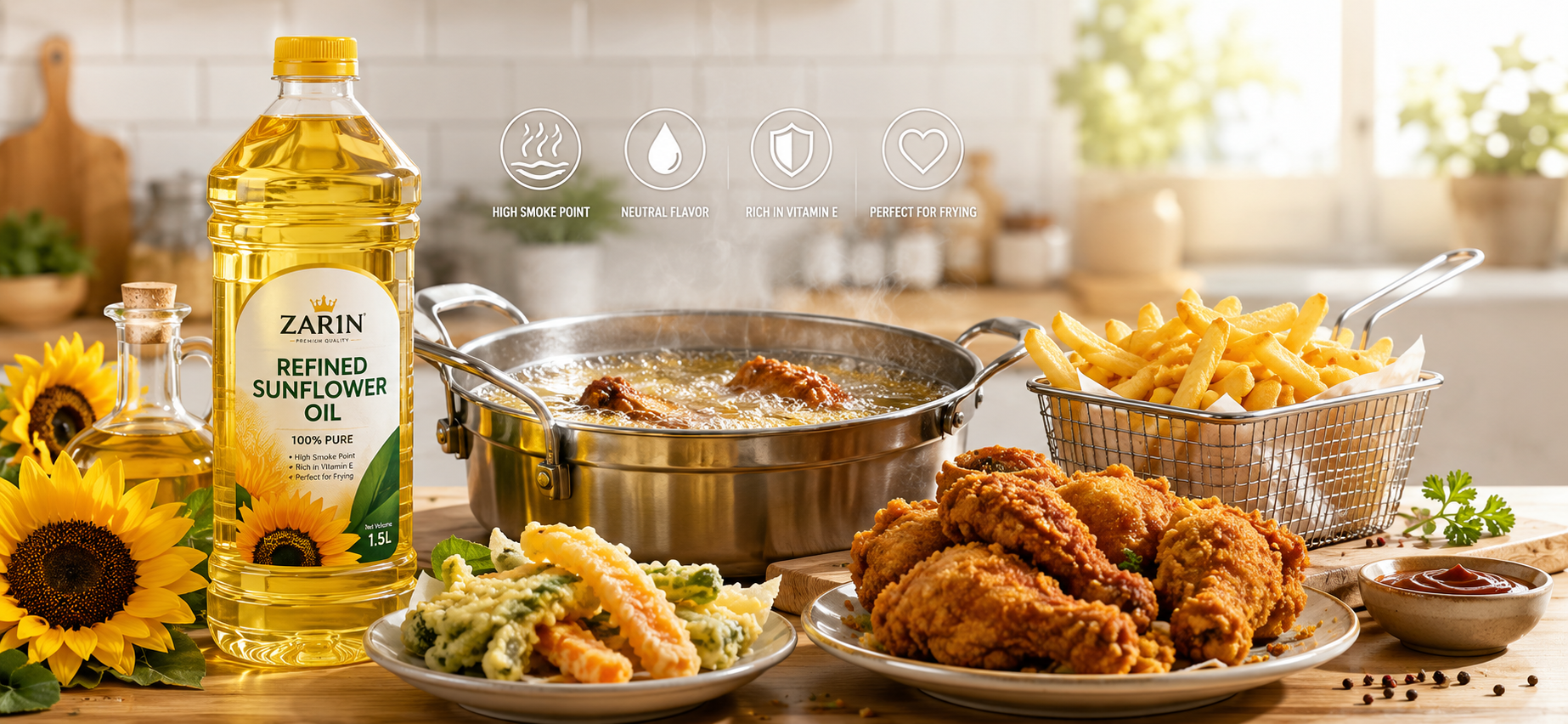
Restaurants, food manufacturers, and home cooks frequently choose sunflower oil because it offers several practical advantages.
These include:
- Neutral taste
- Light color
- High smoke point
- Smooth texture
- Excellent food appearance
- Wide availability
- Competitive pricing
- Easy filtration after frying
Unlike oils with strong flavors, sunflower oil allows the natural taste of foods to remain dominant.
This makes it ideal for:
- French fries
- Fried chicken
- Seafood
- Vegetables
- Snacks
- Pastries
- Tempura
- Frozen foods
What Makes an Oil Good for Frying?
Several characteristics determine whether an edible oil performs well during frying.
1. High Smoke Point
The smoke point is the temperature at which an oil begins producing visible smoke.
When oil exceeds its smoke point:
- Nutrients begin to degrade.
- Flavor deteriorates.
- Harmful oxidation products increase.
- Food quality declines.
Refined sunflower oil typically has a smoke point of approximately 225–232°C (437–450°F), making it suitable for most frying applications.
2. Oxidative Stability
Frying exposes oil to:
- High temperatures
- Oxygen
- Moisture
- Food particles
A stable oil resists oxidation longer, resulting in:
- Better flavor
- Longer frying life
- Reduced waste
- Improved food quality
3. Neutral Flavor
A frying oil should not overpower food flavors.
Sunflower oil has a very mild taste, making it suitable for almost every cuisine.
4. Clean Appearance
Sunflower oil produces bright, golden fried foods without adding unwanted color.
This characteristic is especially valued by commercial food manufacturers.
Smoke Point of Sunflower Oil
| Oil Type | Smoke Point |
|---|---|
| Refined Sunflower Oil | 225–232°C |
| High Oleic Sunflower Oil | 230–245°C |
| Cold-Pressed Sunflower Oil | 107–160°C |
Refined sunflower oil is recommended for frying.
Cold-pressed sunflower oil is better suited for:
- Salad dressings
- Dips
- Cold dishes
- Finishing oils
High Oleic vs Regular Sunflower Oil for Frying
Not all sunflower oils perform the same under heat.
Regular (Linoleic) Sunflower Oil
Characteristics:
- Higher polyunsaturated fat
- Excellent nutrition
- Good for normal home cooking
- Suitable for light frying
High Oleic Sunflower Oil
Contains much more oleic acid.
Benefits include:
- Better heat resistance
- Longer frying life
- Greater oxidation stability
- Preferred by restaurants
- Lower oil degradation
This is why many fast-food chains and food manufacturers prefer high oleic sunflower oil.
Nutritional Profile During Frying
Sunflower oil naturally contains:
- Vitamin E
- Healthy unsaturated fats
- Plant sterols
- Essential fatty acids
Some nutrients decline during prolonged heating, especially repeated frying.
However, when used correctly, sunflower oil remains one of the healthier frying oils compared with many solid fats.
Advantages of Frying with Sunflower Oil
Excellent Crispiness
Foods develop:
- Crispy exterior
- Tender interior
- Even browning
Mild Flavor
The oil does not mask spices or ingredients.
Ideal for:
- Fish
- Chicken
- Potatoes
- Dough products
Attractive Appearance
Produces golden-colored fried foods without excessive darkening.
Lower Saturated Fat
Compared with butter, shortening, or animal fats, sunflower oil contains significantly less saturated fat.
Rich in Vitamin E
Vitamin E acts as a natural antioxidant that helps protect the oil before heating and contributes to overall nutritional value.
Potential Limitations
Although sunflower oil performs well, no frying oil is perfect.
Possible concerns include:
- Repeated overheating
- Improper storage
- Excessive reuse
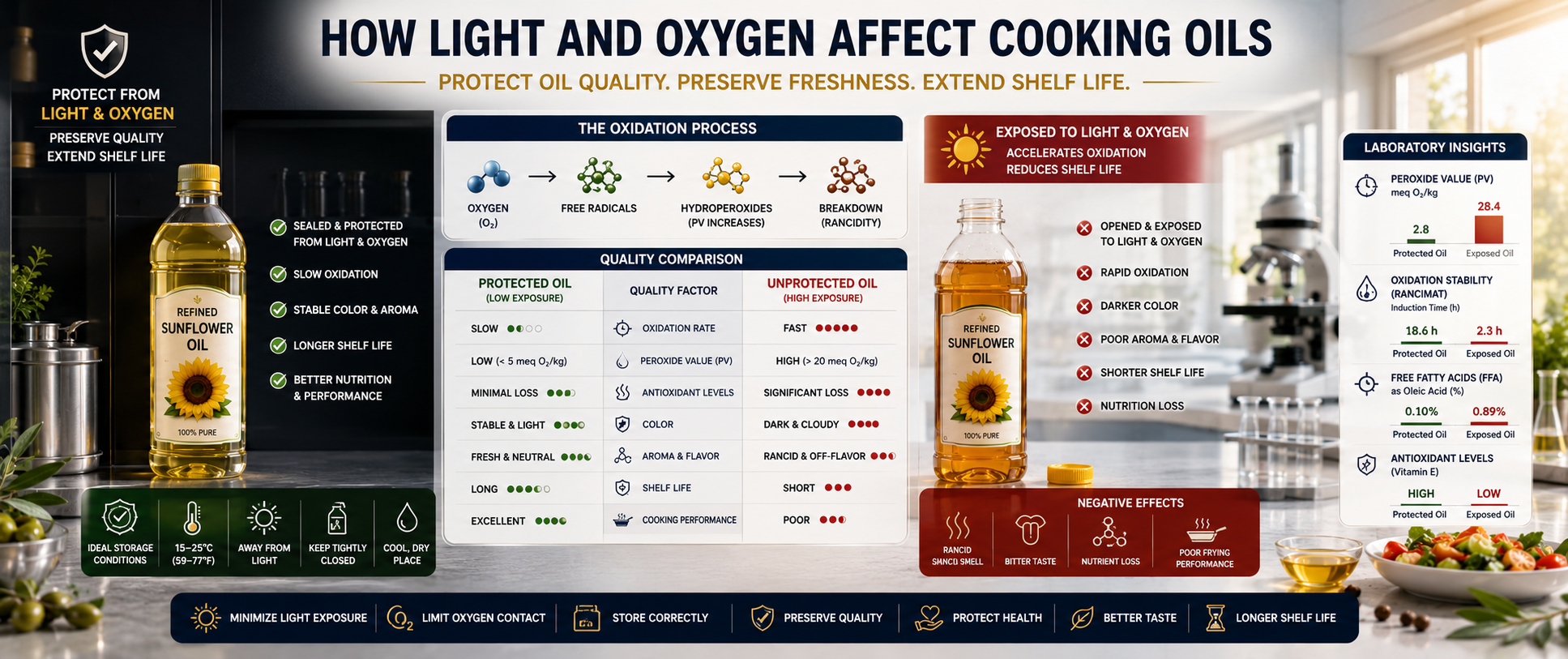
- Exposure to light
- Oxidation after prolonged frying
Proper handling greatly reduces these issues.
Tips for Frying with Sunflower Oil
Maintain Proper Temperature
Ideal frying temperature:
170–190°C
Too low:
- Food absorbs more oil.
Too high:
- Oil breaks down faster.
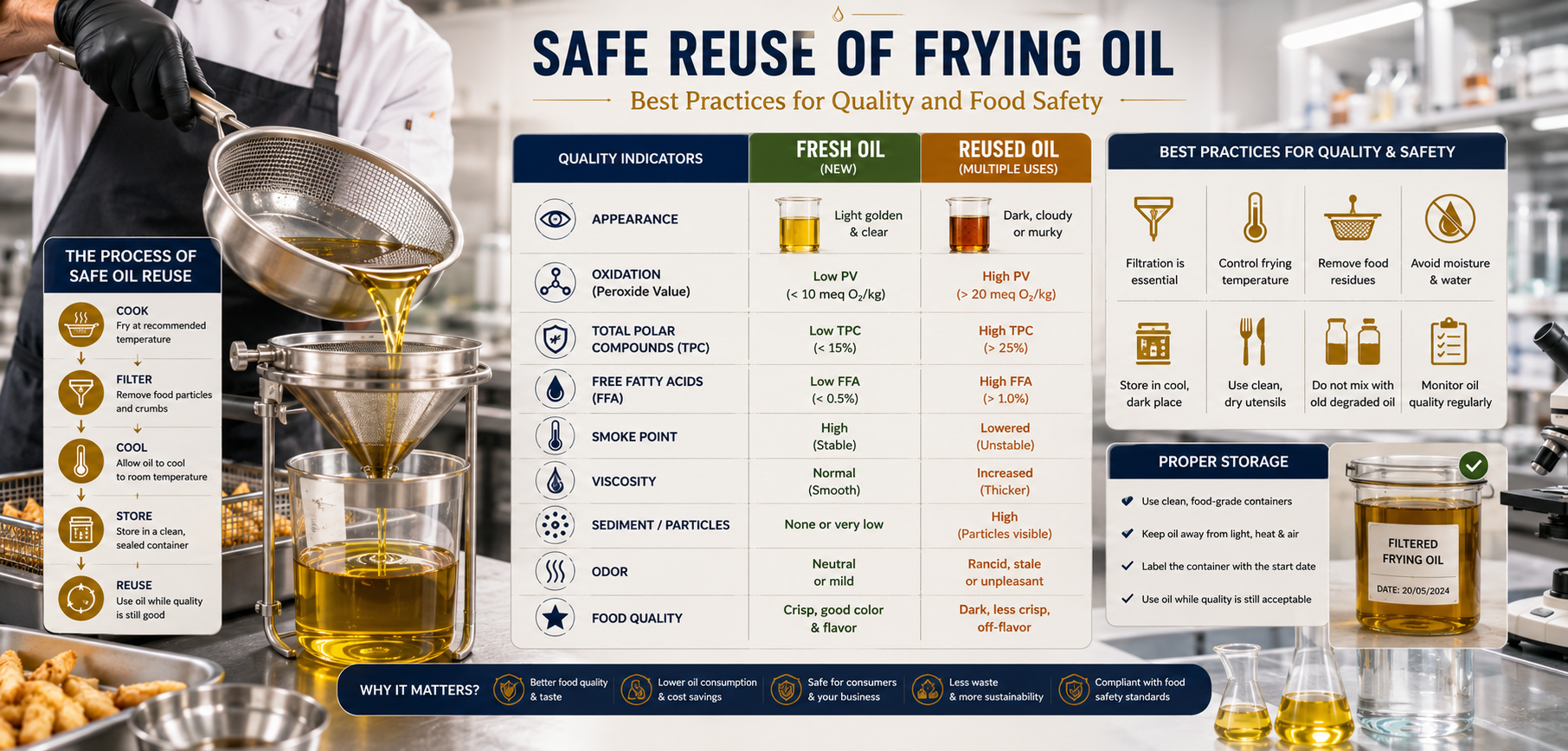
Avoid Reusing Oil Excessively
Each heating cycle increases:
- Oxidation
- Polymer formation
- Flavor deterioration
Commercial kitchens usually monitor oil quality carefully and replace oil when necessary.
Filter Food Particles
Burned crumbs accelerate oil degradation.
Removing food debris helps extend oil life.
Store Oil Properly
After frying:
- Cool the oil
- Filter it
- Store in a dark container
- Keep away from sunlight
Foods That Fry Well in Sunflower Oil
Excellent choices include:
- French fries
- Fried chicken
- Onion rings
- Tempura
- Seafood
- Vegetable fritters
- Doughnuts
- Falafel
- Spring rolls
- Croquettes
Commercial Applications
Sunflower oil is widely used in:
- Restaurants
- Fast food chains
- Frozen food production
- Snack manufacturing
- Potato chip factories
- Catering services
- Industrial frying systems
High oleic sunflower oil is especially favored because it withstands continuous frying better than conventional sunflower oil.
Comparison of Common Frying Oils
| Oil | Smoke Point | Flavor | Frying Performance |
|---|---|---|---|
| High Oleic Sunflower Oil | Excellent | Neutral | Excellent |
| Refined Sunflower Oil | Very Good | Neutral | Very Good |
| Canola Oil | Very Good | Mild | Very Good |
| Corn Oil | Very Good | Mild | Very Good |
| Peanut Oil | Excellent | Slight Nutty | Excellent |
| Olive Oil (Extra Virgin) | Moderate | Strong | Better for light sautéing |
Common Mistakes When Frying with Sunflower Oil
Avoid these errors:
- Heating above the smoke point.
- Mixing fresh oil with heavily degraded oil.
- Frying at inconsistent temperatures.
- Leaving oil uncovered.
- Reusing oil too many times.
- Storing oil beside the stove.
- Using cold-pressed sunflower oil for deep frying.
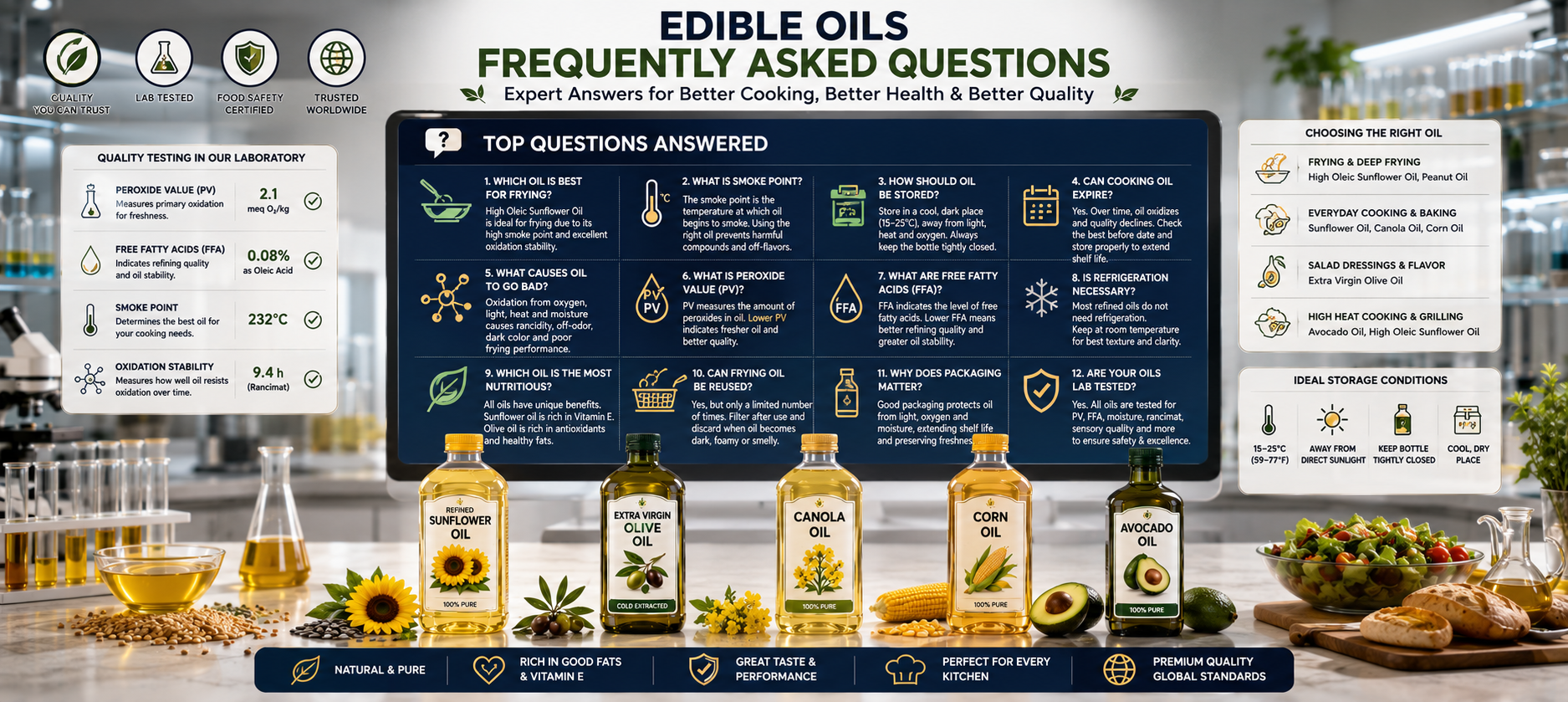
Frequently Asked Questions (FAQ)
Is sunflower oil safe for deep frying?
Yes. Refined sunflower oil is widely used for deep frying because of its high smoke point and neutral flavor.
Which sunflower oil is best for frying?
High oleic sunflower oil offers the greatest heat stability for frequent or commercial frying, while refined sunflower oil is an excellent choice for everyday home use.
Can sunflower oil be reused?
Yes, if it has not been overheated or heavily contaminated with food particles. Filter it after use, store it properly, and discard it if it develops a dark color, unpleasant odor, or excessive foaming.
Is sunflower oil healthier than butter for frying?
Generally yes. Sunflower oil contains much less saturated fat and provides a higher proportion of unsaturated fats than butter.
Does frying destroy Vitamin E?
Some Vitamin E is lost during prolonged heating, but sunflower oil still retains useful nutritional value when used under proper frying conditions.
Related Articles
- Smoke Point of Sunflower Oil
- Health Benefits of Sunflower Oil
- High Oleic vs Linoleic Sunflower Oil
- How Sunflower Oil Is Produced
- Which Oil Is Best for Frying?
- Safe Reuse of Frying Oil
Conclusion
Sunflower oil is one of the most versatile and reliable oils for frying. Its high smoke point, mild flavor, light texture, and broad culinary compatibility make it a preferred option for both home kitchens and commercial food production.
For the best results, choose refined sunflower oil for everyday frying or high oleic sunflower oil when extended heat stability is required. Maintaining the correct frying temperature, filtering the oil, avoiding excessive reuse, and storing it properly will help preserve quality, improve food taste, and extend the oil’s usable life.
Call to Action
Looking for premium refined sunflower oil for retail, food service, or industrial applications?
ZAR1N supplies high-quality sunflower oil that meets international standards and is available for bulk export, private label, and white label partnerships. Contact our team to learn more about product specifications, packaging options, and global distribution solutions.
Leave a Reply