



With countless cooking oil brands available on supermarket shelves, choosing a high-quality sunflower oil can seem overwhelming. Attractive packaging and competitive pricing may catch the eye, but premium sunflower oil is defined by much more than appearance.
The quality of sunflower oil depends on the entire production chain—from seed selection and refining to quality control, packaging, storage, and compliance with international food safety standards.
Whether you’re purchasing sunflower oil for your home, restaurant, or food manufacturing business, understanding the key indicators of quality will help you make a more informed decision.
What Defines Premium Sunflower Oil?
Premium sunflower oil combines:
- High-quality raw materials
- Modern refining technology
- Strict quality control
- Safe packaging
- Consistent composition
- Reliable traceability
Every stage of production contributes to the oil’s final performance and shelf life.
Check the Type of Sunflower Oil
The first step is identifying the oil type.
Common varieties include:
Refined Sunflower Oil
Best suited for:
- Frying
- Baking
- Everyday cooking
- Industrial food production
Characteristics:
- Neutral flavor
- Clear appearance
- High smoke point
- Excellent stability
Cold-Pressed Sunflower Oil
Typically used for:
- Salad dressings
- Dips
- Cold dishes
Characteristics:
- More natural aroma
- Lower smoke point
- Minimal processing
Choose the type that best matches your cooking needs.
Examine the Appearance
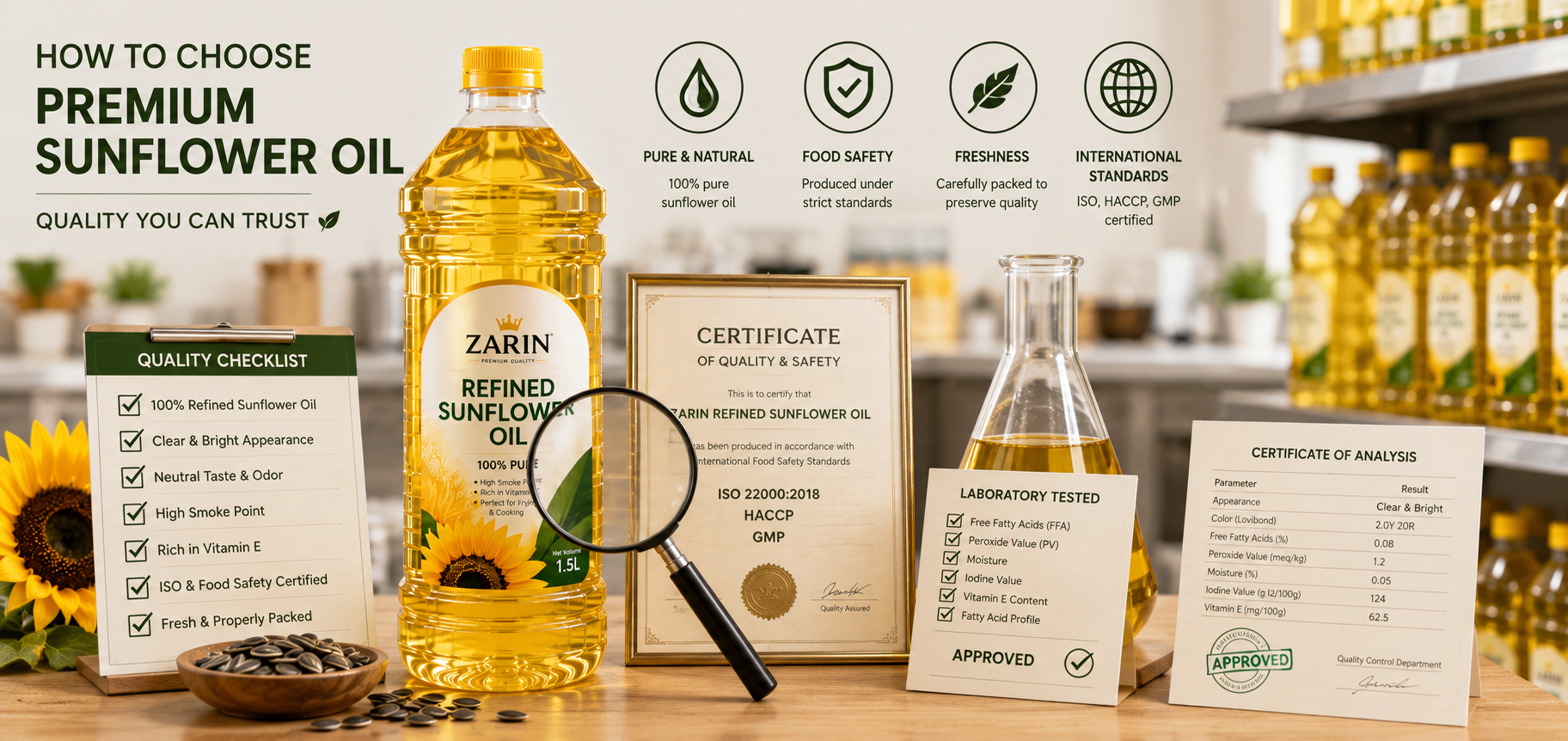
High-quality refined sunflower oil should appear:
- Clear
- Bright
- Transparent
- Free from visible particles
Cloudiness or sediment may indicate improper storage or contamination, although some unrefined oils naturally appear less clear.
Evaluate the Color
Premium refined sunflower oil generally has a light golden-yellow color.
Extremely dark oil may suggest:
- Poor refining
- Oxidation
- Excessive aging
Consistency in color is an important indicator of manufacturing quality.
Assess the Aroma
Good refined sunflower oil has:
- A clean aroma
- Very mild scent
- No rancid smell
- No burnt odor
A strong unpleasant odor is often a sign of deterioration.
Read the Ingredient List
Premium sunflower oil should contain:
100% Sunflower Oil
Avoid products with unnecessary additives unless specifically formulated for specialized food applications.
Check the Nutrition Label
Review important nutritional information such as:
- Total fat
- Saturated fat
- Unsaturated fat
- Vitamin E content
These values help compare products objectively.
Look for Food Safety Certifications
Reliable manufacturers often operate under internationally recognized quality systems.
Examples include:
- ISO 22000
- HACCP
- GMP
- FSSC 22000
These certifications demonstrate commitment to food safety and consistent production standards.
Review Packaging Quality
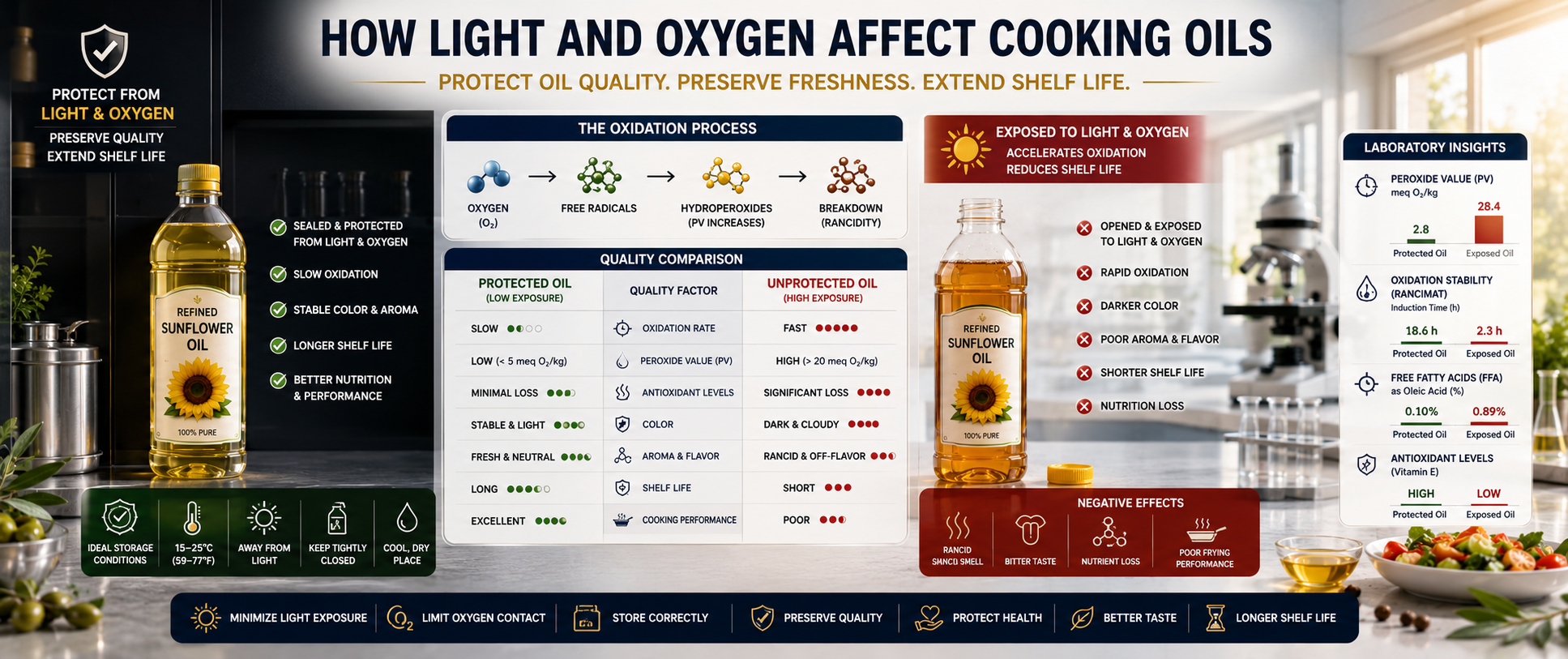
Packaging plays an important role in protecting oil from:
- Light
- Oxygen
- Moisture
- Physical damage
Common packaging options include:
- PET bottles
- HDPE containers
- Glass bottles
- Metal containers
- Bulk industrial packaging
Choose packaging appropriate for your intended use.
Check the Manufacturing and Expiry Dates
Freshness directly affects oil quality.
Always verify:
- Production date
- Best-before date
- Batch number
Avoid purchasing products nearing the end of their recommended shelf life unless they will be used immediately.
Storage Recommendations
The label should include storage guidance such as:
- Store in a cool, dry place
- Protect from direct sunlight
- Keep container tightly closed
Following these recommendations helps preserve quality after purchase.
Understand the Smoke Point
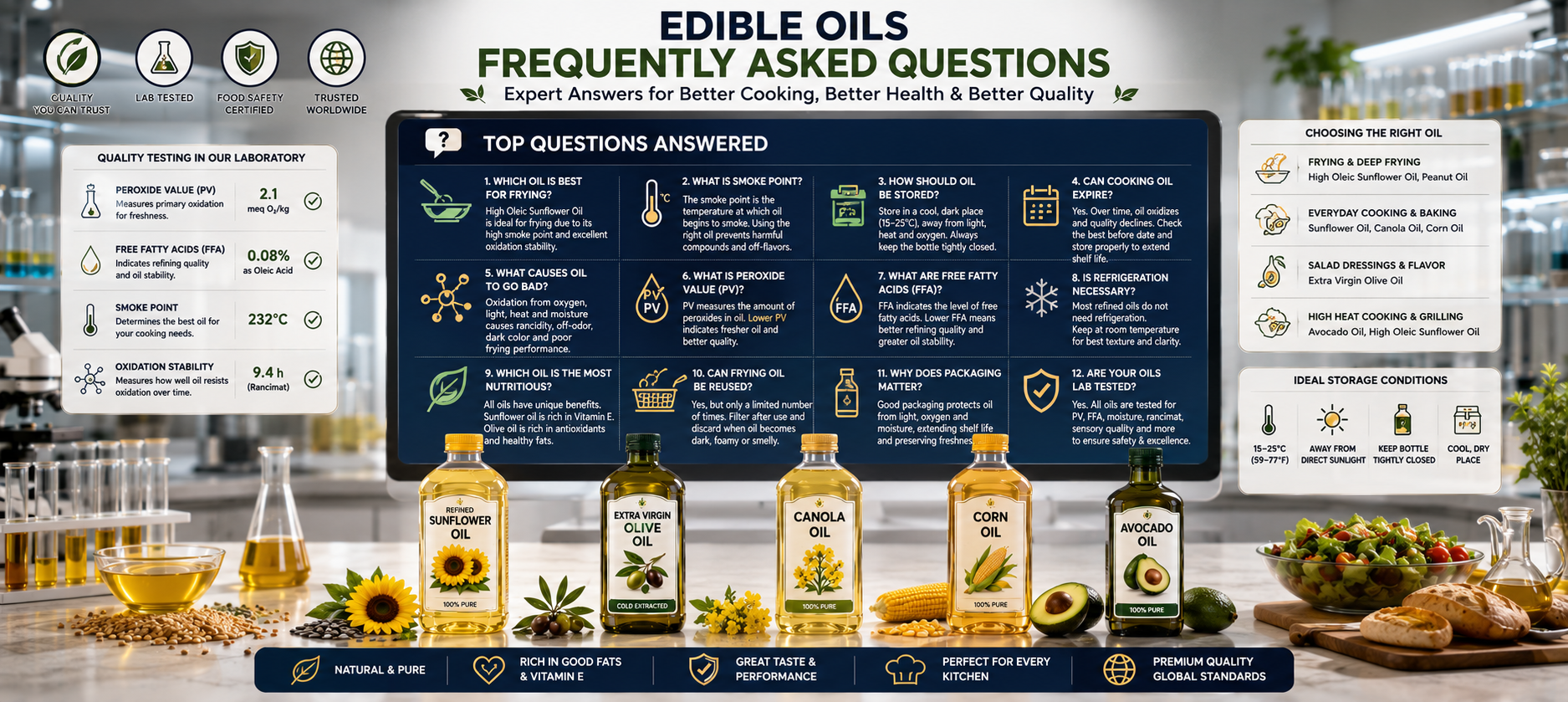
If you plan to fry foods regularly, select refined sunflower oil with a high smoke point.
A higher smoke point supports:
- Better frying performance
- Improved stability
- Reduced oil breakdown
High Oleic or Conventional?
Some premium brands offer high oleic sunflower oil.
Advantages include:
- Higher heat stability
- Better oxidation resistance
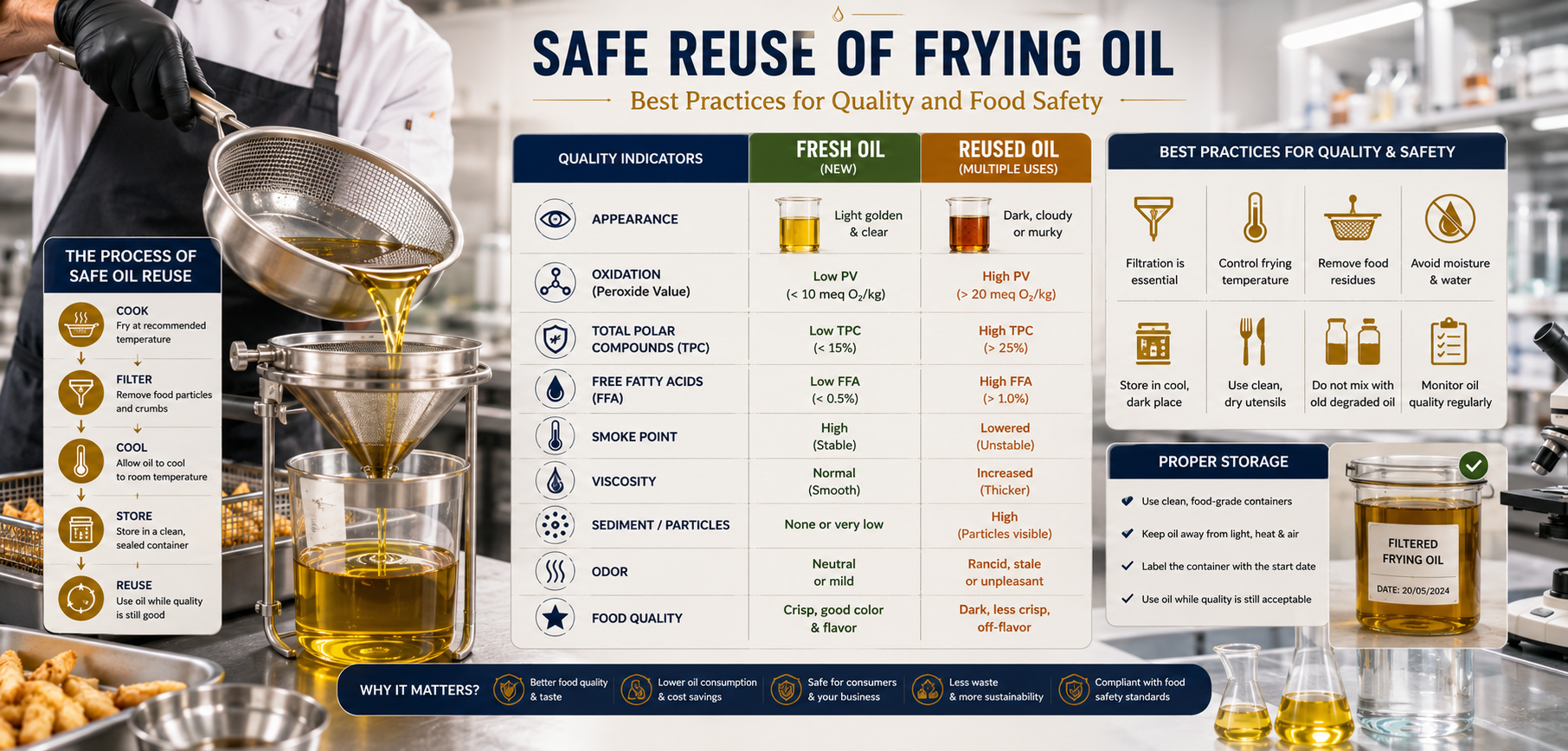
- Longer frying life
- Preferred for commercial kitchens
For everyday home cooking, conventional refined sunflower oil remains an excellent choice.
Consider the Brand Reputation
Established manufacturers typically invest in:
- Quality assurance
- Laboratory testing
- Traceability
- Customer support
- Product consistency
Choosing a trusted supplier reduces the risk of inconsistent quality.
Importance of Laboratory Testing
Professional manufacturers routinely evaluate:
- Free Fatty Acid (FFA)
- Peroxide Value (PV)
- Moisture content
- Color
- Clarity
- Oxidative stability
- Fatty acid composition
These tests ensure every production batch meets defined specifications.
Buying for Commercial Use
Restaurants and food manufacturers should also consider:
- Packaging size
- Bulk supply availability
- Technical specifications
- Product consistency
- Export documentation
- Long-term supplier reliability
Industrial buyers often require certificates such as:
- Certificate of Analysis (COA)
- Technical Data Sheet (TDS)
- Health Certificate
- Certificate of Origin
Common Mistakes When Buying Sunflower Oil
Avoid these common errors:
- Choosing based only on price
- Ignoring expiration dates
- Overlooking storage conditions
- Buying damaged packaging
- Failing to read ingredient labels
- Assuming all sunflower oils are identical
Understanding product specifications leads to better purchasing decisions.
Quick Buyer Checklist
Before purchasing sunflower oil, ask yourself:
✓ Is it refined or cold-pressed?
✓ Does it appear clear and bright?
✓ Is the packaging undamaged?
✓ Does it have a recent production date?
✓ Does the manufacturer follow recognized food safety standards?
✓ Is the product suitable for your intended cooking method?
Frequently Asked Questions (FAQ)
How can I tell if sunflower oil is high quality?
Look for clear appearance, mild aroma, reliable packaging, recognized food safety certifications, and a trusted manufacturer.
Is refined sunflower oil better than cold-pressed oil?
Not necessarily. Refined sunflower oil is better for high-temperature cooking, while cold-pressed oil is preferred for cold applications.
Should premium sunflower oil be completely clear?
Yes. Properly refined sunflower oil is typically bright and transparent.
Does expensive sunflower oil always mean better quality?
Not always. Quality depends on production standards, raw materials, refining, and quality control—not simply price.
What is the best packaging for sunflower oil?
Sealed, food-grade containers that protect the oil from light and air help maintain freshness and quality.
Related Articles
- Everything About Sunflower Oil
- How Sunflower Oil Is Produced
- Smoke Point of Sunflower Oil
- Reading an Oil Label Correctly
- Storage Conditions for Cooking Oils
- How to Identify High-Quality Cooking Oil
Conclusion
Choosing premium sunflower oil involves more than selecting an attractive bottle or the lowest price. High-quality sunflower oil is the result of superior raw materials, advanced refining technology, rigorous laboratory testing, safe packaging, and adherence to international food safety standards.
By paying attention to product labels, certifications, freshness, and intended use, consumers and businesses can confidently select sunflower oil that delivers excellent cooking performance, long shelf life, and reliable quality.
Call to Action
Searching for a dependable supplier of premium refined sunflower oil?
ZAR1N provides internationally certified sunflower oil for retail, food service, industrial manufacturing, private label, and global export. With advanced quality control, flexible packaging options, and customized supply solutions, ZAR1N is your trusted partner for premium edible oils.
Leave a Reply