



Shelf Life of Edible Oils
Every bottle of cooking oil has a limited lifespan. Although edible oils do not spoil in the same way as fresh foods, their quality gradually declines over time due to natural chemical reactions. The period during which an oil maintains its intended quality, flavor, nutritional value, and safety is known as its shelf life.
For consumers, understanding shelf life helps prevent the use of degraded oils. For manufacturers and exporters, shelf life is a critical quality parameter that influences packaging design, transportation methods, inventory management, and customer satisfaction.
What Is Shelf Life?
Shelf life refers to the length of time an edible oil remains suitable for consumption while maintaining its expected quality characteristics.
During this period, the oil should retain:
- Fresh flavor
- Pleasant aroma
- Stable color
- Nutritional value
- Oxidative stability
- Cooking performance
Once the shelf life has expired, quality gradually decreases, even if the oil is not immediately unsafe.
Why Do Oils Have a Limited Shelf Life?
Edible oils naturally react with oxygen over time.
Several chemical processes contribute to quality deterioration, including:
- Oxidation
- Hydrolysis
- Light degradation
- Thermal degradation
These reactions slowly reduce freshness and eventually lead to rancidity.
Factors That Determine Shelf Life
Shelf life depends on multiple factors working together.
1. Type of Oil
Different oils naturally have different oxidation resistance.
General comparison:
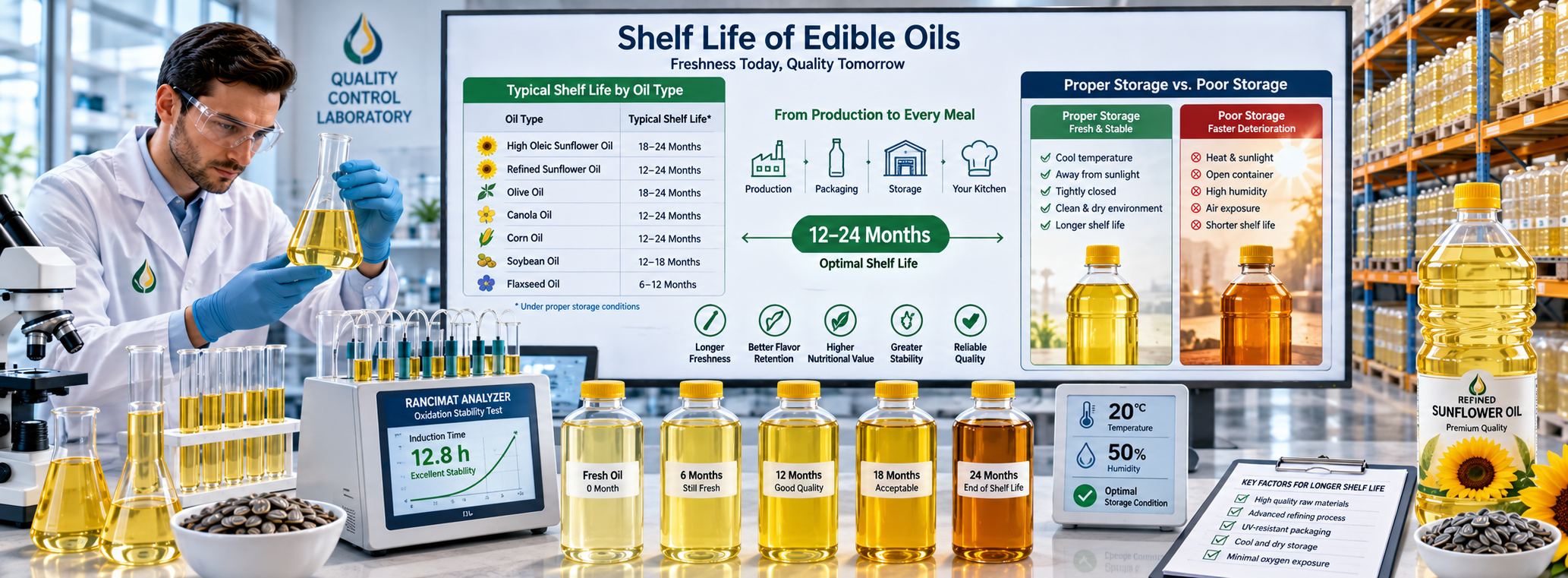
| Oil Type | Typical Shelf Life* |
|---|---|
| High Oleic Sunflower Oil | 18–24 Months |
| Refined Sunflower Oil | 12–24 Months |
| Olive Oil | 18–24 Months |
| Canola Oil | 12–24 Months |
| Corn Oil | 12–24 Months |
| Soybean Oil | 12–18 Months |
| Flaxseed Oil | 6–12 Months |
*Approximate values under proper storage conditions.
2. Fatty Acid Composition
The more unsaturated an oil is, the more susceptible it becomes to oxidation.
Generally:
- Saturated fats → Longest stability
- Monounsaturated fats → Good stability
- Polyunsaturated fats → Lower stability
3. Refining Quality
Modern refining removes substances that accelerate deterioration, including:
- Moisture
- Free Fatty Acids
- Metal contaminants
- Waxes
- Phospholipids
Proper refining significantly extends shelf life.
4. Packaging
Packaging plays a major role in preserving oil quality.
Premium manufacturers use:
- UV-resistant PET bottles
- Dark glass bottles
- Tin containers
- Airtight caps
- Food-grade packaging materials
Effective packaging minimizes exposure to oxygen and light.
5. Storage Conditions
Storage conditions directly influence shelf life.
Ideal storage includes:
- Cool temperatures
- Dry environment
- Minimal oxygen exposure
- Protection from sunlight
- Stable room temperature
Poor storage accelerates deterioration.
How Manufacturers Determine Shelf Life
Shelf life is not estimated by guesswork.
Professional manufacturers conduct laboratory testing using:
- Oxidation Stability Tests (Rancimat)
- Peroxide Value (PV)
- Free Fatty Acid (FFA)
- Sensory Evaluation
- Accelerated Shelf-Life Studies
- Real-Time Storage Testing
These analyses help establish reliable expiration dates.
Shelf Life Before Opening
When stored correctly in sealed packaging, refined edible oils typically remain stable for 12 to 24 months, depending on the oil type and manufacturing process.
Unopened packaging offers the best protection against oxygen and moisture.
Shelf Life After Opening
Once opened, the bottle is repeatedly exposed to:
- Air
- Moisture
- Temperature changes
For best quality, opened cooking oil should generally be used within two to six months, depending on storage conditions and frequency of use.
Always close the cap tightly after each use.
Signs That Shelf Life Is Ending
As edible oils age, several changes may become noticeable:
- Rancid odor
- Bitter taste
- Darker color
- Increased viscosity
- Loss of clarity
- Reduced frying performance
- Excessive foaming during cooking
These changes indicate quality deterioration.
Does the Expiration Date Mean the Oil Is Unsafe?
Not necessarily.
The expiration or “Best Before” date primarily indicates the period during which the manufacturer guarantees optimal quality.
If the oil has been stored correctly and shows no signs of deterioration, it may still be usable shortly after this date.
However, sensory evaluation and proper storage history should always be considered.
How Storage Extends Shelf Life
Consumers can significantly increase freshness by following simple practices:
- Store oil in a cool place.
- Keep containers tightly closed.
- Avoid direct sunlight.
- Do not store near ovens or stoves.
- Minimize repeated exposure to air.
- Purchase container sizes appropriate for consumption.
These practices help slow oxidation.
Export Considerations
For international trade, shelf life becomes especially important.
Products shipped overseas may spend weeks or months in:
- Warehouses
- Shipping containers
- Distribution centers
- Retail shelves
Manufacturers therefore ensure exported oils maintain sufficient remaining shelf life upon arrival.
Relationship Between Shelf Life and Quality Indicators
Several laboratory parameters influence shelf life.
| Quality Indicator | Effect on Shelf Life |
|---|---|
| Low Peroxide Value | Longer shelf life |
| Low Free Fatty Acids | Better stability |
| High Oxidation Stability | Longer freshness |
| Proper Packaging | Reduced oxidation |
| Controlled Storage | Maximum product life |
These indicators work together to preserve oil quality.
Common Misconceptions
“Cooking oil never expires.”
False. All edible oils gradually deteriorate over time.
“Refrigeration always extends shelf life.”
Not necessarily. Most refined vegetable oils are best stored at cool room temperature unless otherwise recommended.
“Dark-colored bottles make oil last forever.”
No. They help slow oxidation but cannot completely prevent natural aging.
“Unopened oil cannot deteriorate.”
Incorrect. Even sealed oil slowly ages due to natural oxidation.
Comparison Table
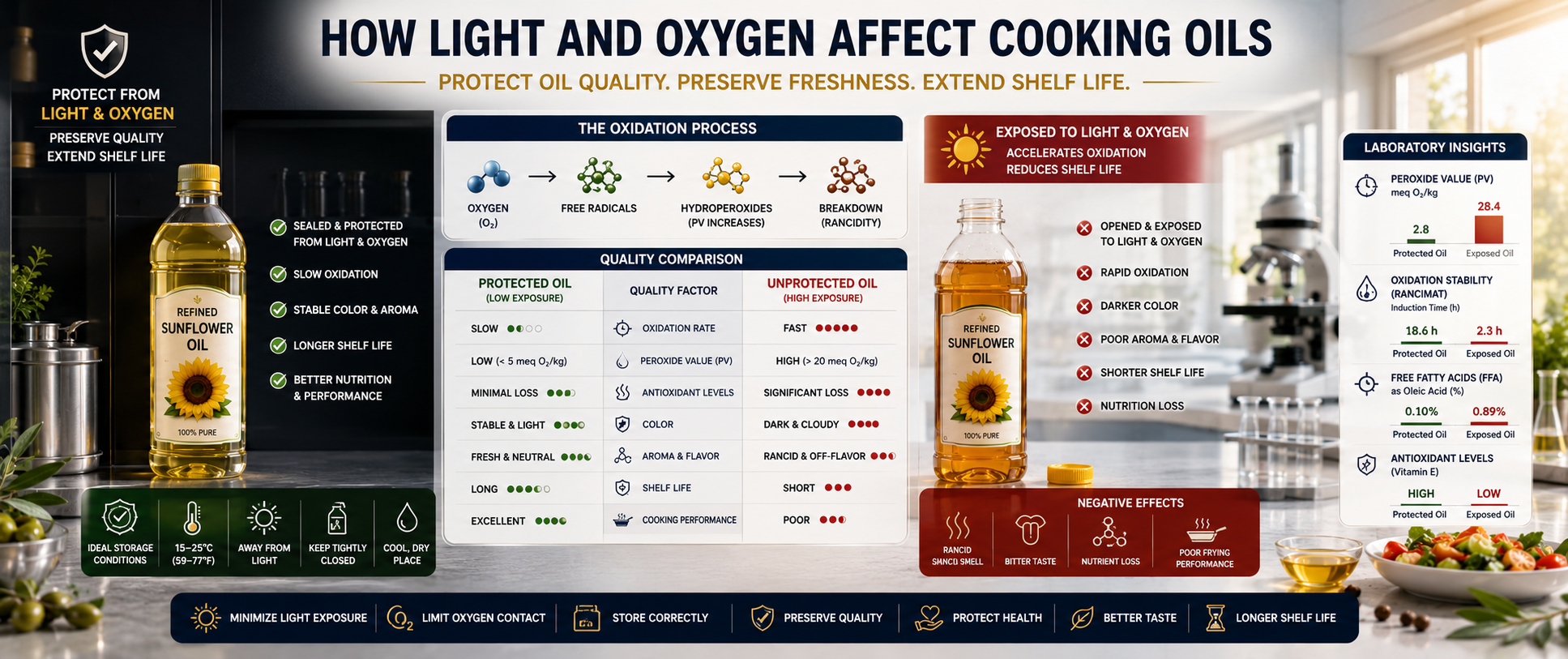
| Properly Stored Oil | Poorly Stored Oil |
|---|---|
| Longer shelf life | Faster deterioration |
| Better flavor | Off-flavors |
| Stable color | Darkening |
| Better frying performance | Increased smoke |
| Lower oxidation | Higher oxidation |
| Greater nutritional retention | Nutrient loss |
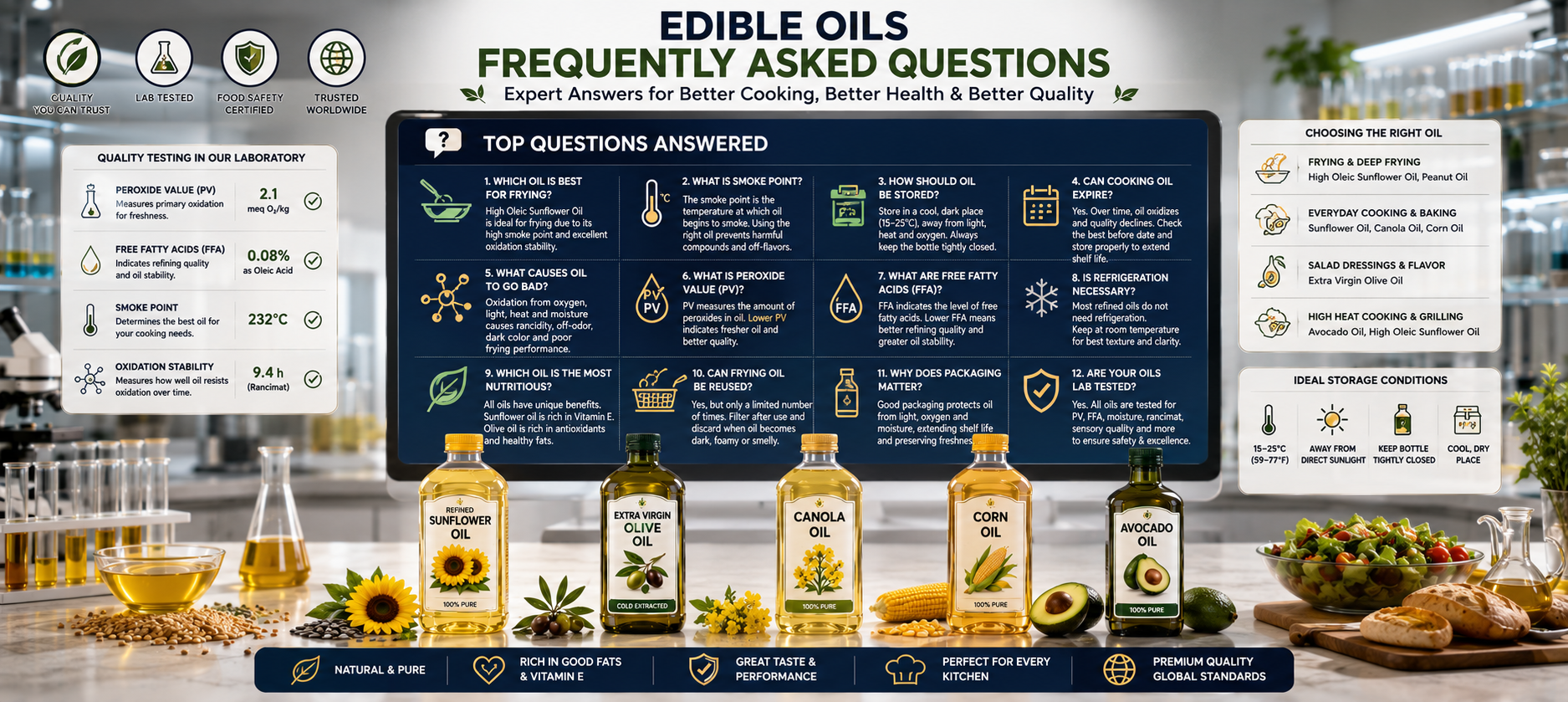
Frequently Asked Questions (FAQ)
How long does refined sunflower oil typically last?
When stored correctly in unopened packaging, refined sunflower oil generally has a shelf life of 12–24 months, depending on formulation and packaging.
Does opening the bottle shorten shelf life?
Yes. Exposure to oxygen begins immediately after opening and gradually accelerates oxidation.
Can expired cooking oil still be used?
If the oil has developed unpleasant odor, taste, or appearance, it should not be used. Always inspect the oil before consumption.
What storage condition is most important?
Protecting oil from heat, light, and oxygen has the greatest impact on preserving freshness.
Which oils generally last the longest?
High Oleic sunflower oil and olive oil typically exhibit excellent shelf-life performance due to their higher oxidative stability.
Related Articles
- Oxidation Stability of Cooking Oils
- Peroxide Value Explained
- Free Fatty Acids Explained
- Storage Conditions for Cooking Oils
- Best Temperature for Oil Storage
- Signs That Oil Has Gone Bad
Conclusion
Shelf life is one of the most important quality characteristics of edible oils. It depends on raw material quality, refining technology, fatty acid composition, packaging, and storage conditions. By protecting oils from oxygen, heat, and light, manufacturers and consumers can preserve freshness, nutritional value, and cooking performance for the longest possible period. Choosing oils produced under strict quality control systems ensures consistent quality from production to the final meal.
Call to Action
Select premium edible oils manufactured with advanced refining technologies, scientifically validated shelf-life testing, and high-quality packaging. Properly produced and carefully stored cooking oils deliver superior freshness, reliable performance, and lasting quality throughout their intended shelf life
Leave a Reply