



Proper storage is one of the most important factors in preserving the quality, freshness, and nutritional value of edible oils. Even the highest-quality cooking oil can deteriorate prematurely if stored at unsuitable temperatures.
Whether the oil is used at home, in restaurants, or by food manufacturers, maintaining the correct storage temperature helps slow oxidation, preserve flavor, and maximize shelf life.
Understanding how temperature affects edible oils enables consumers and businesses to protect product quality from production to consumption.
Why Temperature Matters
Edible oils naturally undergo slow chemical changes over time.
Temperature directly influences the speed of these reactions.
Higher temperatures accelerate:
- Oxidation
- Flavor deterioration
- Nutrient degradation
- Color changes
- Loss of freshness
Lower, stable temperatures help preserve quality for longer periods.
What Is the Ideal Storage Temperature?
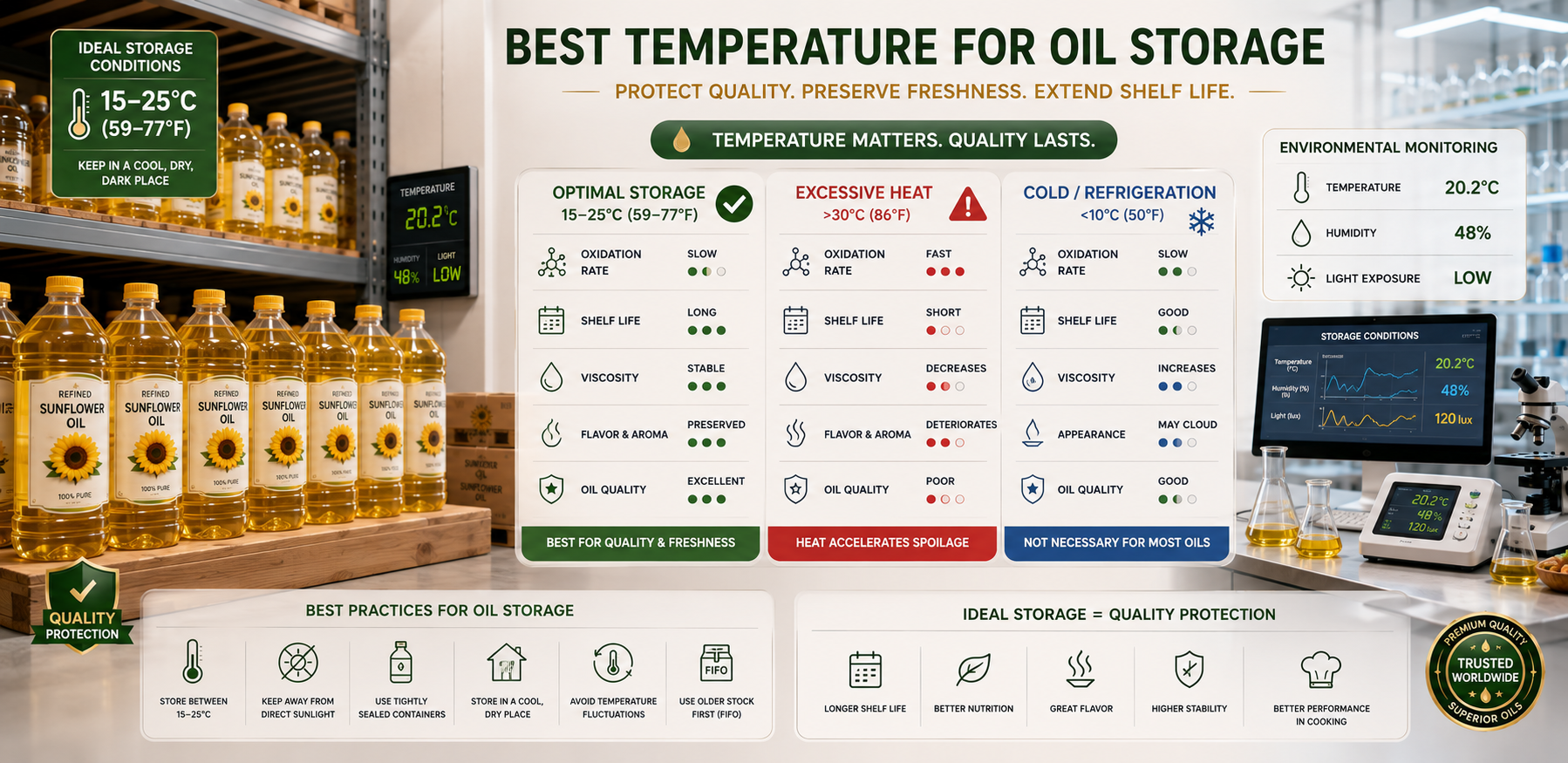
For most refined edible oils, the recommended storage temperature is:
15–25°C (59–77°F)
Within this range, oils generally maintain:
- Optimal freshness
- Stable color
- Pleasant aroma
- Good oxidative stability
- Maximum shelf life
Maintaining a consistent temperature is often more important than achieving an exact value.
Why Excessive Heat Is Harmful
High temperatures significantly accelerate oxidation.
When oils are repeatedly exposed to temperatures above approximately 30°C (86°F) for extended periods, deterioration occurs more rapidly.
Potential consequences include:
- Higher Peroxide Value (PV)
- Faster oxidation
- Reduced shelf life
- Off-flavors
- Loss of nutritional quality
- Increased rancidity
Heat is one of the most damaging environmental factors affecting edible oils.
Does Cold Storage Help?
Many consumers assume refrigeration always extends shelf life.
In reality, most refined vegetable oils do not require refrigeration.
Very low temperatures may cause:
- Temporary cloudiness
- Wax crystallization
- Increased viscosity
These changes are usually reversible once the oil returns to room temperature.
Refrigeration is generally unnecessary unless recommended by the manufacturer or required for a specific specialty oil.
What Happens When Oil Freezes?
Some edible oils partially solidify at low temperatures.
This does not necessarily indicate spoilage.
For example:
- Olive oil may become cloudy.
- Sunflower oil may develop wax crystals.
- Corn oil may appear thicker.
After warming gradually to room temperature, normal appearance usually returns.
Temperature Fluctuations
Frequent changes between warm and cool temperatures are undesirable.
Repeated fluctuations may:
- Increase condensation
- Accelerate oxidation after opening
- Reduce product stability
Stable storage conditions are preferable to constantly changing environments.
Storage During Transportation
Temperature control is especially important during transportation.
Export shipments may be exposed to:
- Hot shipping containers
- Direct sunlight
- Long transit times
- Seasonal temperature extremes
Manufacturers use proper packaging and logistics planning to reduce temperature-related quality losses.
Industrial Storage
Food manufacturers often store edible oils in:
- Stainless steel tanks
- Temperature-controlled warehouses
- Closed storage systems
- Insulated containers
Continuous monitoring helps maintain product consistency throughout storage.
Household Storage
Consumers can preserve oil quality by storing bottles:
- Inside kitchen cabinets
- Away from windows
- Away from ovens
- Away from stoves
- Away from dishwashers
- In dry locations
Avoid leaving bottles on countertops exposed to direct sunlight.
Best Containers for Temperature Protection
Packaging also helps protect oils from heat.
Preferred packaging includes:
- Dark glass bottles
- UV-resistant PET bottles
- Metal containers
- Food-grade sealed packaging
These materials reduce heat and light exposure.
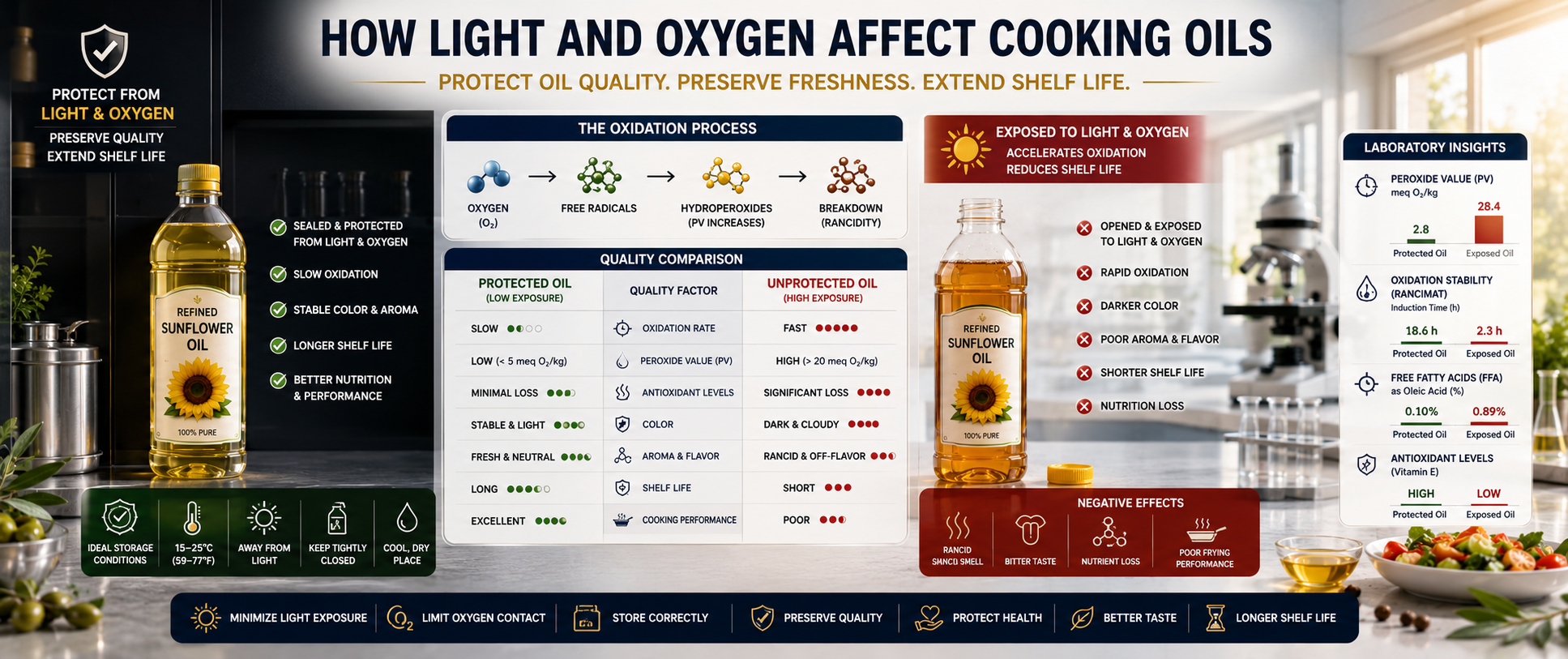
How Temperature Affects Oxidation
Oxidation proceeds much faster at elevated temperatures.
Higher temperatures increase:
- Oxygen reactions
- Peroxide formation
- Breakdown of antioxidants
- Development of rancid compounds
Maintaining cooler conditions significantly slows these reactions.
Temperature and Frying Oils
Fresh frying oil should always be stored properly before use.
Once used for frying, oil deteriorates more rapidly.
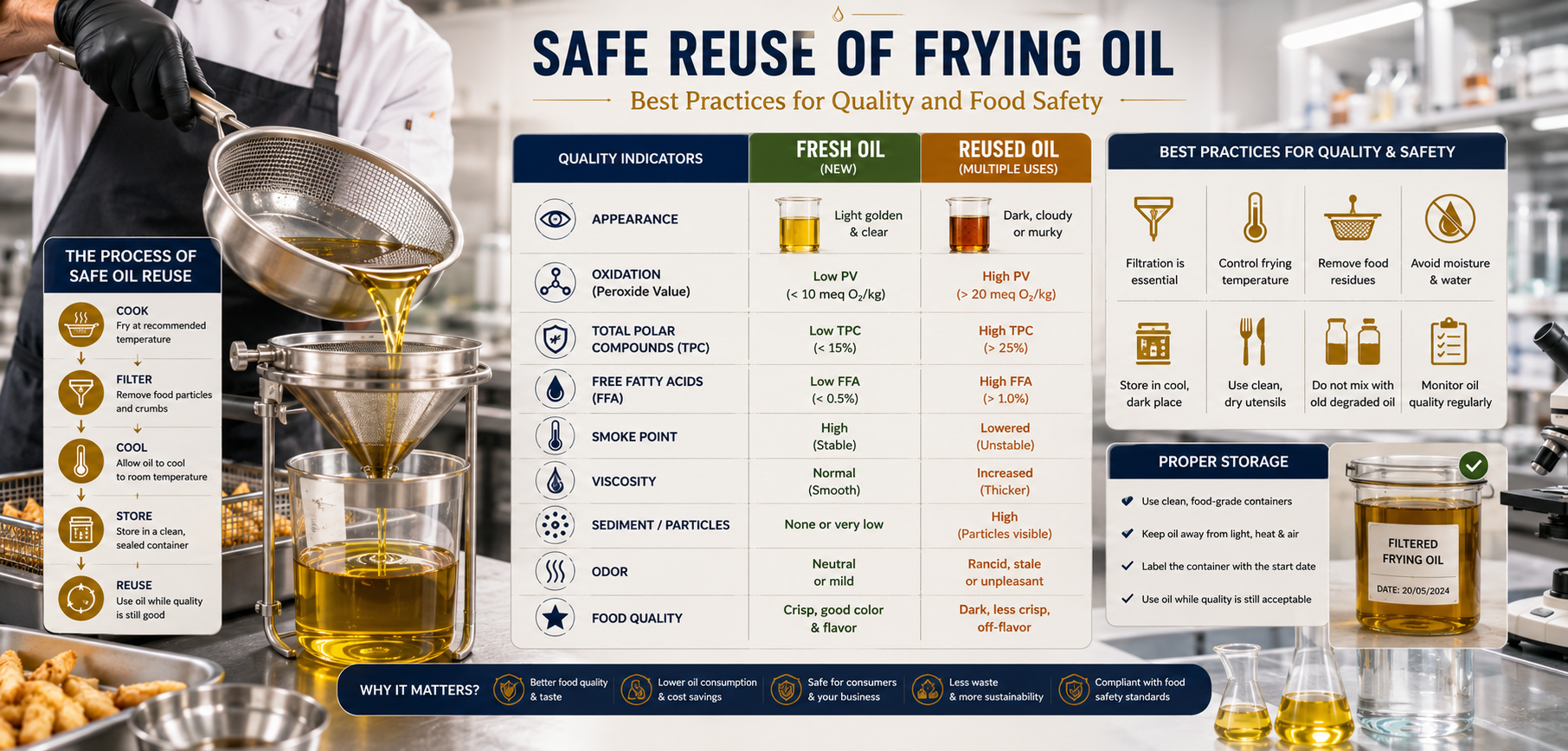
Used frying oil should:
- Cool completely before storage
- Be filtered if intended for limited reuse
- Be stored in clean, sealed containers
- Be protected from heat and sunlight
Even under good storage conditions, repeatedly heated oil has a shorter usable life.
Recommended Storage Temperature by Oil Type
| Oil Type | Recommended Storage Temperature |
|---|---|
| Refined Sunflower Oil | 15–25°C |
| High Oleic Sunflower Oil | 15–25°C |
| Olive Oil | 15–20°C |
| Canola Oil | 15–25°C |
| Corn Oil | 15–25°C |
| Soybean Oil | 15–25°C |
| Avocado Oil | 15–20°C |
Approximate recommendations may vary slightly depending on manufacturer guidance.
Common Storage Mistakes
Many consumers unintentionally shorten shelf life by:
- Storing oil next to the stove
- Leaving bottles in direct sunlight
- Keeping containers open
- Storing oil in garages during summer
- Purchasing oversized bottles that remain open for long periods
Simple storage improvements can significantly extend freshness.
Proper vs Improper Temperature
| Proper Temperature | Excessive Heat |
|---|---|
| Slower oxidation | Faster oxidation |
| Longer shelf life | Reduced shelf life |
| Better flavor | Off-flavors |
| Stable color | Darkening |
| Better nutritional retention | Nutrient degradation |
| Better frying performance | Reduced cooking quality |
Frequently Asked Questions (FAQ)
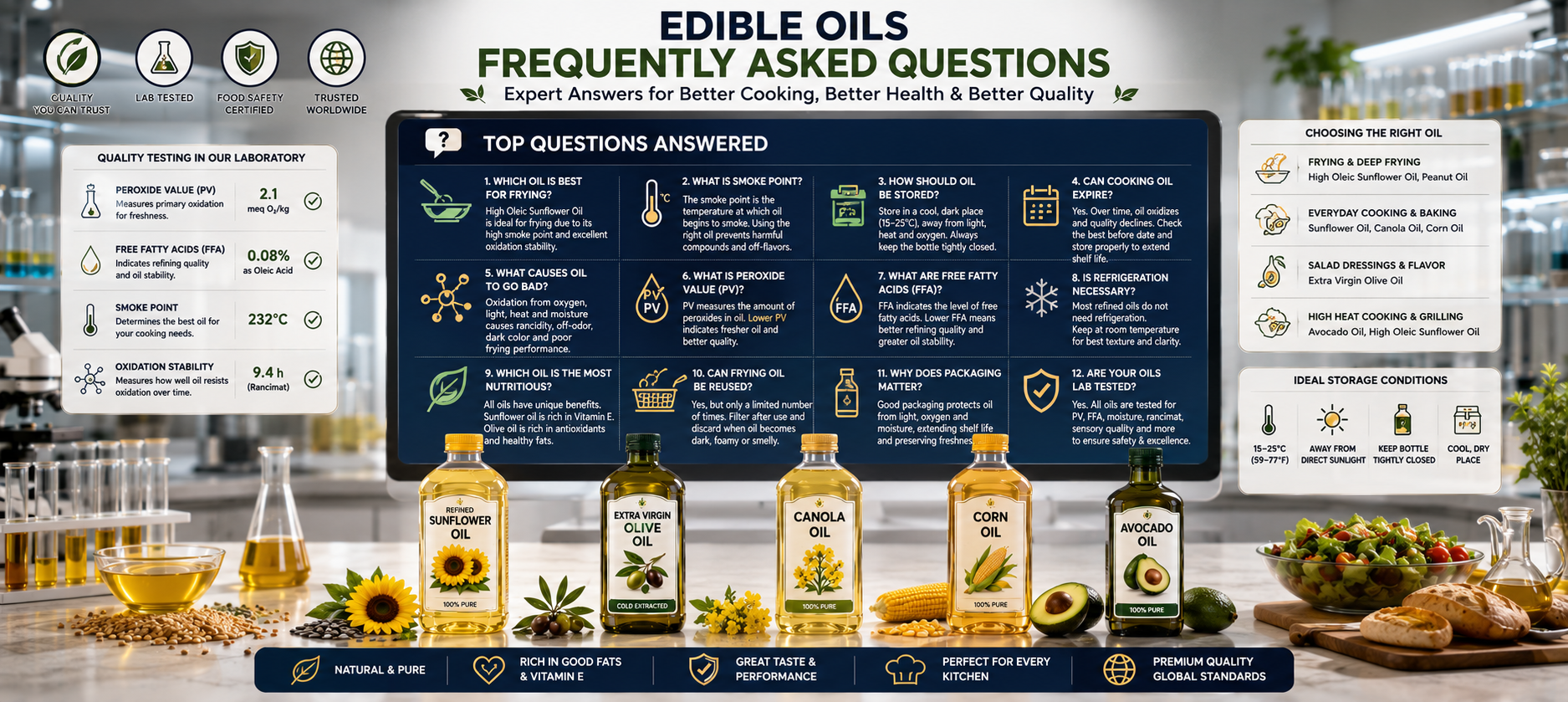
What is the ideal temperature for storing cooking oil?
Most refined edible oils are best stored at 15–25°C (59–77°F) in a cool, dry place away from direct sunlight.
Should cooking oil be refrigerated?
Most refined vegetable oils do not require refrigeration under normal household conditions.
Does heat damage cooking oil?
Yes. High temperatures accelerate oxidation and reduce freshness, shelf life, and nutritional quality.
Why does oil become cloudy in the refrigerator?
Cold temperatures may cause natural waxes or fats to crystallize temporarily. This usually disappears when the oil returns to room temperature.
Is temperature more important than packaging?
Both are important. Proper packaging and correct storage temperature work together to preserve oil quality.
Related Articles
- Storage Conditions for Cooking Oils
- Shelf Life of Edible Oils
- Signs That Oil Has Gone Bad
- How Light and Oxygen Affect Oils
- Oxidation Stability of Cooking Oils
- Peroxide Value Explained
Conclusion
Maintaining the proper storage temperature is one of the simplest and most effective ways to preserve the quality of edible oils. Stable temperatures between 15°C and 25°C, combined with protection from light, oxygen, and moisture, help maximize shelf life, maintain nutritional value, and preserve cooking performance. Whether storing oil at home, in restaurants, or in industrial facilities, proper temperature management is essential for ensuring consistent quality from the first drop to the last.
Call to Action
Choose premium edible oils produced under internationally recognized quality management systems and store them under recommended conditions to preserve their freshness and performance. Proper storage begins with professional manufacturing and continues with informed handling—ensuring every bottle delivers the quality, stability, and reliability you expect.
Leave a Reply