



Olive oil has been treasured for thousands of years and remains one of the world’s most respected edible oils. From Mediterranean kitchens to professional restaurants and modern food manufacturing, olive oil is celebrated for its unique flavor, nutritional value, and versatility.
Available in several grades—from extra virgin to refined olive oil—each type serves a different purpose. Whether you’re preparing fresh salads, sautéing vegetables, baking bread, or producing food on a commercial scale, understanding the characteristics of olive oil helps you choose the right product for every application.
This complete guide explores everything you need to know about olive oil, including how it is made, its nutritional composition, health benefits, cooking performance, and tips for selecting and storing premium-quality products.
What Is Olive Oil?
Olive oil is a natural edible oil extracted from the fruit of the olive tree (Olea europaea). Unlike many seed oils, olive oil comes from the fleshy pulp of the fruit rather than from seeds.
Olive trees have been cultivated for more than 6,000 years, primarily throughout the Mediterranean region, where countries such as Spain, Italy, Greece, Turkey, Portugal, and Tunisia remain among the world’s leading producers.
Today, olive oil is consumed worldwide for both culinary and nutritional purposes.
How Olive Oil Is Produced
The quality of olive oil begins long before extraction. Every stage of production influences the final product.
1. Harvesting
Olives are harvested when they reach the desired stage of ripeness. Some producers harvest early for more robust flavors, while others harvest later to increase oil yield.
2. Cleaning
Leaves, branches, dust, and other impurities are removed before processing.
3. Crushing
The olives are crushed into a paste using modern stainless-steel mills or traditional stone mills.
4. Malaxation
The olive paste is slowly mixed to allow tiny oil droplets to combine into larger ones, improving extraction efficiency.
5. Extraction
Modern facilities typically use centrifuges to separate oil from water and olive solids without the need for chemical solvents in virgin olive oil production.
6. Filtration and Packaging
Depending on the desired product, the oil may be filtered before bottling in containers designed to protect it from light and oxidation.
Types of Olive Oil
Several grades of olive oil are available, each with different characteristics and uses.
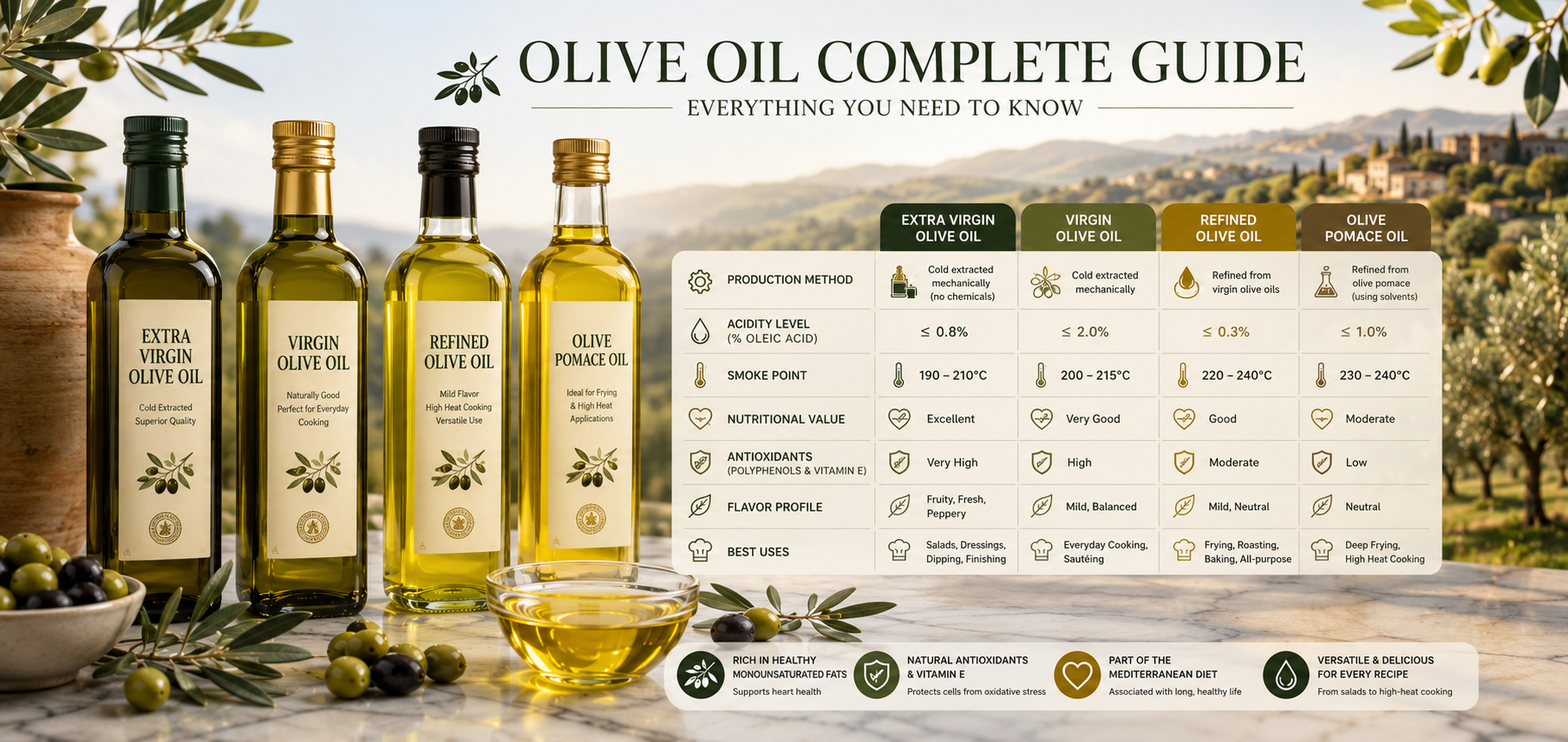
Extra Virgin Olive Oil (EVOO)
- Highest quality
- Mechanical extraction only
- No chemical refining
- Rich in natural antioxidants
- Fruity, fresh flavor
- Low free acidity (≤0.8%)
Best for:
- Salads
- Dressings
- Bread dipping
- Finishing dishes
Virgin Olive Oil
- Mechanically extracted
- Good flavor
- Slightly higher acidity than EVOO
- Suitable for everyday cooking
Refined Olive Oil
Produced by refining lower-grade virgin oils to remove defects while improving stability and shelf life.
Characteristics:
- Mild flavor
- Higher smoke point
- Light color
- Excellent cooking performance
Ideal for:
- Frying
- Sautéing
- Roasting
- Commercial kitchens
Olive Pomace Oil
Made from the remaining olive paste after virgin oil extraction using additional processing methods.
Commonly used for:
- Deep frying
- Food service
- Large-scale food production
Nutritional Value
One tablespoon of olive oil provides approximately:
| Nutrient | Amount |
|---|---|
| Calories | 120 kcal |
| Total Fat | 14 g |
| Monounsaturated Fat | ~10 g |
| Polyunsaturated Fat | ~1.5 g |
| Saturated Fat | ~2 g |
| Cholesterol | 0 g |
| Vitamin E | Good source |
| Vitamin K | Moderate source |
Olive oil is naturally cholesterol-free because it is a plant-based oil.
Fatty Acid Composition
Olive oil is especially valued for its high concentration of monounsaturated fatty acids, primarily oleic acid.
Typical composition:
- Monounsaturated Fat: 70–75%
- Polyunsaturated Fat: 8–12%
- Saturated Fat: 12–15%
This balance contributes to its stability and versatility in cooking.
Natural Antioxidants
Extra virgin olive oil contains naturally occurring compounds such as:
- Polyphenols
- Tocopherols (Vitamin E)
- Oleuropein
- Oleocanthal
- Squalene
These compounds contribute to flavor, stability, and the oil’s resistance to oxidation.
Smoke Point
| Olive Oil Type | Approximate Smoke Point |
|---|---|
| Extra Virgin Olive Oil | 190–210°C |
| Virgin Olive Oil | 200–215°C |
| Refined Olive Oil | 220–240°C |
| Olive Pomace Oil | 230–240°C |
Refined grades are generally preferred for high-temperature cooking due to their greater heat stability.
Cooking Applications
Extra Virgin Olive Oil
Ideal for:
- Salad dressings
- Bread dipping
- Pasta
- Vegetables
- Finishing grilled dishes
Refined Olive Oil
Excellent for:
- Frying
- Sautéing
- Roasting
- Baking
- Everyday cooking
Olive Pomace Oil
Commonly used in:
- Restaurants
- Commercial frying
- Food manufacturing
- Large-scale kitchens
Health Benefits
When consumed as part of a balanced diet, olive oil may contribute to:
- Heart health
- Healthy cholesterol balance
- Antioxidant intake
- Replacement of saturated fats with unsaturated fats
- Overall dietary quality
Many of these benefits are associated with diets that emphasize whole foods, vegetables, legumes, nuts, and olive oil as the primary source of added fat.
How to Choose High-Quality Olive Oil
Look for products that provide:
- Clear labeling of olive oil grade
- Harvest or production information (when available)
- Dark glass or opaque packaging
- Proper food safety certifications
- Reliable country of origin information
- Packaging that protects the oil from light and air
Choose products from reputable manufacturers committed to consistent quality and traceability.
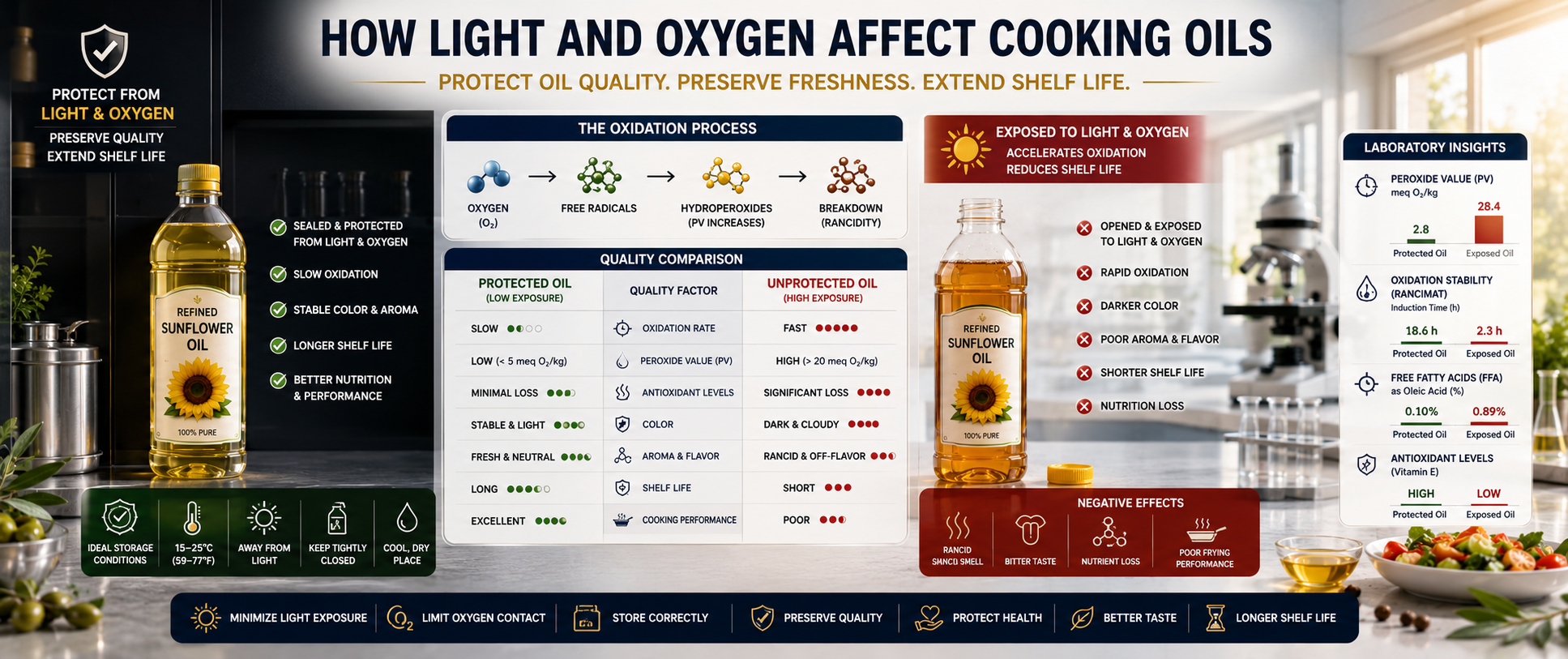
Storage Tips
To preserve quality:
- Store in a cool, dry place.
- Keep away from direct sunlight.
- Close the bottle tightly after each use.
- Avoid storing near ovens or heat sources.
- Use clean utensils to prevent contamination.
Proper storage helps maintain flavor and slows oxidation.
Common Myths About Olive Oil
Myth 1: Olive oil cannot be used for cooking.
Fact: Refined olive oil is well suited for frying and high-heat cooking, while extra virgin olive oil performs well for many everyday cooking methods.
Myth 2: All olive oils are the same.
Fact: Olive oil grades differ in production methods, flavor, antioxidant content, and recommended uses.
Myth 3: Green olive oil is always better.
Fact: Color depends on olive variety and harvest timing and is not a reliable indicator of quality.
Myth 4: Cloudy olive oil is always superior.
Fact: Cloudiness often results from suspended particles and does not necessarily indicate higher quality.
Side-by-Side Comparison of Olive Oil Types
| Feature | Extra Virgin | Virgin | Refined | Pomace |
|---|---|---|---|---|
| Flavor | ⭐⭐⭐⭐⭐ | ⭐⭐⭐⭐ | ⭐⭐⭐ | ⭐⭐ |
| Antioxidants | ⭐⭐⭐⭐⭐ | ⭐⭐⭐⭐ | ⭐⭐ | ⭐ |
| Smoke Point | ⭐⭐⭐ | ⭐⭐⭐⭐ | ⭐⭐⭐⭐⭐ | ⭐⭐⭐⭐⭐ |
| Frying | ⭐⭐⭐ | ⭐⭐⭐⭐ | ⭐⭐⭐⭐⭐ | ⭐⭐⭐⭐⭐ |
| Salad Dressings | ⭐⭐⭐⭐⭐ | ⭐⭐⭐⭐ | ⭐⭐⭐ | ⭐⭐ |
| Everyday Cooking | ⭐⭐⭐⭐ | ⭐⭐⭐⭐ | ⭐⭐⭐⭐⭐ | ⭐⭐⭐⭐ |
Frequently Asked Questions (FAQ)
Is olive oil healthier than butter?
Olive oil is naturally rich in monounsaturated fats and contains no cholesterol, while butter contains more saturated fat and dietary cholesterol.
Can olive oil be used for frying?
Yes. Refined olive oil and olive pomace oil are commonly used for frying due to their higher smoke points.
What is the difference between extra virgin and refined olive oil?
Extra virgin olive oil is mechanically extracted without refining and retains more natural flavor and antioxidants. Refined olive oil undergoes additional processing to improve stability and create a milder taste.
Does olive oil contain cholesterol?
No. Olive oil is a plant-based oil and is naturally cholesterol-free.
How long does olive oil last?
When stored properly in a cool, dark place, unopened olive oil typically maintains its quality for many months. Once opened, it is best used within the period recommended by the manufacturer to enjoy optimal flavor and freshness.
Related Articles
- Extra Virgin Olive Oil Explained
- Types of Olive Oil
- Health Benefits of Olive Oil
- How to Recognize Genuine Olive Oil
- Olive Oil Storage Guide
- Olive Oil vs Avocado Oil
Conclusion
Olive oil is one of the world’s most versatile and respected edible oils, offering a unique combination of flavor, nutritional value, and cooking performance. From the vibrant taste of extra virgin olive oil to the high-heat stability of refined olive oil and olive pomace oil, each grade has a distinct role in both home and professional kitchens.
By understanding the differences between olive oil types, choosing products from reputable producers, and storing them correctly, consumers can enjoy the full culinary and nutritional benefits that olive oil has to offer.
Call to Action
Discover our premium selection of high-quality edible oils, including refined olive oil and refined sunflower oil, produced to international quality standards. Whether you are a home cook, food service professional, or global distributor, our products deliver consistent performance, outstanding quality, and reliable supply for every culinary application.
Leave a Reply