



Every packaged edible oil carries a Best Before or Expiration Date, but many consumers are unsure what these dates actually mean. Some believe cooking oil never expires because it does not spoil like milk or fresh vegetables, while others assume oil becomes unsafe immediately after the printed date.
The truth is more nuanced.
Cooking oils gradually lose quality over time through natural chemical processes. Although properly stored oil may remain usable beyond its labeled date in some cases, freshness, flavor, aroma, and stability slowly decline as oxidation progresses.
Understanding how edible oils age helps consumers store them correctly, recognize signs of deterioration, and avoid unnecessary waste.
Do Cooking Oils Really Expire?
Yes.
Like all foods containing fats, edible oils undergo gradual chemical changes during storage.
The primary causes of aging include:
- Oxidation
- Light exposure
- Heat
- Oxygen
- Moisture
- Time
These processes eventually reduce oil quality, even if the container remains unopened.
Best Before vs Expiration Date
Many consumers confuse these two terms.
Best Before Date
A Best Before date indicates the period during which the manufacturer expects the oil to maintain its optimal:
- Flavor
- Aroma
- Color
- Nutritional quality
- Cooking performance
After this date, quality may gradually decline.
Expiration Date
An Expiration Date generally indicates the end of the recommended consumption period established by the manufacturer or regulatory authority.
Requirements vary depending on local food regulations.
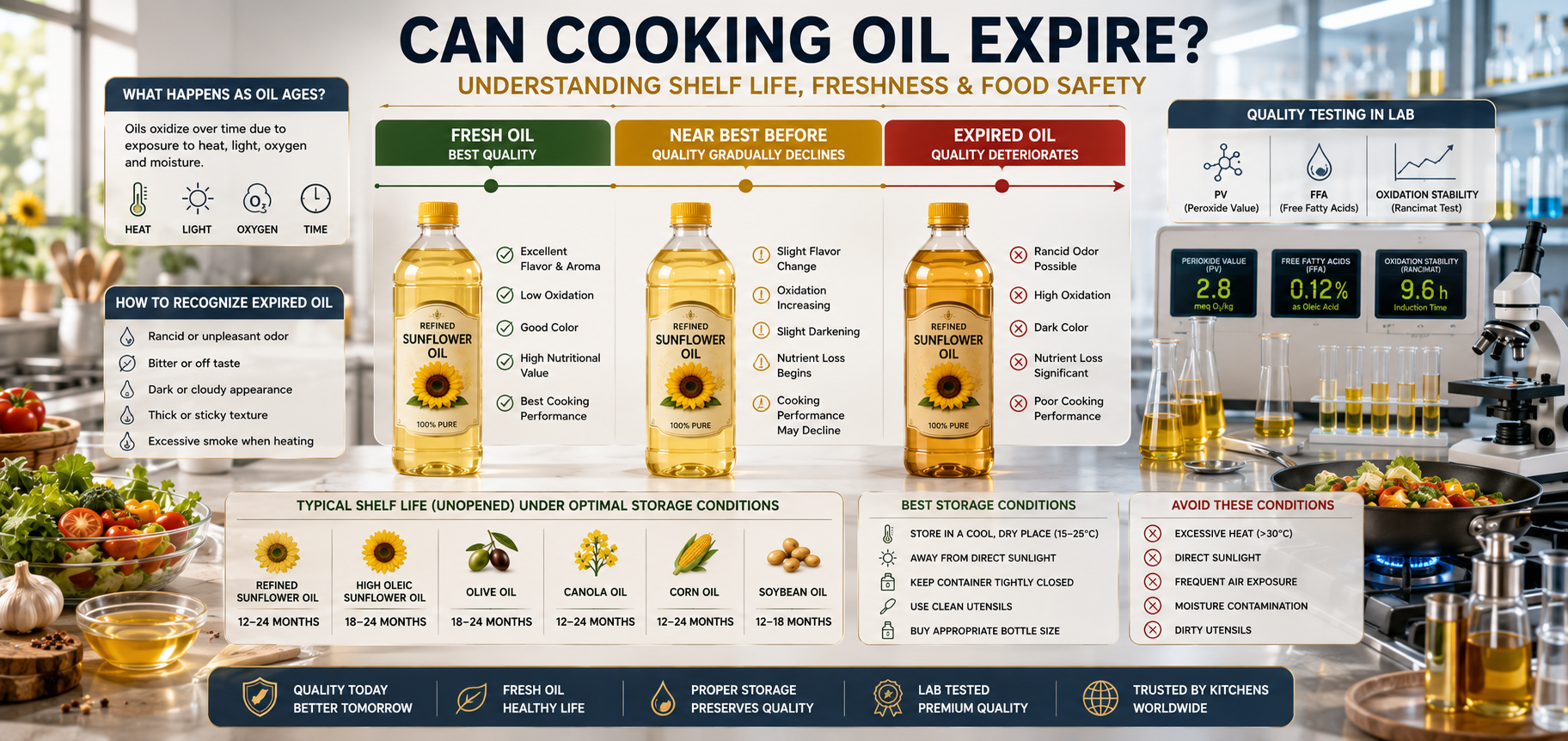
What Happens as Oil Ages?
As edible oil ages, oxidation slowly produces chemical changes.
These include:
- Formation of peroxides
- Breakdown of antioxidants
- Development of aldehydes and ketones
- Flavor deterioration
- Aroma changes
- Color changes
These reactions occur gradually rather than suddenly.
Does Expired Oil Become Dangerous Immediately?
Not necessarily.
Passing the printed date does not automatically mean the oil has become unsafe.
If stored correctly and showing no signs of deterioration, the oil may still retain acceptable quality for some time.
However, once significant oxidation has occurred, the oil should no longer be used.
Consumers should evaluate both the date and the condition of the product.
Signs That Cooking Oil Has Gone Bad
Several visible and sensory changes may indicate deterioration.
Look for:
- Rancid odor
- Bitter or unpleasant taste
- Darkened color
- Cloudiness (when not caused by refrigeration)
- Sticky or thick consistency
- Excessive foaming during frying
- Smoke developing earlier than usual
If these signs are present, the oil should be discarded.
What Causes Oil to Expire Faster?
Several factors accelerate deterioration.
Heat
High temperatures significantly increase oxidation.
Storing oil near:
- Ovens
- Stovetops
- Radiators
can shorten shelf life.
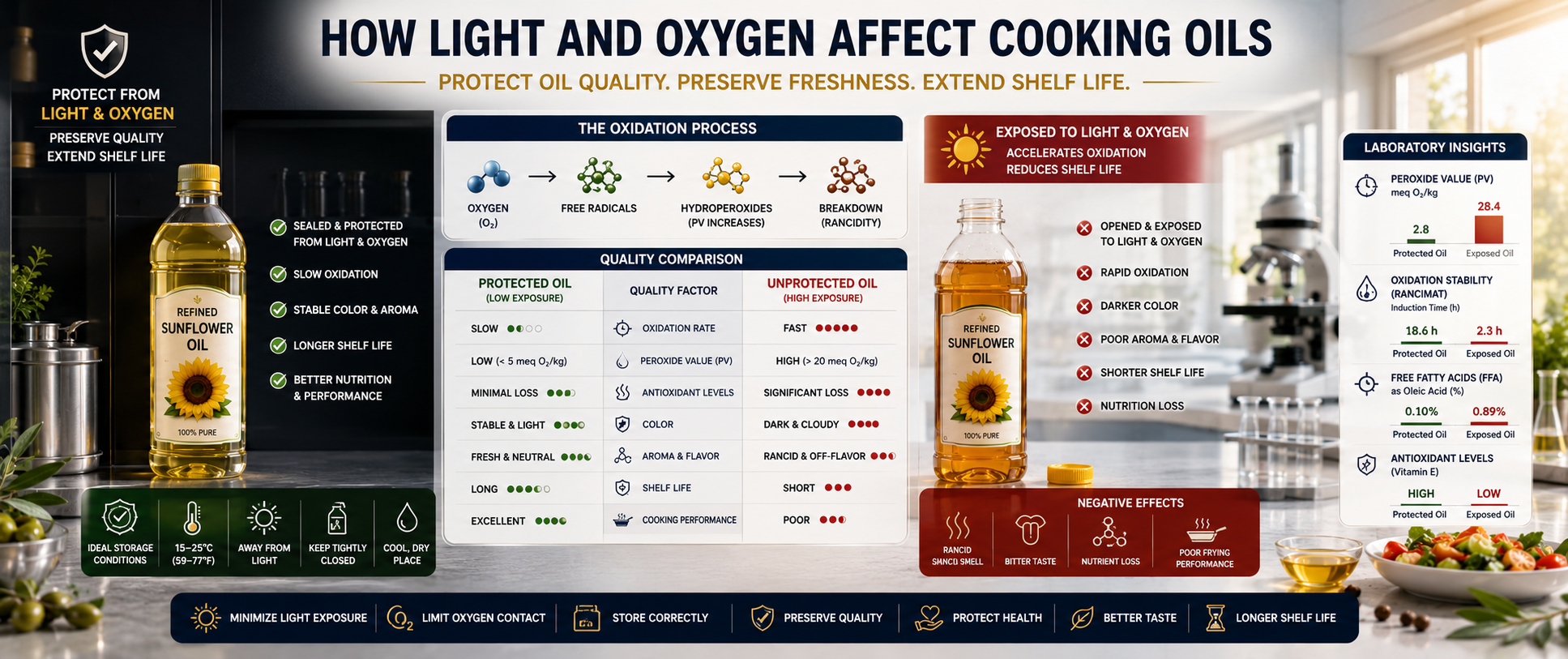
Light
Ultraviolet light destroys natural antioxidants and speeds oxidation.
Premium packaging often includes UV protection to reduce this effect.
Oxygen
Every time a bottle is opened, oxygen enters the container.
Repeated exposure gradually accelerates oxidation.
Always reseal bottles tightly after use.
Moisture
Although edible oils repel water, moisture contamination may contribute to quality deterioration and reduce storage stability.
Does Refrigeration Prevent Expiration?
Not completely.
Most refined vegetable oils do not require refrigeration.
Cold storage may slow certain chemical reactions but does not stop natural aging.
Additionally, refrigeration may cause temporary:
- Cloudiness
- Wax crystallization
- Increased viscosity
These changes usually disappear at room temperature.
Shelf Life of Common Cooking Oils
Approximate unopened shelf life under recommended storage conditions:
| Oil Type | Typical Shelf Life |
|---|---|
| Refined Sunflower Oil | 12–24 Months |
| High Oleic Sunflower Oil | 18–24 Months |
| Olive Oil | 18–24 Months |
| Canola Oil | 12–24 Months |
| Corn Oil | 12–24 Months |
| Soybean Oil | 12–18 Months |
| Avocado Oil | 12–24 Months |
Actual shelf life depends on manufacturing methods, packaging quality, and storage conditions.
What Happens After Opening?
Opening the bottle exposes oil to:
- Oxygen
- Moisture
- Temperature changes
For best quality, most opened cooking oils should be used within two to six months, depending on usage and storage conditions.
Keeping containers tightly sealed helps preserve freshness.
How Manufacturers Determine Shelf Life
Professional manufacturers establish shelf life through laboratory testing.
Common quality evaluations include:
- Peroxide Value (PV)
- Free Fatty Acids (FFA)
- Oxidation Stability (Rancimat)
- Sensory Evaluation
- Accelerated Shelf-Life Testing
These analyses help determine realistic “Best Before” dates.
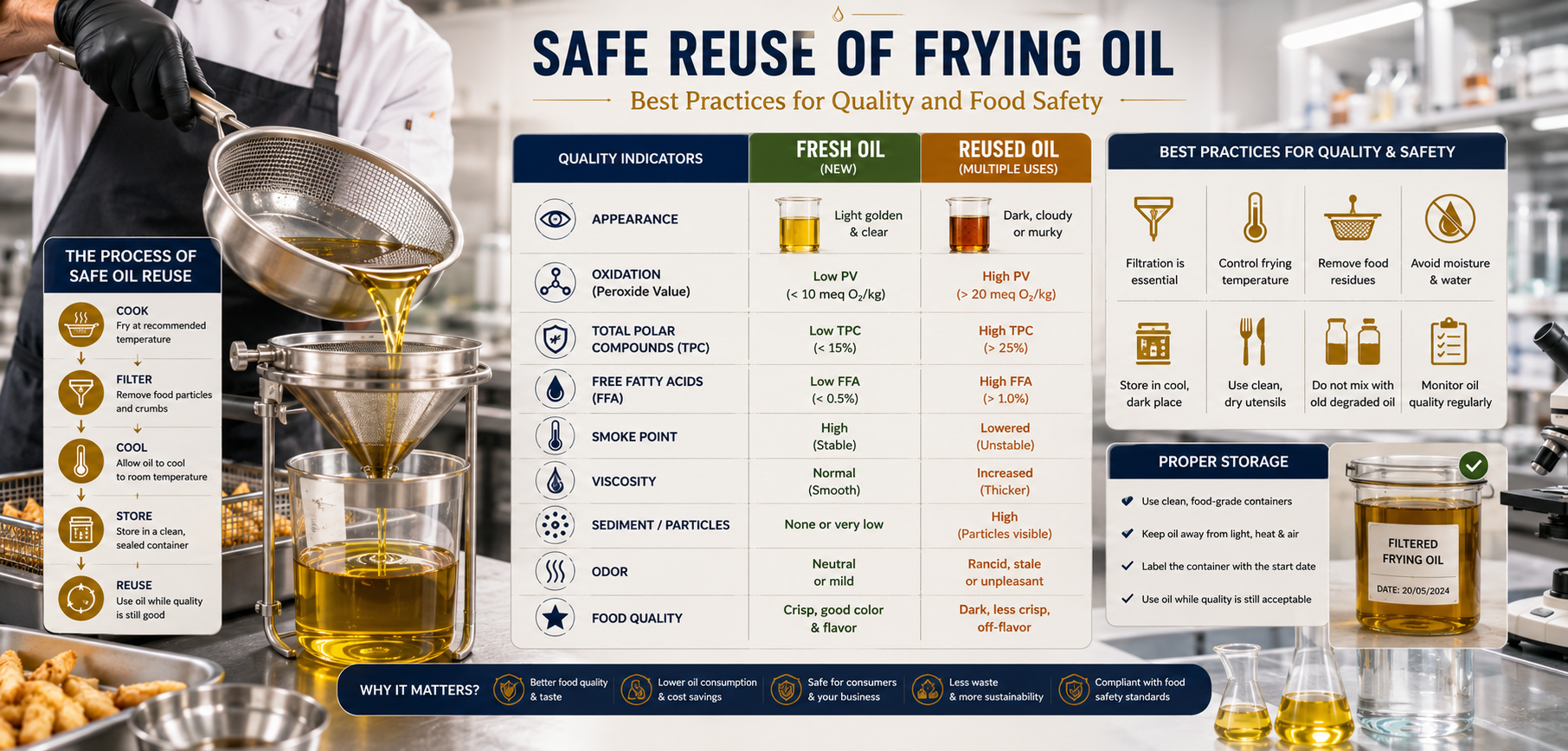
Can Expired Oil Still Be Used for Frying?
If the oil has developed signs of oxidation or rancidity, it should not be used for frying.
Using deteriorated oil may result in:
- Poor flavor
- Excessive smoke
- Reduced frying performance
- Lower food quality
Fresh oil consistently delivers better cooking results.
Tips to Extend Shelf Life
Consumers can maximize oil freshness by:
- Storing bottles between 15–25°C
- Keeping containers tightly sealed
- Avoiding direct sunlight
- Purchasing appropriate bottle sizes
- Using clean utensils
- Following manufacturer storage instructions
Proper handling significantly slows deterioration.
Common Myths
“Cooking oil lasts forever.”
False.
All edible oils gradually deteriorate over time.
“Oil becomes unsafe the day after the Best Before date.”
False.
Quality usually declines gradually rather than instantly.
“Refrigeration completely prevents expiration.”
False.
Cold temperatures slow certain reactions but cannot stop natural aging.
“Clear oil is always fresh.”
False.
Oxidation can occur before visible changes appear.
Laboratory testing remains the most accurate assessment.
Fresh Oil vs Expired Oil
| Fresh Oil | Deteriorated Oil |
|---|---|
| Pleasant aroma | Rancid odor |
| Neutral taste | Bitter taste |
| Stable color | Darkened appearance |
| Good frying performance | Excessive smoke |
| Low oxidation | High oxidation |
| Better shelf life | Reduced quality |
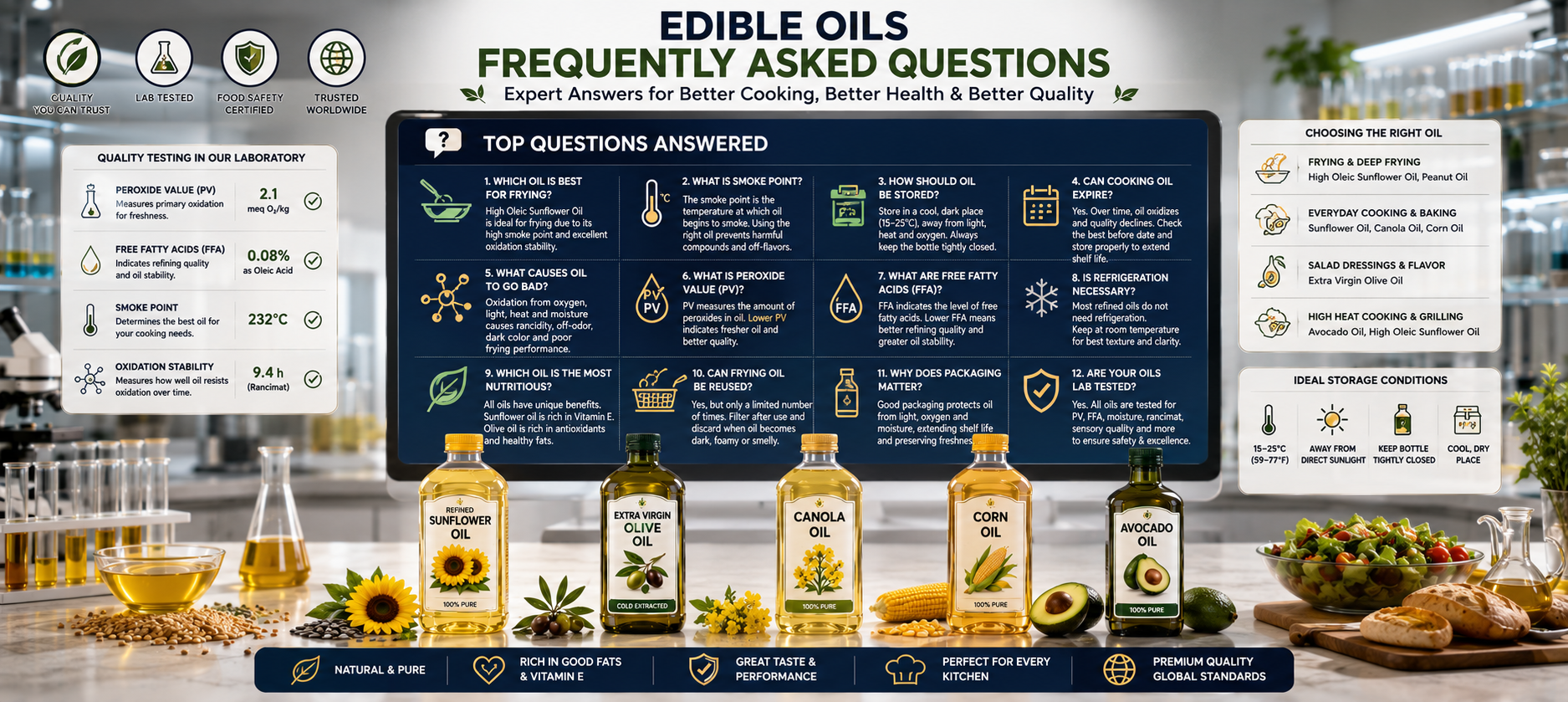
Frequently Asked Questions (FAQ)
Can unopened cooking oil expire?
Yes. Even sealed oil slowly ages because oxidation occurs naturally over time.
Is the Best Before date the same as an expiration date?
Not always. A Best Before date primarily refers to optimal quality rather than immediate safety.
How can I tell if oil has gone bad?
Check for rancid odor, unpleasant taste, dark color, excessive smoke, or unusual texture.
Should expired cooking oil always be discarded?
Not necessarily. If it has been stored properly and shows no signs of deterioration, it may still be usable for a limited period. However, sensory evaluation is essential.
What is the best way to prevent oil from expiring early?
Store oil in a cool, dry, dark place, keep the container tightly closed, and minimize exposure to heat, light, and oxygen.
Related Articles
- Shelf Life of Edible Oils
- Best Temperature for Oil Storage
- Storage Conditions for Cooking Oils
- Signs That Oil Has Gone Bad
- How Light and Oxygen Affect Oils
- Peroxide Value Explained
Conclusion
Cooking oils do expire, but the process is gradual rather than immediate. Oxidation, heat, light, oxygen, and storage conditions all influence how quickly an oil loses its freshness and quality. By understanding the meaning of Best Before dates, recognizing signs of deterioration, and following proper storage practices, consumers can enjoy safer, fresher, and better-performing cooking oils while reducing unnecessary waste.
Call to Action
Choose premium edible oils manufactured under internationally recognized quality management systems and store them according to the manufacturer’s recommendations. Proper production, careful packaging, and informed storage practices ensure that every bottle delivers outstanding freshness, stability, and cooking performance throughout its intended shelf life.
Leave a Reply