



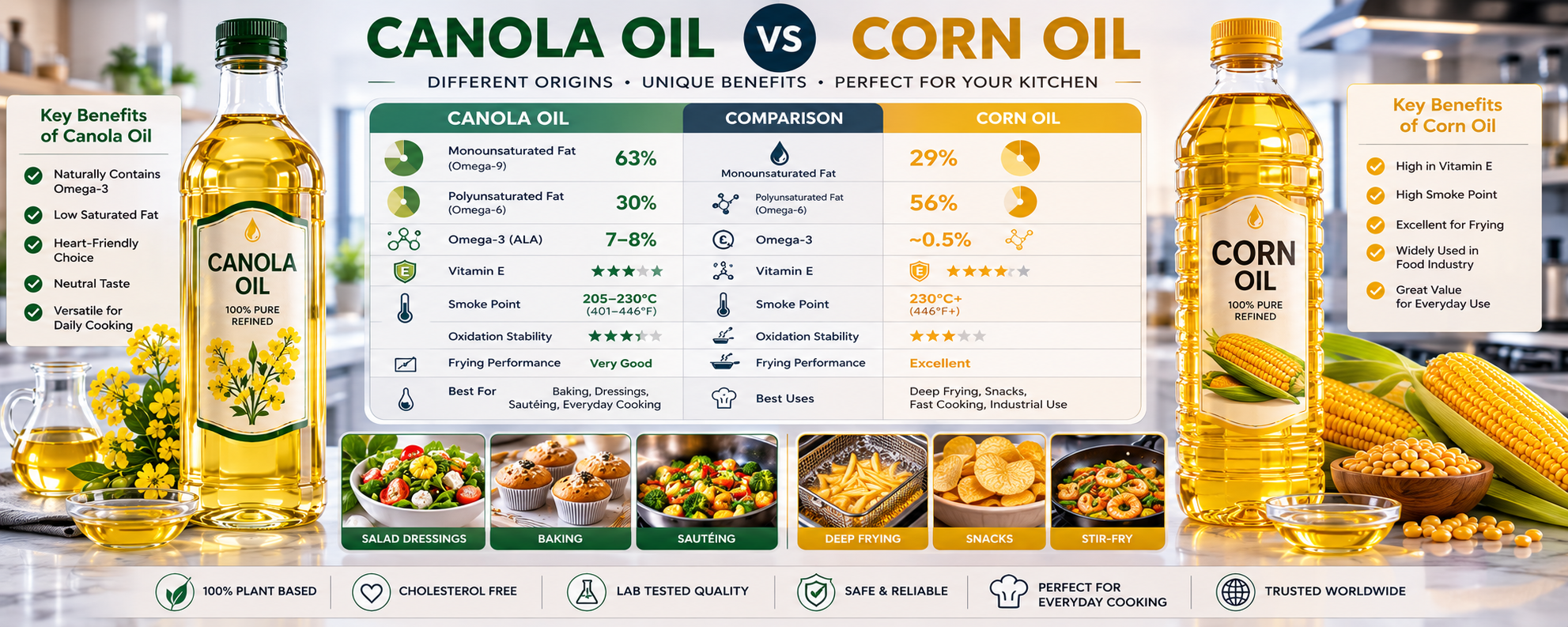
Canola oil and corn oil are among the most widely consumed vegetable oils in the world. Both are versatile, affordable, and commonly used for frying, baking, sautéing, and food manufacturing. Despite these similarities, they differ in fatty acid composition, nutritional characteristics, oxidation stability, and ideal cooking applications.
Choosing between canola oil and corn oil depends on how the oil will be used, the desired nutritional profile, and cooking temperature.
Understanding the strengths of each oil allows consumers and food professionals to make informed decisions for both household and commercial kitchens.
What Is Canola Oil?
Canola oil is extracted from specially cultivated varieties of rapeseed (Brassica napus).
Modern canola oil is characterized by:
- Low saturated fat
- High monounsaturated fat
- Mild flavor
- Balanced fatty acid profile
- Good oxidative stability
It is widely used in:
- Household cooking
- Baking
- Salad dressings
- Food processing
- Commercial frying
What Is Corn Oil?
Corn oil is extracted from the germ of corn kernels (Zea mays).
It is widely appreciated for:
- Mild taste
- High smoke point
- Good frying performance
- Natural Vitamin E content
Corn oil is commonly used in:
- Deep frying
- Snack production
- Margarine
- Food manufacturing
- Restaurant cooking
Nutritional Comparison
Both oils provide similar caloric values.
| Nutrient (Approximate) | Canola Oil | Corn Oil |
|---|---|---|
| Calories | 884 kcal | 884 kcal |
| Total Fat | 100 g | 100 g |
| Saturated Fat | Very Low | Low |
| Monounsaturated Fat | High | Moderate |
| Polyunsaturated Fat | Moderate | High |
| Vitamin E | Moderate | High |
| Cholesterol | 0 mg | 0 mg |
Both oils are naturally cholesterol-free.
Fatty Acid Composition
The major difference lies in the balance of fatty acids.
Canola Oil
Rich in:
- Oleic Acid (Omega-9)
Contains:
- Linoleic Acid (Omega-6)
- Alpha-Linolenic Acid (Omega-3)
Its balanced profile contributes to good versatility.
Corn Oil
Rich in:
- Linoleic Acid (Omega-6)
Contains:
- Moderate Oleic Acid (Omega-9)
- Small amounts of Omega-3
Corn oil is naturally richer in polyunsaturated fats than canola oil.
Omega-3 and Omega-6
Canola oil is notable for containing naturally occurring plant-based Omega-3 (ALA).
Corn oil contains:
- Higher Omega-6
- Very limited Omega-3
Both oils provide essential fatty acids, although in different proportions.
Vitamin E
Corn oil naturally contains relatively high levels of Vitamin E.
Vitamin E acts as:
- An antioxidant
- A protector against oxidative stress
- A contributor to oil stability
Canola oil also contains Vitamin E, but generally at lower levels.
Smoke Point
Approximate smoke points:
| Oil | Smoke Point |
|---|---|
| Refined Canola Oil | ~205–230°C |
| Refined Corn Oil | ~230°C |
Both oils are suitable for high-temperature cooking.
Frying Performance
Corn oil is especially popular for:
- Deep frying
- Restaurant kitchens
- Snack manufacturing
- Commercial food production
Its high smoke point supports consistent frying performance.
Canola oil also performs well in frying while offering a balanced fatty acid composition.
Baking
Both oils are excellent for baking because of their mild flavor.
They help create:
- Moist cakes
- Tender pastries
- Soft bread
- Consistent texture
Neither oil significantly alters the flavor of baked goods.
Flavor Profile
Canola Oil
Characteristics:
- Neutral
- Mild
- Clean
Suitable for recipes where the natural taste of food should dominate.
Corn Oil
Characteristics:
- Mild
- Slightly sweet
- Neutral after refining
Both oils are considered versatile for everyday cooking.
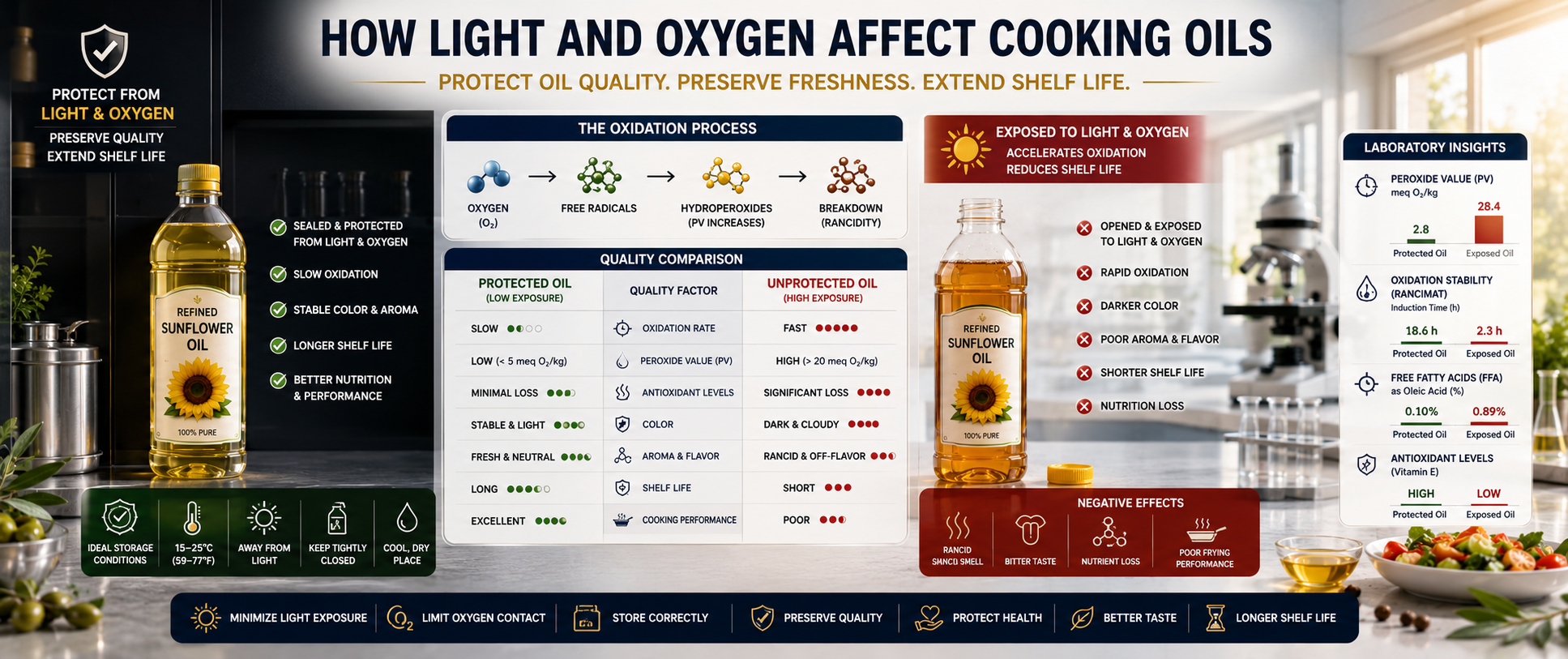
Oxidation Stability
Oxidative stability depends primarily on fatty acid composition.
General comparison:
- Canola Oil → Good to Very Good
- Corn Oil → Moderate to Good
Proper refining, packaging, and storage significantly influence actual stability.
Health Considerations
Both oils contain predominantly unsaturated fats and can be included in a balanced diet.
Canola oil provides:
- Low saturated fat
- Monounsaturated fats
- Plant-based Omega-3 fatty acids
Corn oil provides:
- Vitamin E
- Polyunsaturated fatty acids
- Essential Omega-6 fatty acids
Neither oil should be viewed as a complete source of nutrition on its own.
Industrial Applications
Canola Oil
Frequently used in:
- Mayonnaise
- Salad dressings
- Baking
- Margarine
- Food processing
Corn Oil
Widely used in:
- Deep frying
- Snack foods
- Frozen foods
- Fast-food restaurants
- Industrial food production
Both oils play important roles in the global food industry.
Price Comparison
Prices vary depending on:
- Harvest conditions
- Global vegetable oil markets
- Processing costs
- Regional availability
Both oils are generally considered economical cooking oils.
Which Oil Should You Choose?
Choose Canola Oil if you prefer:
- Balanced fatty acid profile
- Naturally occurring Omega-3
- Mild everyday cooking oil
- Baking and dressings
Choose Corn Oil if you prefer:
- High smoke point
- Excellent frying performance
- Higher Vitamin E content
- Commercial frying applications
Many professional kitchens use both oils depending on the cooking method.
Comparison Table
| Feature | Canola Oil | Corn Oil |
|---|---|---|
| Flavor | Neutral | Mild |
| Vitamin E | Good | Excellent |
| Omega-3 | Present | Very Low |
| Omega-6 | Moderate | High |
| Smoke Point | High | High |
| Frying | Very Good | Excellent |
| Baking | Excellent | Excellent |
| Oxidation Stability | Good–Very Good | Moderate–Good |
| Commercial Use | Extensive | Extensive |
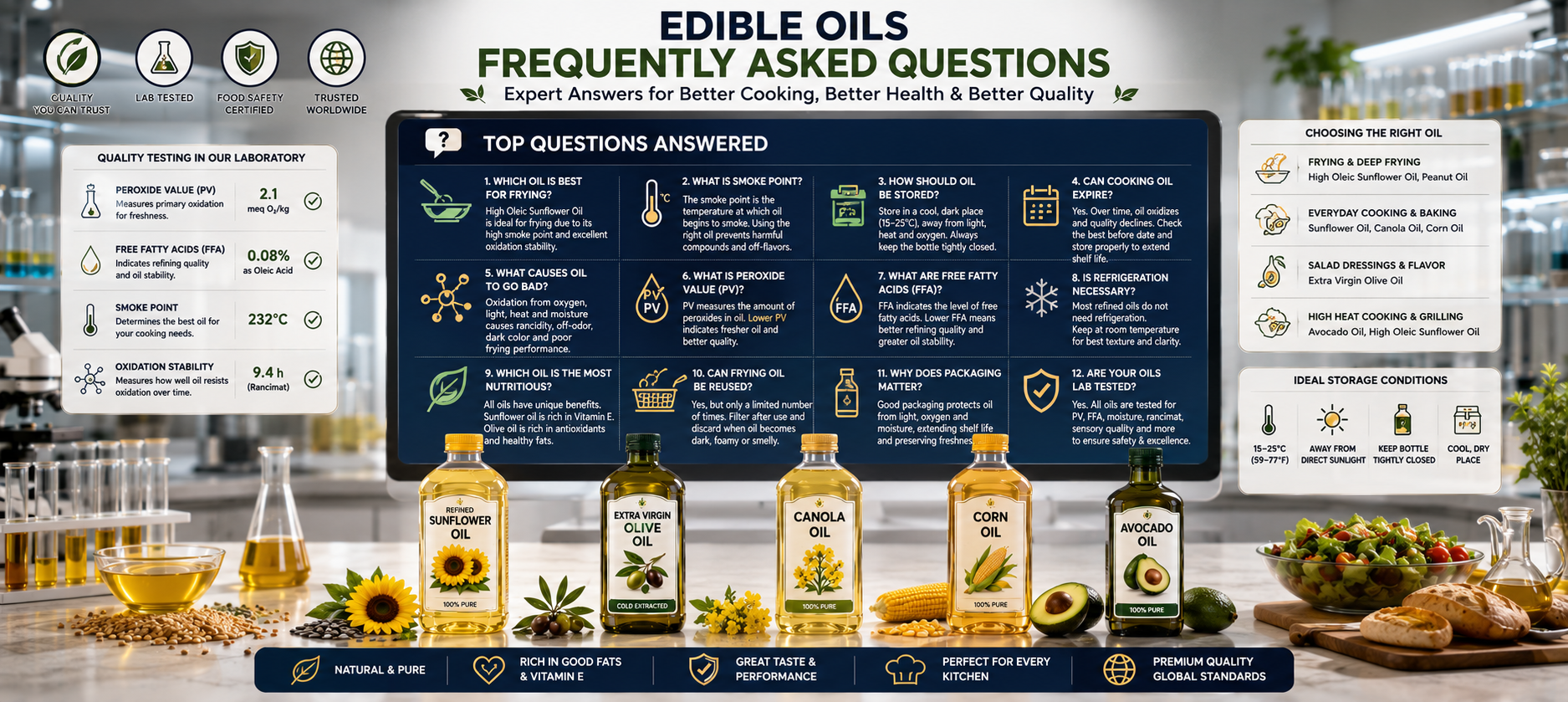
Frequently Asked Questions (FAQ)
Which oil contains more Omega-3?
Canola oil naturally contains significantly more plant-based Omega-3 (ALA) than corn oil.
Which oil contains more Vitamin E?
Corn oil generally contains more Vitamin E than canola oil.
Which oil is better for frying?
Both oils are suitable for frying, but corn oil is especially popular for deep frying because of its high smoke point and widespread commercial use.
Can both oils be used every day?
Yes. Both refined canola oil and refined corn oil can be incorporated into a balanced diet when consumed appropriately.
Which oil has a more neutral flavor?
Both oils have mild flavors, although canola oil is generally considered slightly more neutral.
Related Articles
- Sunflower Oil vs Canola Oil
- Sunflower Oil vs Corn Oil
- Sunflower Oil vs Soybean Oil
- Which Oil Is Best for Frying?
- Smoke Point of Cooking Oils
- Healthy Cooking Oils Guide
Conclusion
Canola oil and corn oil are both versatile vegetable oils suitable for a wide range of culinary applications. Canola oil stands out for its balanced fatty acid profile, naturally occurring Omega-3 content, and mild flavor, while corn oil is valued for its higher Vitamin E content, excellent frying performance, and high smoke point. The best choice depends on cooking style, nutritional priorities, and intended use. Many households and professional kitchens benefit from keeping both oils available for different cooking applications.
Call to Action
Discover our premium selection of refined edible oils, produced under internationally recognized food safety and quality standards. Whether you are cooking at home, operating a restaurant, or sourcing products for international markets, our high-quality oils deliver outstanding performance, consistency, and reliability in every application.
Leave a Reply