



Choosing a cooking oil is no longer as simple as buying the first bottle on the supermarket shelf. Today’s consumers can choose from dozens of edible oils, each offering different characteristics, flavors, cooking performance, and nutritional profiles.
The “best” cooking oil depends on how you cook, what you cook, and what qualities you value most—whether that’s heat stability, neutral taste, rich flavor, or versatility.
This guide explains the key factors to consider when selecting the right edible oil for your kitchen or food business.
Why Oil Selection Matters
Cooking oil is more than just an ingredient—it affects:
- Flavor
- Texture
- Aroma
- Heat stability
- Shelf life of cooked foods
- Nutritional profile
- Cooking efficiency
- Food appearance
Using the wrong oil for a particular cooking method may reduce cooking performance and alter the final taste of a dish.
Step 1: Consider Your Cooking Method
The first question to ask is:
How will the oil be used?
Different cooking techniques require different oil characteristics.
Common Cooking Methods
- Deep frying
- Shallow frying
- Stir-frying
- Sautéing
- Baking
- Roasting
- Grilling
- Salad dressings
- Marinades
- Finishing dishes
Each method places different demands on the oil.
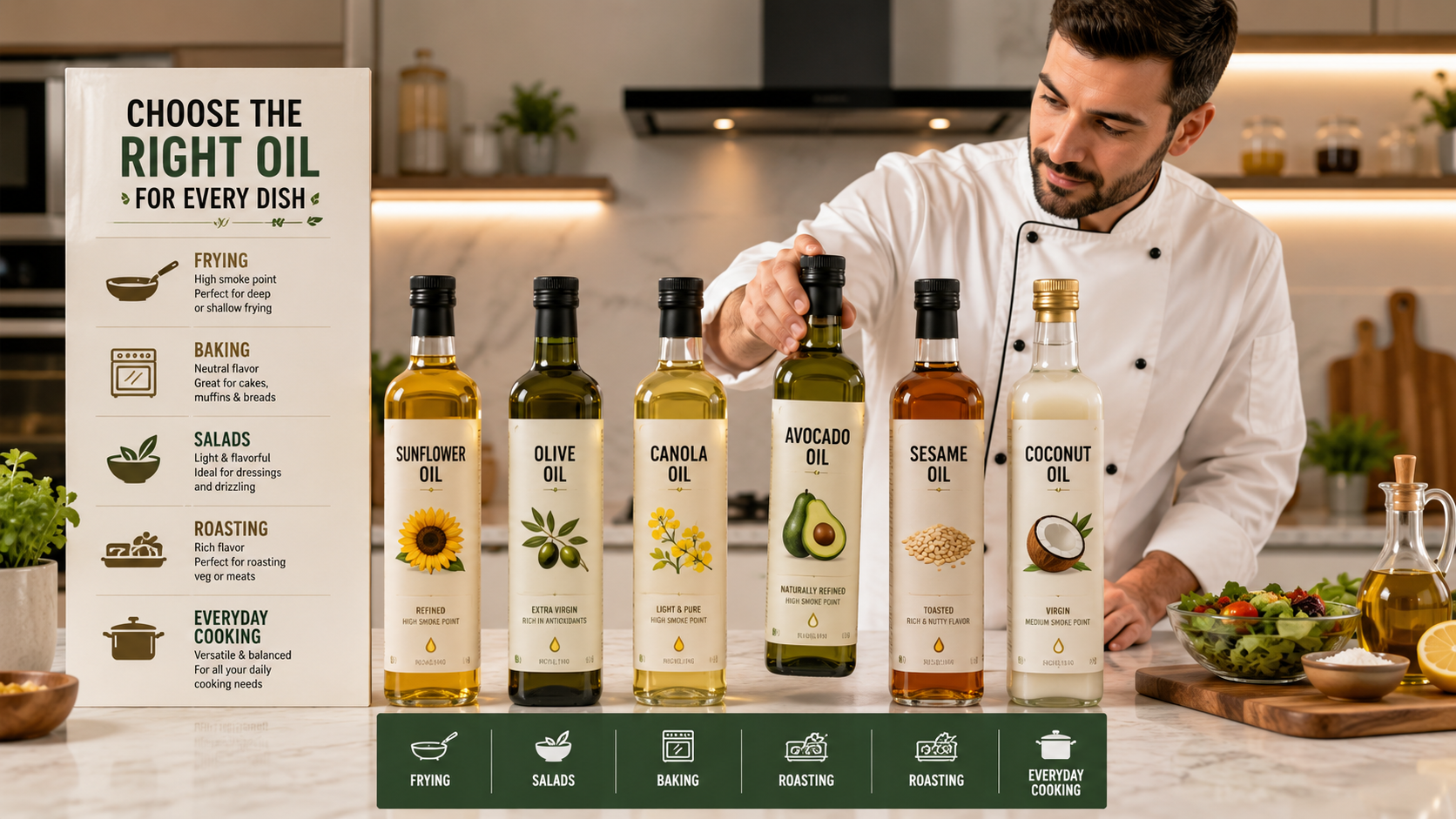
Best Oils for Frying
Frying requires oils that remain stable at high temperatures.
Characteristics to look for:
- High smoke point
- Neutral flavor
- Good oxidative stability
- Consistent performance
Common choices include:
- Refined Sunflower Oil
- Canola Oil
- Rice Bran Oil
- Peanut Oil
- Refined Avocado Oil
Among these, refined sunflower oil is one of the most widely used because of its excellent balance of performance, availability, and versatility.
Best Oils for Salads
For uncooked applications, flavor becomes more important than heat resistance.
Popular options include:
- Extra Virgin Olive Oil
- Cold-Pressed Sunflower Oil
- Avocado Oil
- Walnut Oil
- Sesame Oil
These oils contribute both flavor and aroma to fresh dishes.
Best Oils for Baking
Many baked goods require oils with a mild taste that won’t overpower other ingredients.
Suitable choices include:
- Sunflower Oil
- Canola Oil
- Corn Oil
- Light Olive Oil
These oils help create moist cakes, muffins, breads, and pastries.
Step 2: Understand Smoke Point
One of the most important properties of cooking oil is its smoke point.
The smoke point is the temperature at which oil begins to break down and release visible smoke.
When oil is heated beyond this point:
- Flavor can change.
- Aroma may deteriorate.
- Cooking performance decreases.
- The oil breaks down more rapidly.
For high-temperature cooking, choosing an oil with an appropriate smoke point is essential.
Smoke Point Comparison
| Oil | Approximate Smoke Point |
|---|---|
| Refined Sunflower Oil | 230°C |
| Canola Oil | 204°C |
| Rice Bran Oil | 232°C |
| Refined Olive Oil | 240°C |
| Extra Virgin Olive Oil | 190°C |
| Avocado Oil | 270°C |
| Peanut Oil | 225°C |
| Butter | 175°C |
| Ghee | 250°C |
Step 3: Consider Flavor
Some oils are intentionally neutral, while others contribute a distinctive taste.
Neutral Oils
Ideal when you want ingredients to dominate the flavor.
Examples:
- Refined Sunflower Oil
- Canola Oil
- Corn Oil
Flavorful Oils
Best for recipes where the oil itself contributes to the final taste.
Examples:
- Extra Virgin Olive Oil
- Sesame Oil
- Walnut Oil
Step 4: Consider Nutritional Profile
Different edible oils contain different proportions of:
- Saturated fats
- Monounsaturated fats
- Polyunsaturated fats
Many vegetable oils are naturally rich in unsaturated fats and also contain naturally occurring vitamin E.
Rather than focusing on a single nutrient, it is generally recommended to consider the overall dietary pattern and choose oils that fit a balanced lifestyle.
Step 5: Choose According to Frequency of Use
Everyday Cooking
For daily cooking, consumers often prefer oils that are:
- Versatile
- Affordable
- Neutral in taste
- Stable during heating
Refined sunflower oil is widely used for this purpose around the world.
Specialty Cooking
For gourmet recipes or specific cuisines, specialty oils may offer additional flavor and character.
Examples include:
- Extra Virgin Olive Oil
- Sesame Oil
- Avocado Oil
- Walnut Oil
Step 6: Read the Label Carefully
Before purchasing, check the product label for:
- Production date
- Best-before date
- Ingredients
- Country of origin
- Nutritional information
- Storage recommendations
- Certifications
- Packaging integrity
Quality labeling reflects transparency and supports informed purchasing decisions.
Step 7: Consider Packaging
Oil quality is influenced by packaging.
Common options include:
PET Bottles
- Lightweight
- Practical
- Widely used
Glass Bottles
- Premium appearance
- Often used for specialty oils
Metal Containers
- Excellent light protection
- Common for foodservice and bulk storage
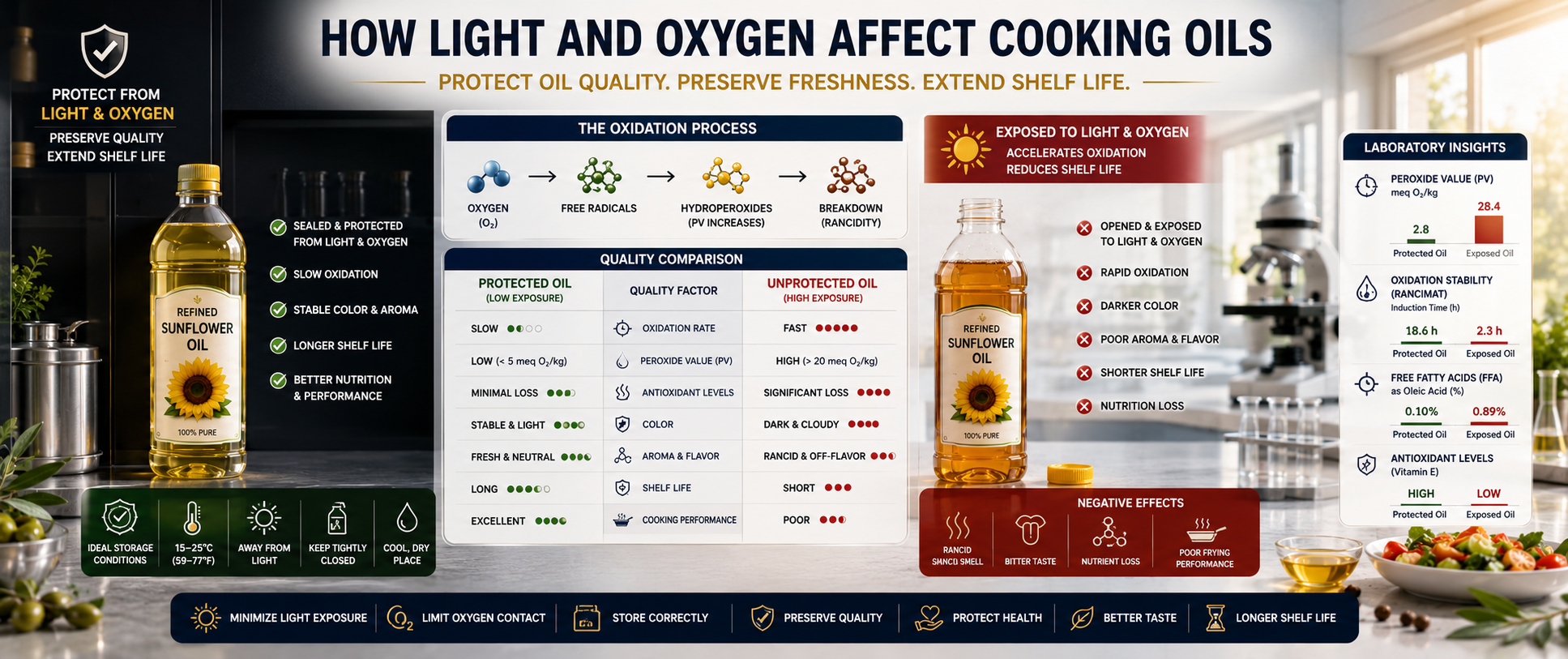
Packaging should protect the oil from excessive exposure to light, air, and contamination.
Common Mistakes When Choosing Cooking Oil
Many consumers make purchasing decisions based solely on price or marketing claims.
Common mistakes include:
- Using salad oils for deep frying
- Ignoring smoke point
- Selecting oils only by price
- Improper storage after opening
- Using one oil for every cooking method
- Overlooking production and expiration dates
Choosing the right oil requires considering both intended use and product quality.
Comparison Table
| Cooking Purpose | Recommended Oil |
|---|---|
| Deep Frying | Refined Sunflower Oil |
| Stir Frying | Canola Oil |
| Baking | Sunflower Oil |
| Salads | Extra Virgin Olive Oil |
| Roasting | Avocado Oil |
| Asian Cuisine | Sesame Oil |
| Everyday Cooking | Refined Sunflower Oil |
Tips for Consumers
✔ Match the oil to the cooking method.
✔ Store oils away from heat and sunlight.
✔ Close bottles tightly after each use.
✔ Purchase from trusted manufacturers.
✔ Read labels carefully.
✔ Rotate oils based on culinary needs rather than relying on a single type.
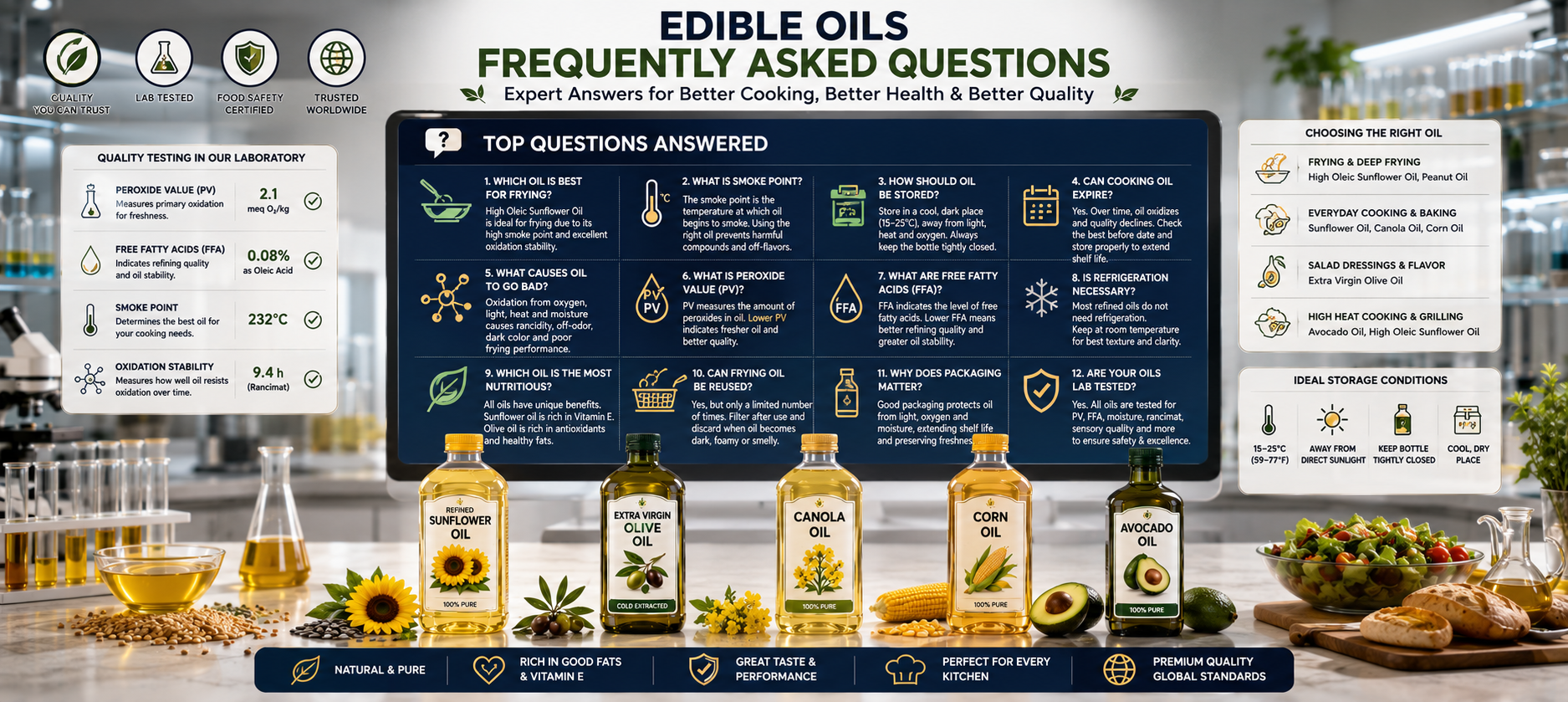
Frequently Asked Questions (FAQ)
What is the best oil for everyday cooking?
Refined sunflower oil is widely regarded as one of the best all-purpose cooking oils because of its neutral taste, high smoke point, and versatility.
Can I use olive oil for frying?
Yes. Refined olive oil is suitable for higher-temperature cooking, while extra virgin olive oil is generally preferred for salads, light sautéing, and finishing dishes.
Which oil has the highest smoke point?
Refined avocado oil is among the highest, with a smoke point of approximately 270°C.
Is expensive oil always better?
Not necessarily. The best oil depends on the intended application rather than the price alone.
Should I keep several different oils at home?
Yes. Many households benefit from having one neutral oil for everyday cooking and one or two specialty oils for salads or recipes that require distinctive flavors.
Related Articles
- What Are Edible Oils?
- Types of Edible Oils
- Refined Oil vs Cold-Pressed Oil
- Saturated vs Unsaturated Fats
- Common Myths About Cooking Oils
Conclusion
Selecting the right cooking oil is about understanding the relationship between the oil’s characteristics and its intended use. Factors such as smoke point, flavor, nutritional composition, packaging, and cooking method all contribute to the overall performance of an oil in the kitchen.
Rather than searching for a single “perfect” oil, maintaining a small selection of high-quality oils allows greater flexibility, better cooking results, and a more enjoyable culinary experience.
Leave a Reply