



Cooking oils are an essential part of daily nutrition, yet they are also among the most misunderstood food products. Social media, advertising, and word-of-mouth have contributed to the spread of many misconceptions, leaving consumers uncertain about which oils to buy and how to use them.
The reality is that no single cooking oil is perfect for every purpose. Each oil has unique characteristics that make it suitable for specific cooking methods and dietary preferences.
This article examines some of the most common myths about cooking oils and explains what current scientific knowledge tells us.
Why So Many Misconceptions Exist
Cooking oils are complex natural products. Their nutritional composition, processing methods, and culinary performance vary depending on:
- Plant source
- Fatty acid profile
- Production process
- Refining method
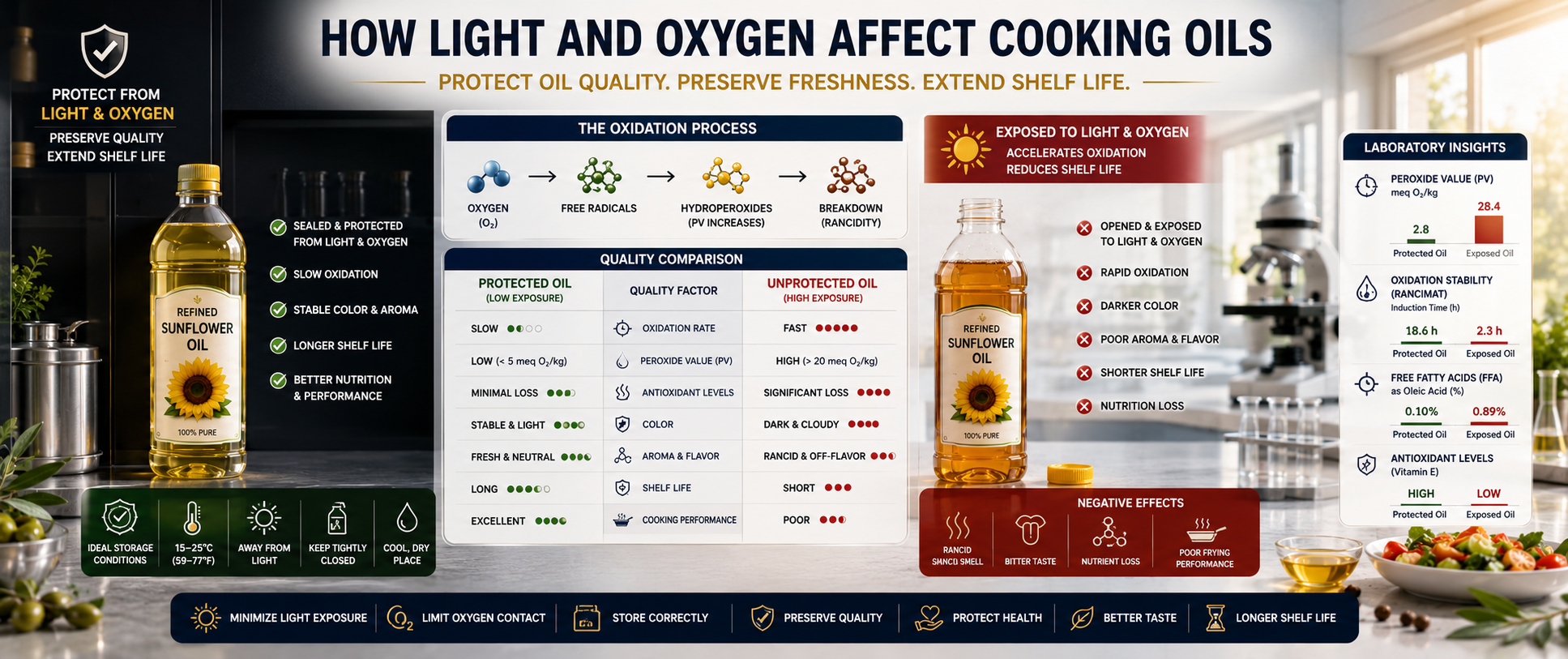
- Storage conditions
- Intended use
When these factors are oversimplified, myths quickly spread.
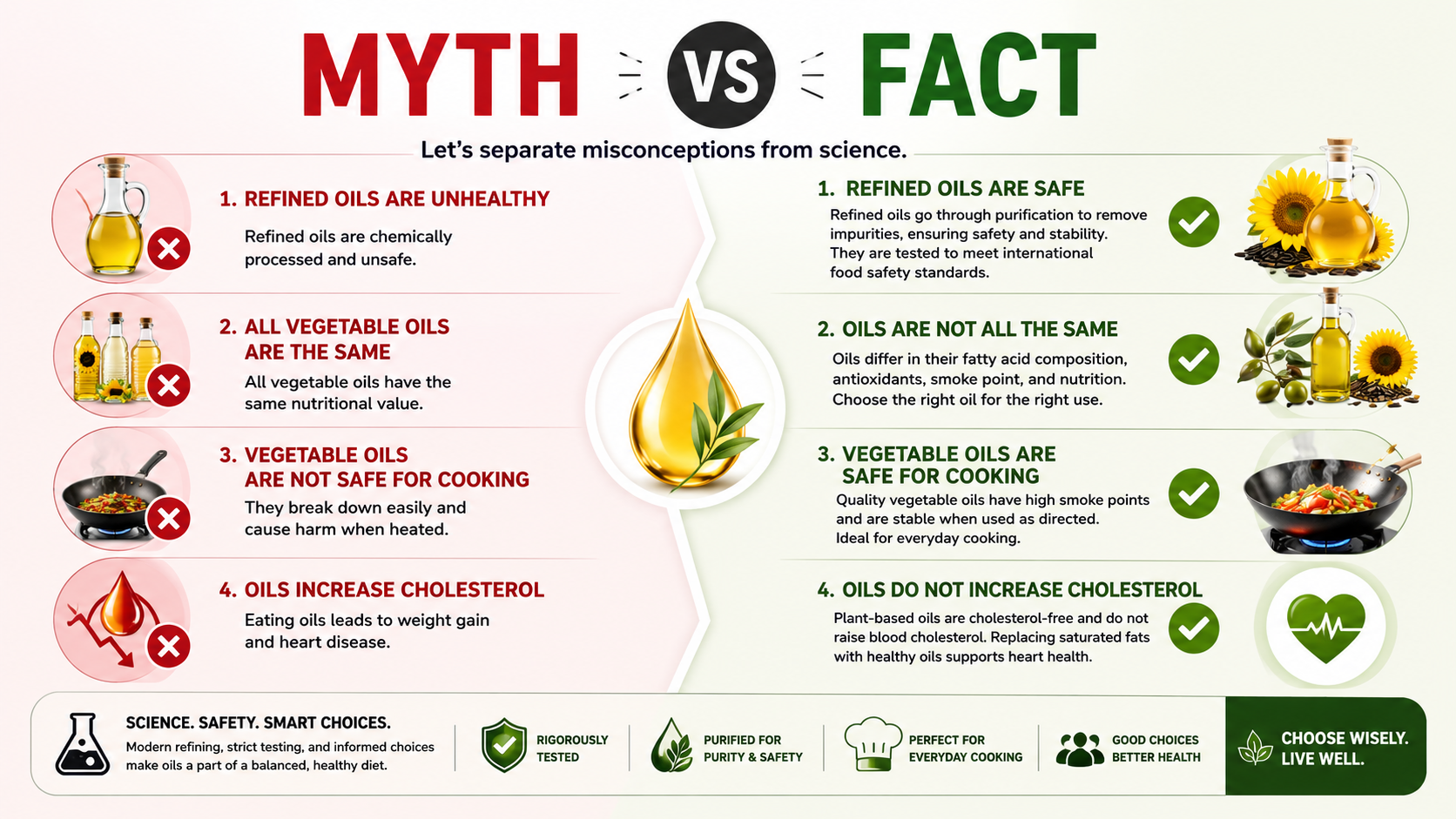
Myth 1: All Vegetable Oils Are the Same
Fact
Every vegetable oil has a unique composition.
For example:
| Oil | Key Characteristics |
|---|---|
| Sunflower Oil | Neutral taste, rich in vitamin E, excellent for frying |
| Olive Oil | Fruity flavor, ideal for salads and Mediterranean cuisine |
| Canola Oil | Mild taste, versatile for everyday cooking |
| Sesame Oil | Strong aroma, popular in Asian dishes |
| Avocado Oil | Very high smoke point, suitable for high-heat cooking |
Each oil performs differently depending on the recipe and cooking temperature.
Myth 2: Refined Oils Are Harmful
Fact
Refining is a carefully controlled food manufacturing process designed to improve the quality and stability of edible oils.
Refining helps:
- Remove impurities
- Improve clarity
- Increase shelf life
- Produce a neutral flavor
- Enhance performance during high-temperature cooking
Modern edible oil refining follows strict international food safety standards.
Myth 3: Cold-Pressed Oils Are Always Better
Fact
Cold-pressed oils retain more of their natural flavor and aroma because they undergo minimal processing.
However, this does not mean they are the best choice for every application.
For example:
- Cold-pressed oils excel in salads and dressings.
- Refined oils are generally more suitable for deep frying because of their higher smoke points and greater heat stability.
The best choice depends on how the oil will be used.
Myth 4: Cooking Oil Contains Cholesterol
Fact
Vegetable oils are naturally cholesterol-free.
Cholesterol is found only in foods of animal origin.
Examples of cholesterol-free oils include:
- Sunflower Oil
- Olive Oil
- Canola Oil
- Corn Oil
- Soybean Oil
- Rice Bran Oil
Myth 5: Darker Oil Is Always Higher Quality
Fact
Color alone does not indicate quality.
Oil color depends on:
- Plant variety
- Natural pigments
- Production method
- Refining level
A lighter oil is not necessarily lower quality, nor is a darker oil always superior.
Laboratory testing—not appearance—is the most reliable way to evaluate oil quality.
Myth 6: You Should Never Fry with Vegetable Oil
Fact
Many refined vegetable oils are specifically produced for frying.
Examples include:
- Refined Sunflower Oil
- Peanut Oil
- Rice Bran Oil
- Refined Canola Oil
These oils have high smoke points and are widely used in homes, restaurants, and food manufacturing.
Myth 7: More Expensive Oil Means Better Quality
Fact
Price depends on many factors, including:
- Raw material cost
- Production method
- Packaging
- Brand positioning
- Country of origin
- Production volume
The most expensive oil is not always the most appropriate for a particular cooking method.
Choosing the right oil for the intended use is more important than price alone.
Myth 8: One Oil Is Enough for Every Type of Cooking
Fact
Professional chefs often use several different oils because each has unique strengths.
For example:
| Cooking Method | Recommended Oil |
|---|---|
| Deep Frying | Refined Sunflower Oil |
| Salad Dressings | Extra Virgin Olive Oil |
| Baking | Sunflower Oil |
| Asian Cuisine | Sesame Oil |
| Grilling | Avocado Oil |
Using different oils for different purposes improves both flavor and cooking performance.
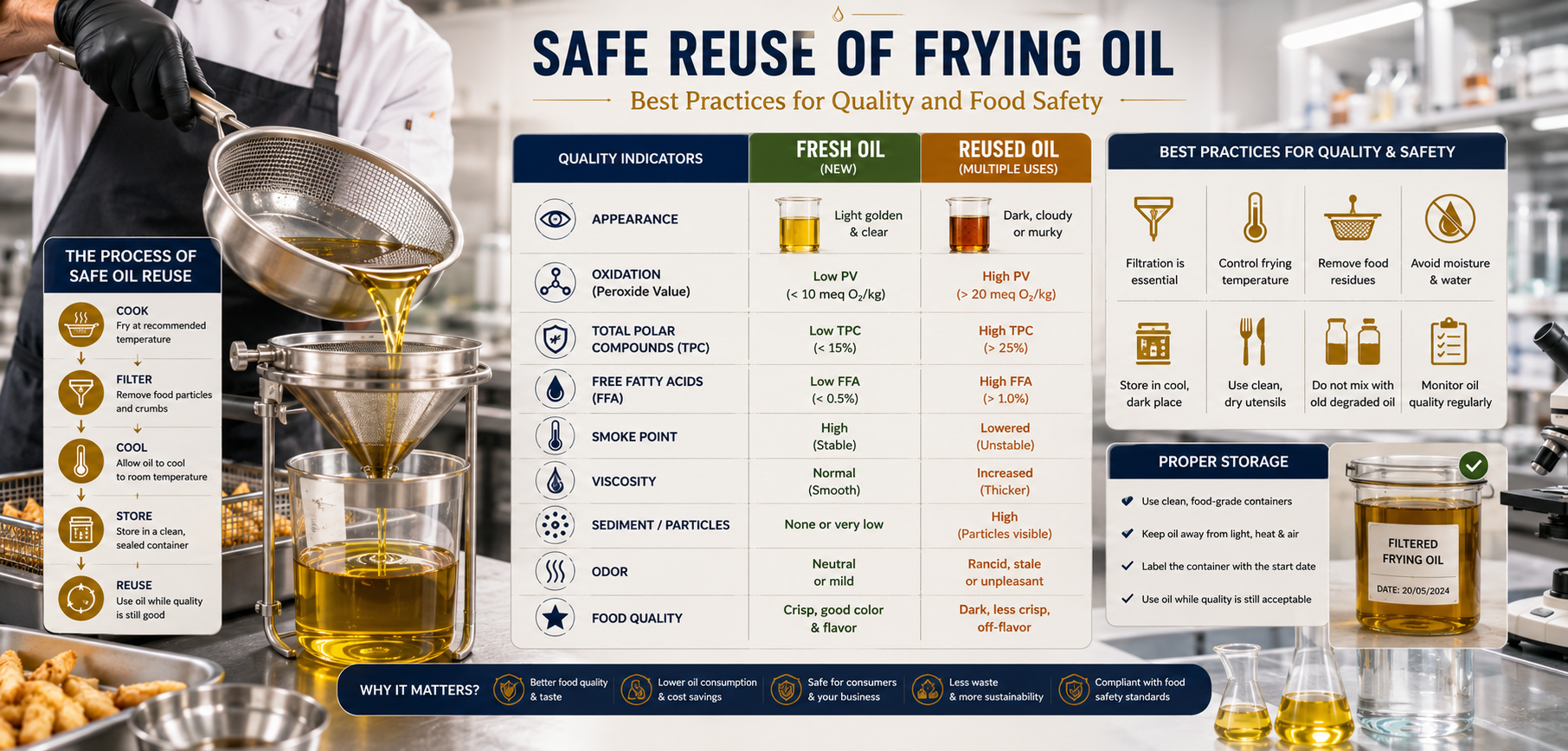
Myth 9: Reusing Frying Oil Is Always Dangerous
Fact
Cooking oil can sometimes be reused safely under controlled conditions, but it should not be reused indefinitely.
Oil should be discarded if it:
- Produces excessive smoke
- Has an unpleasant odor
- Becomes very dark
- Foams excessively
- Contains excessive food residue
Proper filtration and storage between uses help maintain oil quality.
Myth 10: Fat-Free Cooking Is Always Healthier
Fact
Dietary fat is an essential nutrient.
Healthy fats contribute to:
- Energy production
- Vitamin absorption
- Hormone synthesis
- Cell structure
- Brain function
Rather than eliminating fats, nutrition experts generally recommend choosing appropriate fat sources and consuming them in moderation as part of an overall balanced diet.
Myth 11: Smoke Point Is the Only Thing That Matters
Fact
While smoke point is important, it is only one factor when choosing an oil.
Other considerations include:
- Flavor
- Stability
- Nutritional profile
- Intended cooking method
- Storage conditions
A balanced evaluation leads to better cooking results.
Myth 12: All Imported Oils Have Better Quality
Fact
Quality depends on the manufacturer’s production standards, quality control systems, certifications, and raw materials—not simply the country of origin.
Consumers should look for reputable producers that comply with internationally recognized food safety standards.
How to Evaluate a Cooking Oil
Instead of relying on myths, consider these practical factors:
- Intended cooking method
- Smoke point
- Flavor profile
- Packaging quality
- Production date
- Storage recommendations
- Food safety certifications
- Manufacturer reputation
Making informed decisions leads to better cooking outcomes and product selection.
Quick Myth vs Fact Summary
| Myth | Reality |
|---|---|
| All vegetable oils are the same | Different oils have different properties |
| Refined oils are harmful | Refining improves purity and stability |
| Cold-pressed oils are always better | Best choice depends on application |
| Vegetable oils contain cholesterol | They are naturally cholesterol-free |
| Expensive means better | Suitability matters more than price |
| One oil fits every purpose | Different oils perform differently |
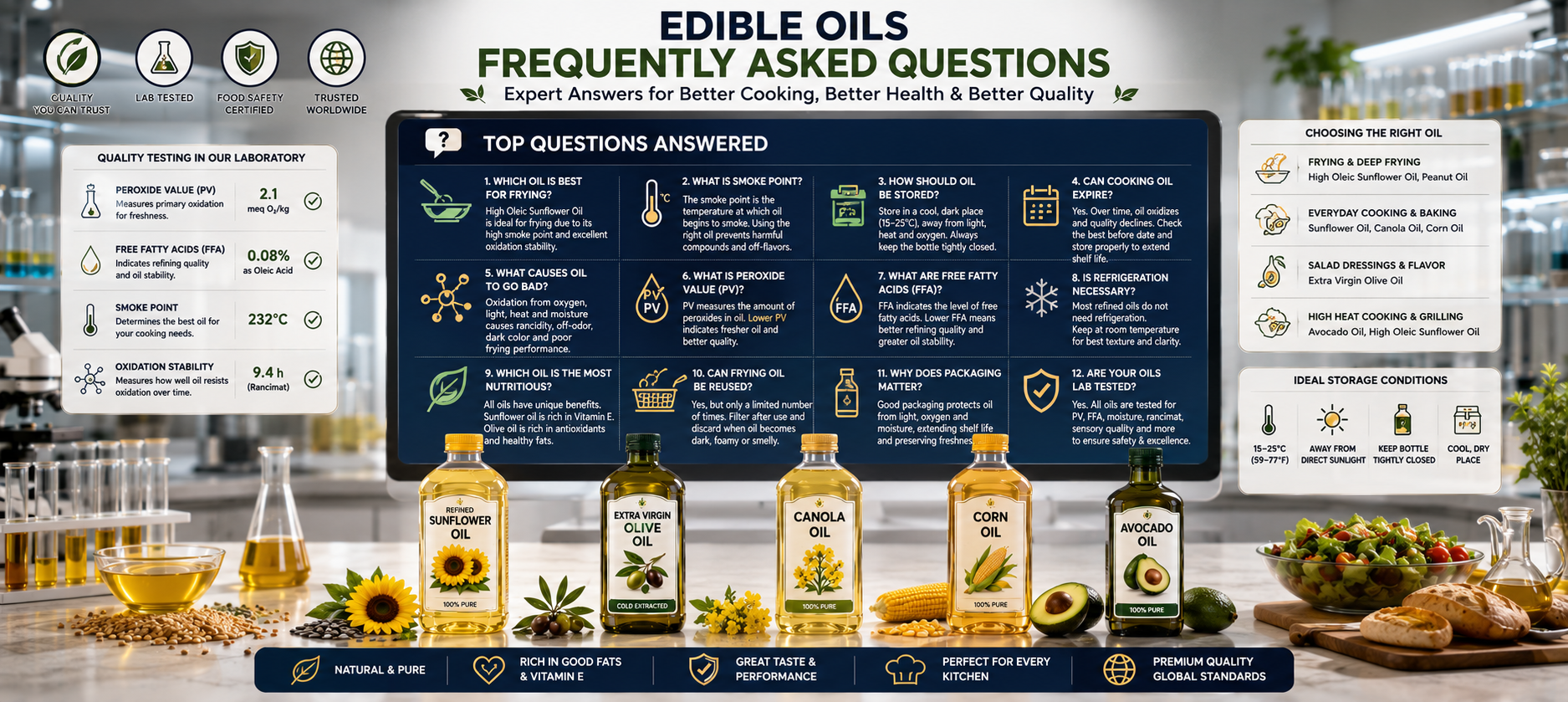
Frequently Asked Questions (FAQ)
Is sunflower oil suitable for everyday cooking?
Yes. Refined sunflower oil is widely used for everyday cooking because of its neutral flavor, versatility, and high smoke point.
Are refined oils safe?
Yes. Properly refined edible oils are produced under strict food safety regulations and are widely used worldwide.
Should I buy cold-pressed or refined oil?
Choose based on your intended use. Cold-pressed oils are ideal for salads and light cooking, while refined oils are generally preferred for frying and high-temperature applications.
Why do different oils have different colors?
Natural pigments, plant varieties, and processing methods all influence the color of edible oils.
Can I use the same oil for every recipe?
It is possible, but using different oils for different cooking methods generally provides better flavor, texture, and performance.
Related Articles
- What Are Edible Oils?
- Types of Edible Oils
- Refined Oil vs Cold-Pressed Oil
- Saturated vs Unsaturated Fats
- Choosing the Right Cooking Oil
- Everything About Sunflower Oil
Conclusion
Many beliefs about cooking oils are based on outdated information or oversimplified claims. Understanding the science behind edible oils helps consumers move beyond myths and make informed decisions based on cooking needs, product quality, and nutritional balance.
Whether selecting a refined oil for frying or a cold-pressed oil for fresh dishes, the best choice is one that matches the intended application and comes from a trusted manufacturer committed to quality and food safety.
Leave a Reply