



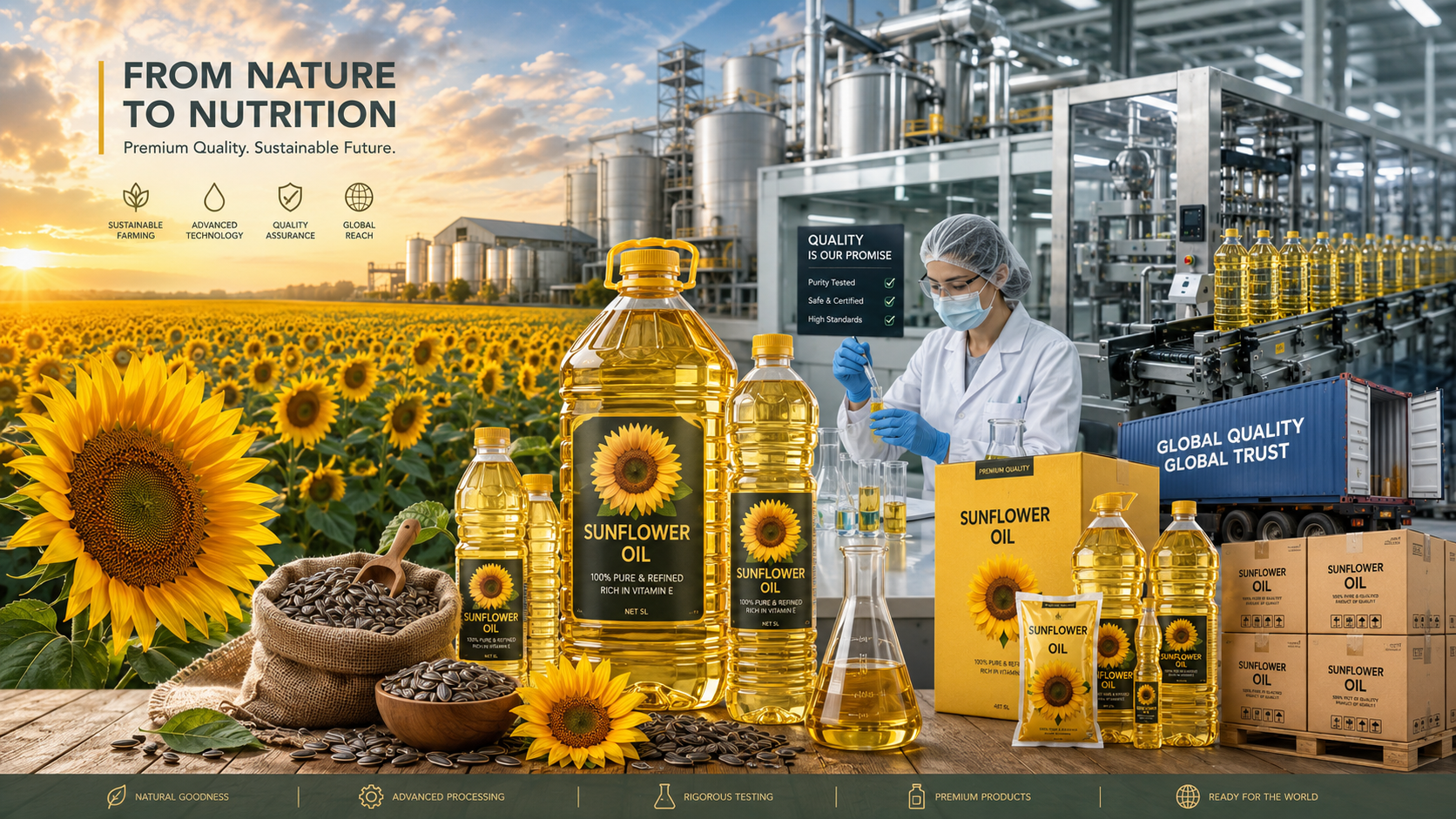
Sunflower oil is one of the world’s most popular edible oils, trusted by millions of households, restaurants, and food manufacturers every day. Its mild flavor, excellent cooking performance, high smoke point, and versatility have made it a staple ingredient in kitchens across more than 150 countries.
From frying and baking to large-scale food manufacturing, sunflower oil has become an essential component of modern food production.
This comprehensive guide explores everything you need to know about sunflower oil—from cultivation and production to nutrition, quality, storage, and industrial applications.
What Is Sunflower Oil?
Sunflower oil is a vegetable oil extracted from the seeds of the sunflower plant (Helianthus annuus).
Originally cultivated in North America, the sunflower is now grown extensively in regions such as:
- Ukraine
- Russia
- Türkiye
- Romania
- Bulgaria
- Argentina
- Hungary
- France
The oil extracted from sunflower seeds is widely appreciated for its:
- Neutral taste
- Light color
- Excellent frying performance
- Versatility
- Consistent quality
A Brief History of Sunflower Oil
The sunflower was first cultivated by Indigenous peoples in North America thousands of years ago. During the 18th and 19th centuries, it spread across Europe, particularly to Eastern Europe and Russia, where it became a major oilseed crop.
Today, sunflower oil is among the four most-produced vegetable oils worldwide, alongside soybean, palm, and canola oil.
How Sunflower Oil Is Produced
Modern sunflower oil production combines advanced engineering with strict food safety standards.
The typical production process includes:
- Harvesting sunflower seeds
- Cleaning and removing impurities
- Dehulling (when required)
- Crushing and conditioning
- Oil extraction
- Refining
- Quality testing
- Packaging
- Distribution
Every stage is carefully monitored to ensure product consistency and safety.
Types of Sunflower Oil
Not all sunflower oils are the same. They vary according to both processing method and fatty acid composition.
Based on Processing
Refined Sunflower Oil
The most widely used type.
Characteristics:
- Neutral flavor
- High smoke point
- Excellent shelf life
- Ideal for frying and everyday cooking
Cold-Pressed Sunflower Oil
Mechanically extracted without high heat.
Characteristics:
- Rich natural aroma
- Distinct flavor
- Golden color
- Ideal for salads and dressings
Based on Fatty Acid Composition
Linoleic Sunflower Oil
The traditional variety.
Widely used in:
- Household cooking
- Baking
- Food manufacturing
High Oleic Sunflower Oil
Produced from specially developed sunflower varieties.
Characteristics:
- Higher proportion of monounsaturated fats
- Greater oxidative stability
- Longer frying life
- Popular in commercial food production
Nutritional Composition
Sunflower oil primarily consists of dietary fats.
Typical components include:
- Monounsaturated fatty acids
- Polyunsaturated fatty acids
- Small amounts of saturated fats
- Naturally occurring vitamin E
It contains:
- No protein
- No carbohydrates
- No dietary fiber
Like all edible oils, sunflower oil provides approximately 9 calories per gram.
Why Is Sunflower Oil So Popular?
Several factors contribute to its worldwide popularity.
Neutral Flavor
It does not overpower the taste of food.
Excellent Cooking Performance
Suitable for:
- Frying
- Baking
- Sautéing
- Roasting
- Stir-frying
High Smoke Point
Refined sunflower oil has a smoke point of approximately 230°C, making it well-suited for high-temperature cooking.
Attractive Appearance
Its clear, light golden color appeals to consumers and food manufacturers alike.
Wide Availability
Sunflower oil is produced and traded globally, making it one of the most accessible vegetable oils.
Common Applications
Household Cooking
Used for:
- Frying
- Baking
- Soups
- Sauces
- Everyday meals
Restaurants
Professional kitchens appreciate its:
- Neutral flavor
- Stable frying performance
- Cost efficiency
Food Manufacturing
Sunflower oil is widely used in:
- Snack foods
- Chips
- Crackers
- Biscuits
- Mayonnaise
- Margarine
- Frozen foods
- Ready meals
- Canned foods
Private Label Products
Many retailers market sunflower oil under their own brands through private label manufacturing.
Smoke Point
The smoke point of refined sunflower oil is approximately:
230°C (446°F)
This makes it suitable for:
- Deep frying
- Commercial kitchens
- Continuous cooking
- High-temperature food production
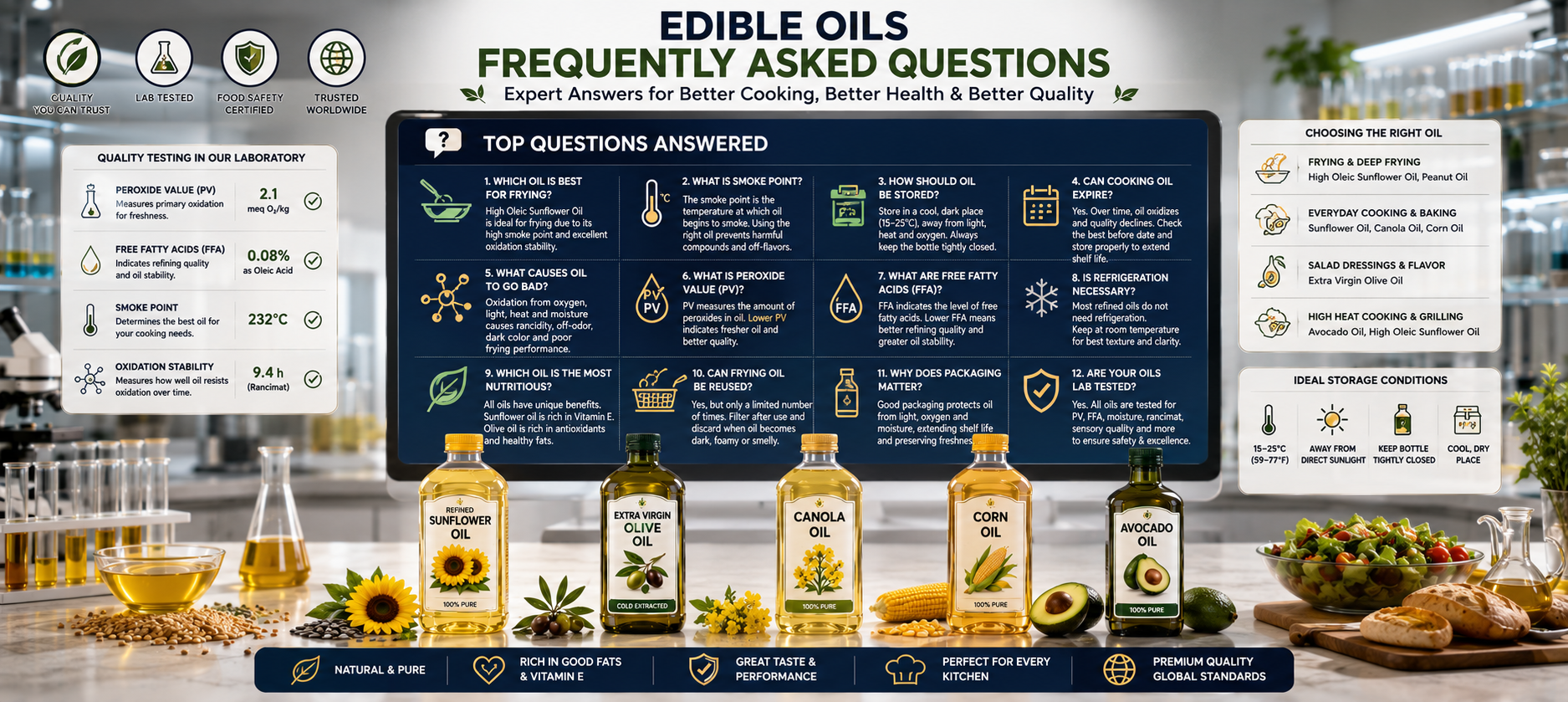
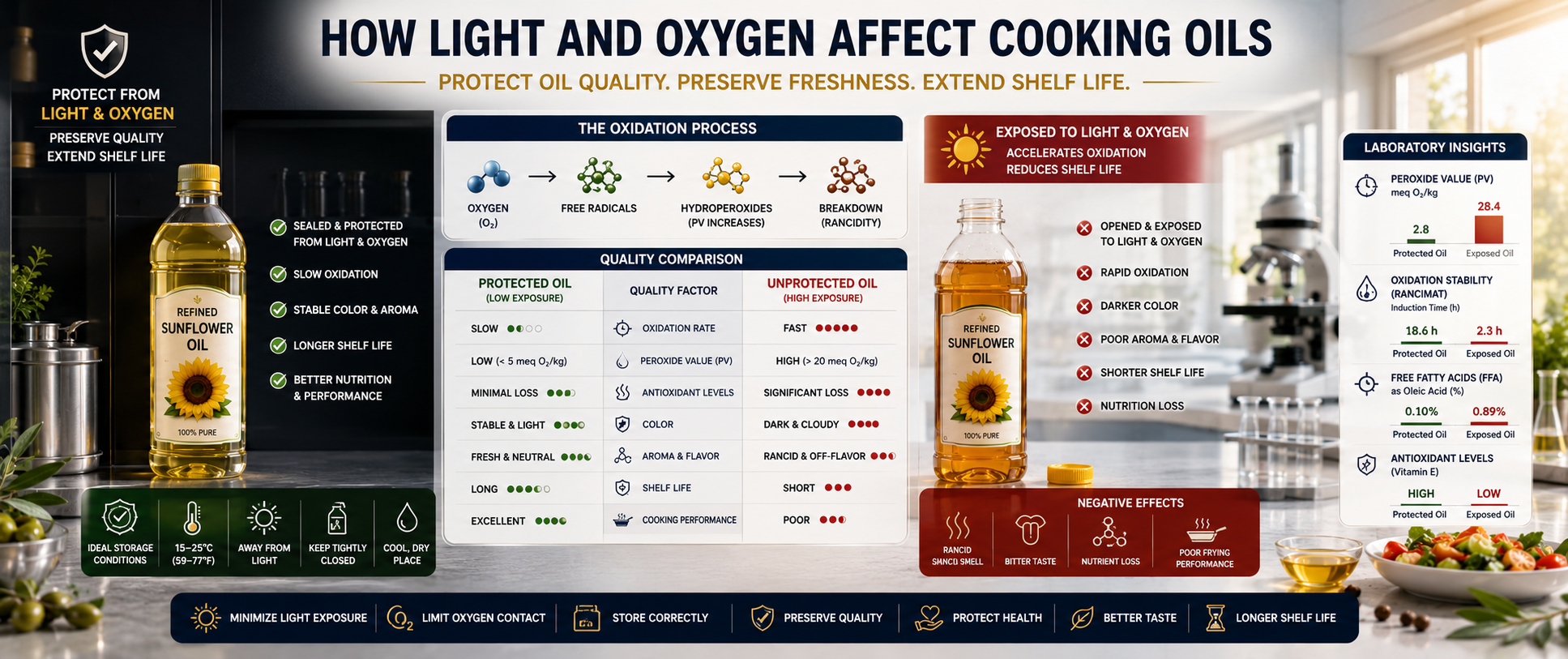
Storage Recommendations
Proper storage helps preserve quality.
Recommended conditions include:
- Cool temperatures
- Dry environment
- Away from direct sunlight
- Tightly sealed after opening
- Protected from excessive heat
When stored correctly, sunflower oil maintains its quality throughout its recommended shelf life.
How to Recognize High-Quality Sunflower Oil
Consumers should evaluate several factors.
Appearance
- Clear
- Bright
- Free from sediment
Aroma
- Mild
- Fresh
- Neutral
Packaging
Quality products use clean, well-sealed packaging that protects the oil from contamination and light.
Label Information
A professional label should include:
- Ingredients
- Production date
- Best-before date
- Batch number
- Nutritional information
- Country of origin
- Manufacturer information
Quality Parameters Used by Manufacturers
Leading edible oil manufacturers perform laboratory analyses such as:
- Free Fatty Acid (FFA)
- Peroxide Value (PV)
- Moisture
- Color
- Density
- Fatty acid profile
- Oxidative stability
These tests ensure consistency and compliance with international standards.
International Standards
Premium sunflower oil producers often operate under internationally recognized food safety systems such as:
- ISO 22000
- FSSC 22000
- HACCP
- GMP
- Halal Certification
These certifications demonstrate a commitment to food safety and quality management.
Global Market Importance
Sunflower oil is a major commodity in international agricultural trade.
It is exported worldwide for:
- Retail markets
- Food manufacturing
- Hospitality
- Foodservice
- Industrial food production
Its balance of performance, affordability, and versatility has made it one of the most important vegetable oils in global commerce.
Comparison with Other Cooking Oils
| Feature | Sunflower Oil | Olive Oil | Canola Oil |
|---|---|---|---|
| Flavor | Neutral | Fruity | Mild |
| Smoke Point | High | Medium to High | High |
| Frying | Excellent | Good | Excellent |
| Baking | Excellent | Good | Excellent |
| Salad Dressings | Good | Excellent | Good |
| Food Manufacturing | Excellent | Moderate | Excellent |
Frequently Asked Questions (FAQ)
Is sunflower oil suitable for everyday cooking?
Yes. Refined sunflower oil is one of the most versatile edible oils and is widely used for everyday cooking around the world.
Can sunflower oil be used for deep frying?
Yes. Its high smoke point and neutral flavor make refined sunflower oil an excellent choice for deep frying.
Does sunflower oil contain cholesterol?
No. Like all vegetable oils, sunflower oil is naturally cholesterol-free.
What is the difference between refined and cold-pressed sunflower oil?
Refined sunflower oil is ideal for high-temperature cooking, while cold-pressed sunflower oil is better suited for salads, dressings, and recipes where its natural flavor can be appreciated.
How should sunflower oil be stored?
Store it in a cool, dry place away from direct sunlight, and always keep the container tightly sealed after opening.
Related Articles
- Why Sunflower Oil Is Popular Worldwide
- High Oleic vs Linoleic Sunflower Oil
- Nutritional Value of Sunflower Oil
- Health Benefits of Sunflower Oil
- Is Sunflower Oil Good for Frying?
- How to Choose Premium Sunflower Oil
Conclusion
Sunflower oil has earned its place as one of the world’s leading edible oils through its exceptional versatility, reliable cooking performance, and broad range of applications. From household kitchens to industrial food production, it delivers consistent quality and adapts to a variety of culinary needs.
Understanding its production, characteristics, quality indicators, and proper use enables consumers and businesses to make informed decisions and maximize the value of this essential ingredient.
Leave a Reply