



Olive oil and avocado oil are widely recognized as two of the healthiest edible oils available today. Both are naturally rich in heart-friendly monounsaturated fats, contain beneficial antioxidants, and are versatile enough for everyday cooking.
Although they share many nutritional similarities, they differ in flavor, smoke point, production methods, vitamin composition, and ideal culinary uses.
Whether you’re preparing a fresh salad, sautéing vegetables, or frying at high temperatures, understanding these differences can help you choose the right oil for every recipe.
What Is Olive Oil?
Olive oil is extracted from the fruit of the olive tree (Olea europaea). It has been a cornerstone of Mediterranean cuisine for thousands of years and is widely associated with heart-healthy diets.
Common types include:
- Extra Virgin Olive Oil (EVOO)
- Virgin Olive Oil
- Refined Olive Oil
- Olive Pomace Oil
Extra virgin olive oil is mechanically extracted without chemical refining, preserving its natural flavor and antioxidant content.
What Is Avocado Oil?
Avocado oil is extracted from the pulp of ripe avocados rather than the seed. It is valued for its smooth texture, mild taste, and exceptionally high smoke point.
Common varieties include:
- Extra Virgin Avocado Oil
- Cold-Pressed Avocado Oil
- Refined Avocado Oil
Refined avocado oil is especially popular for high-temperature cooking due to its excellent heat stability.
Nutritional Comparison
| Nutrient | Olive Oil | Avocado Oil |
|---|---|---|
| Calories | 120 kcal/tbsp | 120 kcal/tbsp |
| Total Fat | 14 g | 14 g |
| Monounsaturated Fat | Very High | Very High |
| Polyunsaturated Fat | Low | Moderate |
| Saturated Fat | Low | Low |
| Cholesterol | 0 | 0 |
| Trans Fat | 0 | 0 |
Both oils contain similar calorie levels and healthy fat profiles.
Fatty Acid Profile
Olive Oil
Typical refined olive oil contains:
- Monounsaturated fat: 70–75%
- Polyunsaturated fat: 8–12%
- Saturated fat: 12–15%
Oleic acid is the primary fatty acid, contributing to cardiovascular health and oxidative stability.
Avocado Oil
Typical refined avocado oil contains:
- Monounsaturated fat: 65–72%
- Polyunsaturated fat: 10–15%
- Saturated fat: 12–15%
Like olive oil, avocado oil is exceptionally rich in oleic acid.
Antioxidants and Vitamins
Olive Oil
Extra virgin olive oil is naturally rich in:
- Polyphenols
- Tocopherols (Vitamin E)
- Squalene
- Oleocanthal
- Oleuropein
These compounds contribute to antioxidant and anti-inflammatory properties.
Avocado Oil
Avocado oil provides:
- Vitamin E
- Lutein
- Phytosterols
- Carotenoids
- Chlorophyll (in less refined oils)
Although avocado oil contains antioxidants, extra virgin olive oil generally has a broader range of naturally occurring polyphenols.
Winner:
✅ Extra Virgin Olive Oil
Smoke Point Comparison
| Oil | Smoke Point |
|---|---|
| Extra Virgin Olive Oil | 190–210°C |
| Refined Olive Oil | 220–240°C |
| Refined Avocado Oil | 260–270°C |
Refined avocado oil has one of the highest smoke points among commonly used edible oils.
Winner:
✅ Avocado Oil
Flavor Comparison
Olive Oil
- Fruity
- Herbaceous
- Peppery (extra virgin)
- Rich Mediterranean flavor
Perfect for:
- Salads
- Pasta
- Bread dipping
- Mediterranean cuisine
- Finishing dishes
Avocado Oil
- Mild
- Buttery
- Smooth
- Neutral
Ideal for:
- Baking
- Stir-frying
- Roasting
- Grilling
- Recipes where other flavors should dominate
Cooking Performance
Olive Oil
Best suited for:
- Low to medium-heat cooking
- Salad dressings
- Light sautéing
- Marinades
- Finishing dishes
Refined olive oil can also handle higher cooking temperatures.
Avocado Oil
Excellent for:
- Deep frying
- High-heat roasting
- Air frying
- Searing meats
- Stir frying
Its stability makes it ideal for professional kitchens.
Oxidative Stability
Both oils are naturally stable due to their high monounsaturated fat content.
However:
- Refined avocado oil performs exceptionally well at prolonged high temperatures.
- Extra virgin olive oil offers additional protection from oxidation because of its natural antioxidants, especially during moderate-heat cooking.
Heart Health
Both oils support cardiovascular health by replacing saturated fats with unsaturated fats.
Potential benefits include:
- Supporting healthy cholesterol levels
- Reducing LDL cholesterol when used instead of saturated fats
- Providing antioxidants
- Supporting healthy blood vessels
- Contributing to balanced diets
Culinary Applications
Olive Oil
Excellent for:
- Salads
- Bruschetta
- Pasta
- Mediterranean dishes
- Sauces
- Hummus
- Pizza finishing
Avocado Oil
Excellent for:
- High-temperature frying
- Grilled vegetables
- Chicken
- Seafood
- Baking
- Homemade mayonnaise
- Air fryer recipes
Sustainability Considerations
Both olive and avocado production depend on climate, water management, and responsible farming practices.
Consumers should look for products that emphasize:
- Sustainable agriculture
- Responsible water use
- Quality certifications
- Traceable sourcing
- Food safety standards
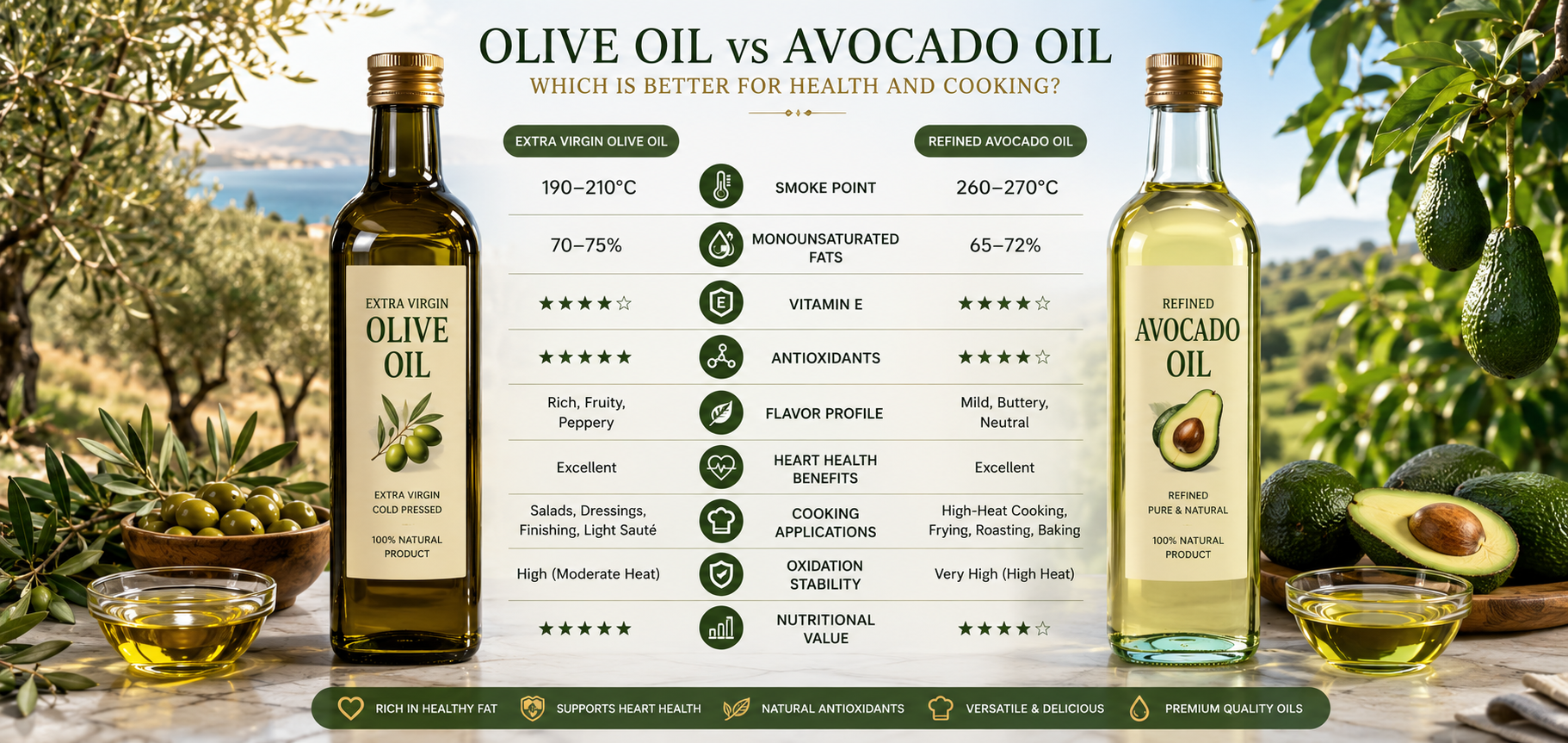
Side-by-Side Comparison
| Feature | Olive Oil | Avocado Oil |
|---|---|---|
| Monounsaturated Fat | ⭐⭐⭐⭐⭐ | ⭐⭐⭐⭐⭐ |
| Antioxidants | ⭐⭐⭐⭐⭐ | ⭐⭐⭐⭐ |
| Vitamin E | ⭐⭐⭐⭐ | ⭐⭐⭐⭐ |
| Smoke Point | ⭐⭐⭐⭐ | ⭐⭐⭐⭐⭐ |
| Salad Dressings | ⭐⭐⭐⭐⭐ | ⭐⭐⭐⭐ |
| Deep Frying | ⭐⭐⭐ | ⭐⭐⭐⭐⭐ |
| Flavor | Rich & Fruity | Mild & Neutral |
| Mediterranean Cooking | ⭐⭐⭐⭐⭐ | ⭐⭐⭐ |
Which Oil Should You Choose?
Choose Olive Oil if you want:
- Rich Mediterranean flavor
- High antioxidant content
- Salad dressings
- Finishing dishes
- Traditional Mediterranean recipes
Choose Avocado Oil if you want:
- Very high smoke point
- High-temperature frying
- Neutral taste
- Versatile everyday cooking
- Excellent heat stability
Many households benefit from keeping both oils available, using olive oil for cold applications and moderate-heat cooking, and avocado oil for high-heat methods.
Frequently Asked Questions (FAQ)
Is avocado oil healthier than olive oil?
Both are highly nutritious. Extra virgin olive oil contains more polyphenol antioxidants, while avocado oil offers excellent heat stability and a similar healthy fat profile.
Which oil is better for frying?
Refined avocado oil is generally preferred for deep frying due to its very high smoke point.
Can olive oil be used for high-heat cooking?
Refined olive oil is suitable for higher temperatures, while extra virgin olive oil is best used for low to medium heat or as a finishing oil.
Which oil has more antioxidants?
Extra virgin olive oil generally contains a wider variety of naturally occurring antioxidant compounds.
Which oil tastes better?
This depends on personal preference. Olive oil has a bold, fruity flavor, while avocado oil is mild and neutral.
Related Articles
- Olive Oil Complete Guide
- Extra Virgin Olive Oil Explained
- Types of Olive Oil
- Sunflower Oil vs Olive Oil
- Which Oil Is Best for Frying?
- Best Oil for Everyday Cooking
Conclusion
Olive oil and avocado oil are both excellent choices for a healthy kitchen, offering high levels of heart-friendly monounsaturated fats and versatile culinary applications. Extra virgin olive oil stands out for its rich flavor and powerful natural antioxidants, making it ideal for salads, dressings, and Mediterranean-style dishes. Avocado oil, on the other hand, excels in high-heat cooking thanks to its exceptionally high smoke point and mild taste.
Rather than choosing one over the other, many home cooks and professional chefs use both oils strategically to achieve the best balance of nutrition, flavor, and cooking performance.
Call to Action
Explore our premium range of high-quality edible oils, including refined sunflower oil, olive oil, and other food-grade vegetable oils. Whether you are a home cook, food manufacturer, or international distributor, we provide reliable products that meet global quality standards for exceptional cooking performance and taste.
Leave a Reply