



Butter and vegetable oils have long been staples in kitchens around the world. Butter is valued for its rich flavor and traditional culinary appeal, while vegetable oils are appreciated for their versatility, high smoke points, and healthier fat composition.
Choosing between them is not always straightforward. The best option depends on your nutritional goals, cooking method, and desired flavor. Understanding their differences can help you make informed decisions for everyday cooking and baking.
What Is Butter?
Butter is a dairy product made by churning cream until the fat separates from the liquid (buttermilk). It has been used for centuries in baking and cooking and is prized for its creamy texture and distinctive taste.
Butter naturally contains:
- Milk fat
- Saturated fat
- Cholesterol
- Fat-soluble vitamins (A, D, E, and K in varying amounts)
Because butter is an animal-based product, it also contains small amounts of naturally occurring milk proteins and water.
What Are Vegetable Oils?
Vegetable oils are extracted from seeds, fruits, or other plant sources. Common examples include:
- Sunflower oil
- Canola oil
- Corn oil
- Soybean oil
- Olive oil
- Avocado oil
Most refined vegetable oils contain predominantly unsaturated fats and are naturally free of cholesterol.
Nutritional Comparison
| Nutrient | Butter | Vegetable Oils |
|---|---|---|
| Calories | ~102 kcal/tbsp | ~120 kcal/tbsp |
| Total Fat | 11–12 g | 14 g |
| Saturated Fat | High | Usually Low |
| Monounsaturated Fat | Moderate | Moderate to High |
| Polyunsaturated Fat | Low | Moderate to High |
| Cholesterol | Yes | None |
| Vitamin E | Low | Often Higher |
Although butter contains slightly fewer calories per tablespoon, its saturated fat and cholesterol content is considerably higher than that of most vegetable oils.
Fat Composition
Butter
Butter contains approximately:
- Saturated fat: 50–65%
- Monounsaturated fat: 20–30%
- Polyunsaturated fat: 2–5%
The high saturated fat content gives butter its solid consistency at room temperature.
Vegetable Oils
Most vegetable oils contain:
- Monounsaturated fat: 20–75%
- Polyunsaturated fat: 10–70%
- Saturated fat: 5–15%
This healthier fat profile contributes to their liquid consistency and suitability for a wide range of cooking methods.
Cholesterol
One of the biggest nutritional differences is cholesterol.
Butter
- Naturally contains dietary cholesterol.
Vegetable Oils
- Naturally cholesterol-free because they are plant-based.
This makes vegetable oils a popular choice for people looking to reduce cholesterol intake as part of an overall heart-healthy diet.
Vitamins and Antioxidants
Butter
Provides:
- Vitamin A
- Small amounts of Vitamin D
- Vitamin K2 (particularly in some grass-fed butter)
Vegetable Oils
Many vegetable oils naturally provide:
- Vitamin E
- Plant sterols (depending on the oil)
- Beneficial antioxidants
Sunflower oil, in particular, is one of the richest natural sources of vitamin E among commonly used cooking oils.
Smoke Point Comparison
| Fat | Typical Smoke Point |
|---|---|
| Butter | ~150–175°C |
| Clarified Butter (Ghee) | ~230–250°C |
| Refined Sunflower Oil | ~230°C |
| Refined Canola Oil | ~230°C |
| Refined Corn Oil | ~230°C |
Butter burns relatively quickly because its milk solids begin to brown at lower temperatures.
Refined vegetable oils are generally much better suited for high-heat cooking.
Cooking Performance
Butter
Best suited for:
- Baking
- Sauces
- Low-heat sautéing
- Pastries
- Flavor enhancement
Vegetable Oils
Excellent for:
- Frying
- Stir-frying
- Roasting
- Grilling
- Baking
- Deep frying
Their higher smoke points make them more versatile for everyday cooking.
Flavor Comparison
Butter
Offers:
- Rich
- Creamy
- Slightly sweet
- Distinct dairy flavor
Ideal for:
- Cookies
- Cakes
- Mashed potatoes
- Toast
- Pastries
Vegetable Oils
Most refined vegetable oils have:
- Neutral flavor
- Light texture
- Minimal aroma
This allows the natural flavors of food to stand out.
Heart Health Considerations
Current nutritional guidance generally recommends replacing foods high in saturated fat with foods rich in unsaturated fats whenever appropriate.
Vegetable oils rich in unsaturated fats may support:
- Healthy cholesterol levels
- Cardiovascular health
- Balanced dietary fat intake
Butter can still be enjoyed in moderation as part of a balanced diet, especially when used for flavor rather than as the primary cooking fat.
Industrial Applications
Butter
Commonly used in:
- Bakery products
- Pastries
- Cookies
- Premium confectionery
- Sauces
Vegetable Oils
Widely used in:
- Snack production
- Commercial frying
- Processed foods
- Salad dressings
- Margarine
- Ready meals
- Food manufacturing
Sustainability Considerations
Environmental impact depends on factors such as:
- Farming methods
- Animal husbandry (for butter)
- Crop cultivation
- Water use
- Transportation
- Manufacturing practices
Choosing products from responsible producers that follow quality and sustainability standards supports both environmental and food safety goals.
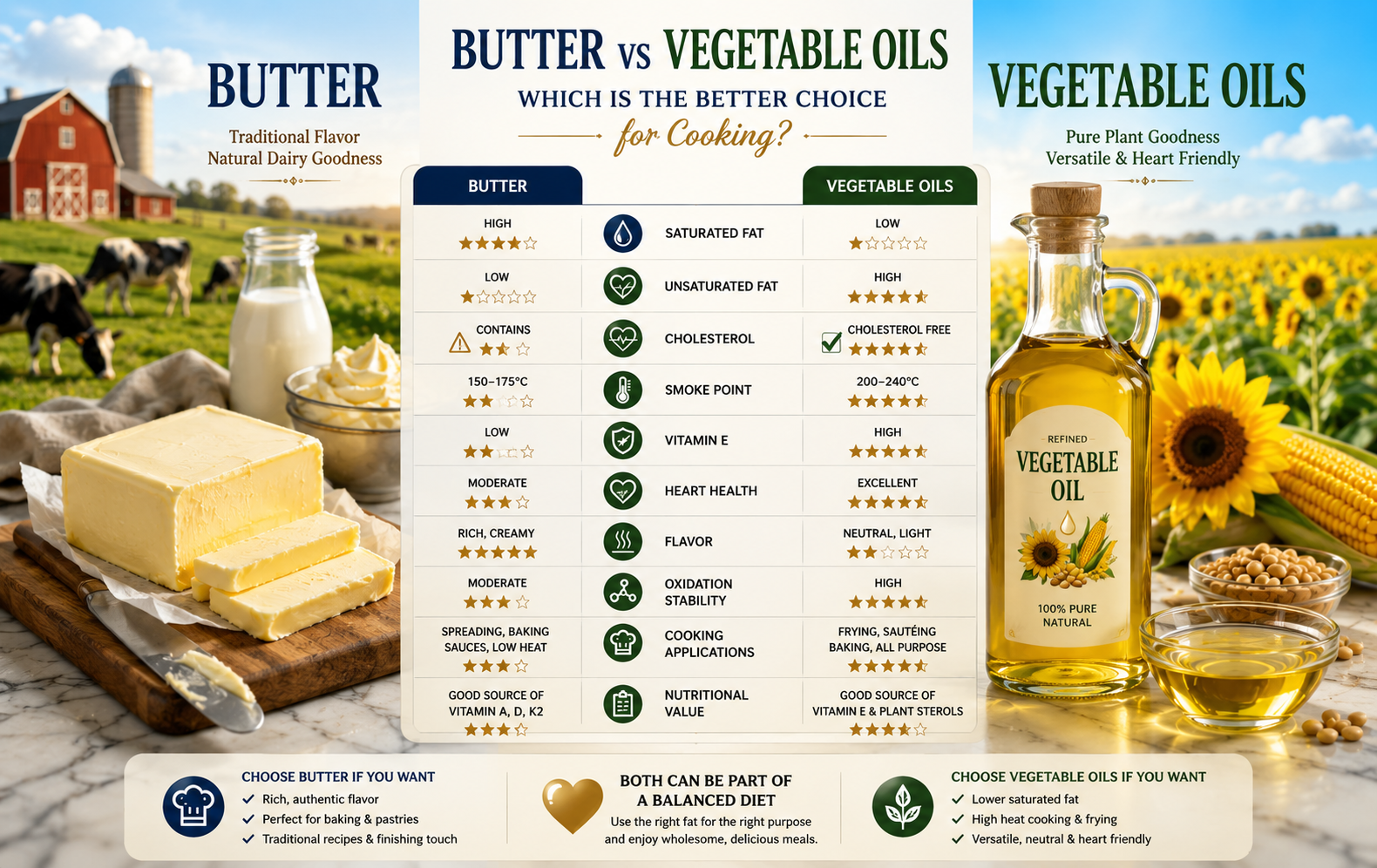
Side-by-Side Comparison
| Feature | Butter | Vegetable Oils |
|---|---|---|
| Saturated Fat | ⭐⭐⭐⭐⭐ | ⭐⭐ |
| Unsaturated Fat | ⭐⭐ | ⭐⭐⭐⭐⭐ |
| Cholesterol-Free | ❌ | ✅ |
| Smoke Point | ⭐⭐ | ⭐⭐⭐⭐⭐ |
| Frying | ⭐⭐ | ⭐⭐⭐⭐⭐ |
| Baking | ⭐⭐⭐⭐⭐ | ⭐⭐⭐⭐ |
| Flavor | ⭐⭐⭐⭐⭐ | ⭐⭐⭐ |
| Heart-Friendly Fat Profile | ⭐⭐ | ⭐⭐⭐⭐⭐ |
Which Should You Choose?
Choose Butter if you want:
- Rich traditional flavor
- Premium baked goods
- Creamy sauces
- Occasional finishing touches
Choose Vegetable Oils if you want:
- Everyday cooking versatility
- High-temperature frying
- Neutral flavor
- Lower saturated fat intake
- Cholesterol-free cooking fat
For many households, using both strategically provides the best balance—vegetable oils for daily cooking and butter for recipes where its distinctive flavor is desired.
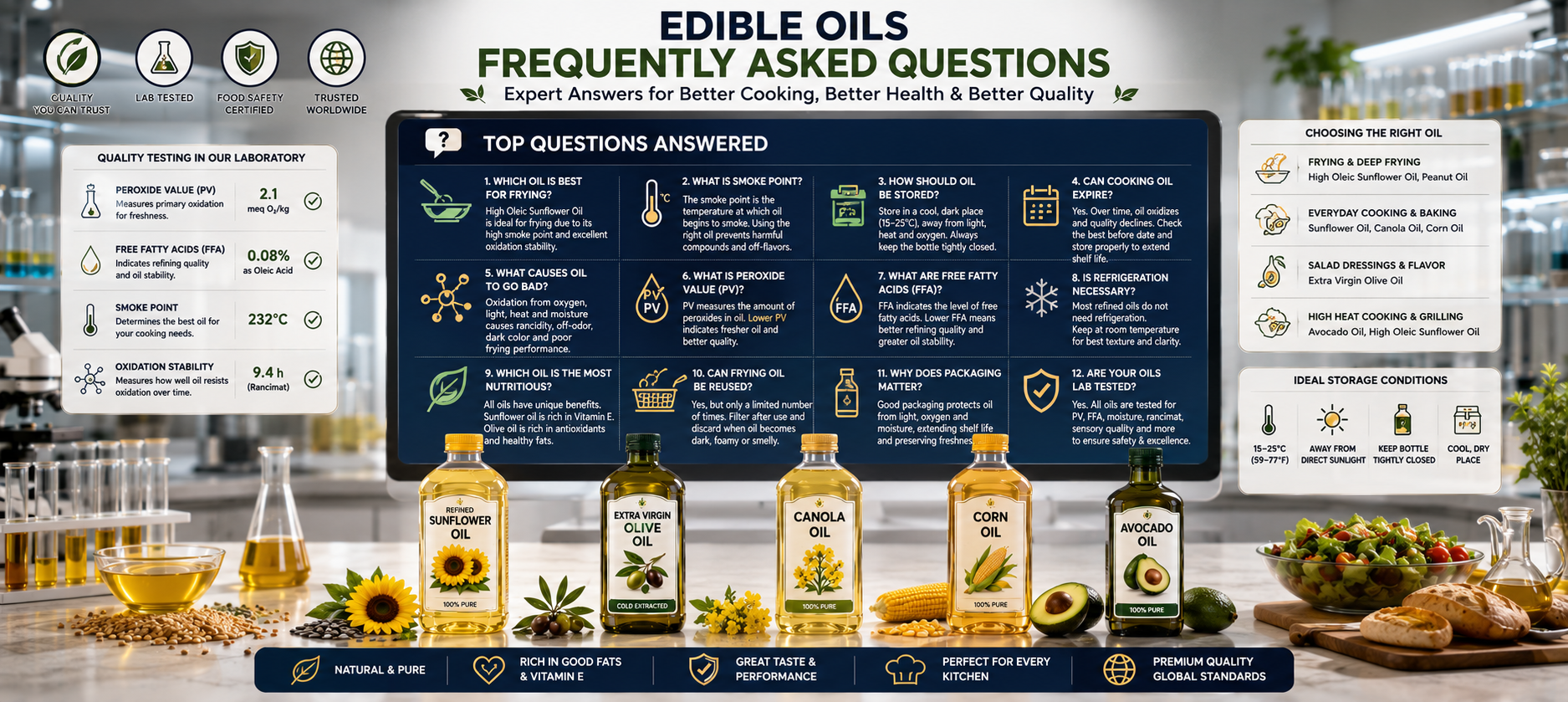
Frequently Asked Questions (FAQ)
Is butter healthier than vegetable oils?
Both can fit into a balanced diet, but most vegetable oils contain more unsaturated fats and no cholesterol, making them a common choice for everyday cooking.
Why does butter burn more easily?
Butter contains milk solids and water, which begin to brown and burn at relatively low temperatures.
Which is better for frying?
Refined vegetable oils are generally preferred because of their higher smoke points and better heat stability.
Can vegetable oils replace butter in baking?
In many recipes, yes. Vegetable oils often produce softer, moister baked goods, though butter provides a richer flavor and texture.
Does butter contain cholesterol?
Yes. Butter naturally contains cholesterol because it is an animal-derived product, whereas vegetable oils are naturally cholesterol-free.
Related Articles
- Ghee vs Vegetable Oils
- Which Oil Is Best for Frying?
- Which Oil Is Best for Everyday Cooking?
- Saturated vs Unsaturated Fats
- Refined Oil vs Cold-Pressed Oil
- Sunflower Oil vs Olive Oil
Conclusion
Butter and vegetable oils each have unique strengths in the kitchen. Butter offers unmatched richness and flavor, making it a favorite for baking and finishing dishes. Vegetable oils, however, provide greater versatility, higher smoke points, and a fat profile that is generally richer in unsaturated fats and free of cholesterol, making them well suited for everyday cooking and high-heat applications.
Rather than viewing one as universally better, the healthiest and most practical approach is to choose the right fat for the right purpose while maintaining a balanced overall diet.
Call to Action
Explore our premium selection of refined vegetable oils designed for home kitchens, food service, and industrial food production. With consistent quality, excellent frying performance, and internationally recognized standards, our products deliver reliable results for every cooking application.
Leave a Reply