



For centuries, both ghee and vegetable oils have been used in kitchens around the world. Ghee has deep roots in South Asian and Middle Eastern cuisine, while vegetable oils such as sunflower, canola, corn, and soybean oils have become staples of modern cooking because of their versatility and affordability.
Consumers often ask:
Is ghee healthier than vegetable oil?
The answer depends on several factors, including cooking method, nutritional needs, portion size, and the specific vegetable oil being compared.
Rather than viewing one as universally superior, understanding the nutritional and culinary characteristics of each helps consumers choose the right fat for the right purpose.
What Is Ghee?
Ghee is a form of clarified butter produced by slowly heating butter until the water evaporates and the milk solids separate.
The remaining golden fat is filtered, producing a rich, aromatic cooking fat with a long shelf life.
Traditional ghee is commonly used in:
- Indian cuisine
- Pakistani cuisine
- Middle Eastern dishes
- Traditional desserts
- High-heat cooking
What Are Vegetable Oils?
Vegetable oils are extracted from seeds, fruits, or other plant sources.
Common examples include:
- Sunflower Oil
- Canola Oil
- Corn Oil
- Soybean Oil
- Olive Oil
- Avocado Oil
Depending on the oil type and refining process, vegetable oils may be suitable for frying, baking, sautéing, or salad dressings.
Nutritional Comparison
Although both provide approximately the same calories, their fat composition differs considerably.
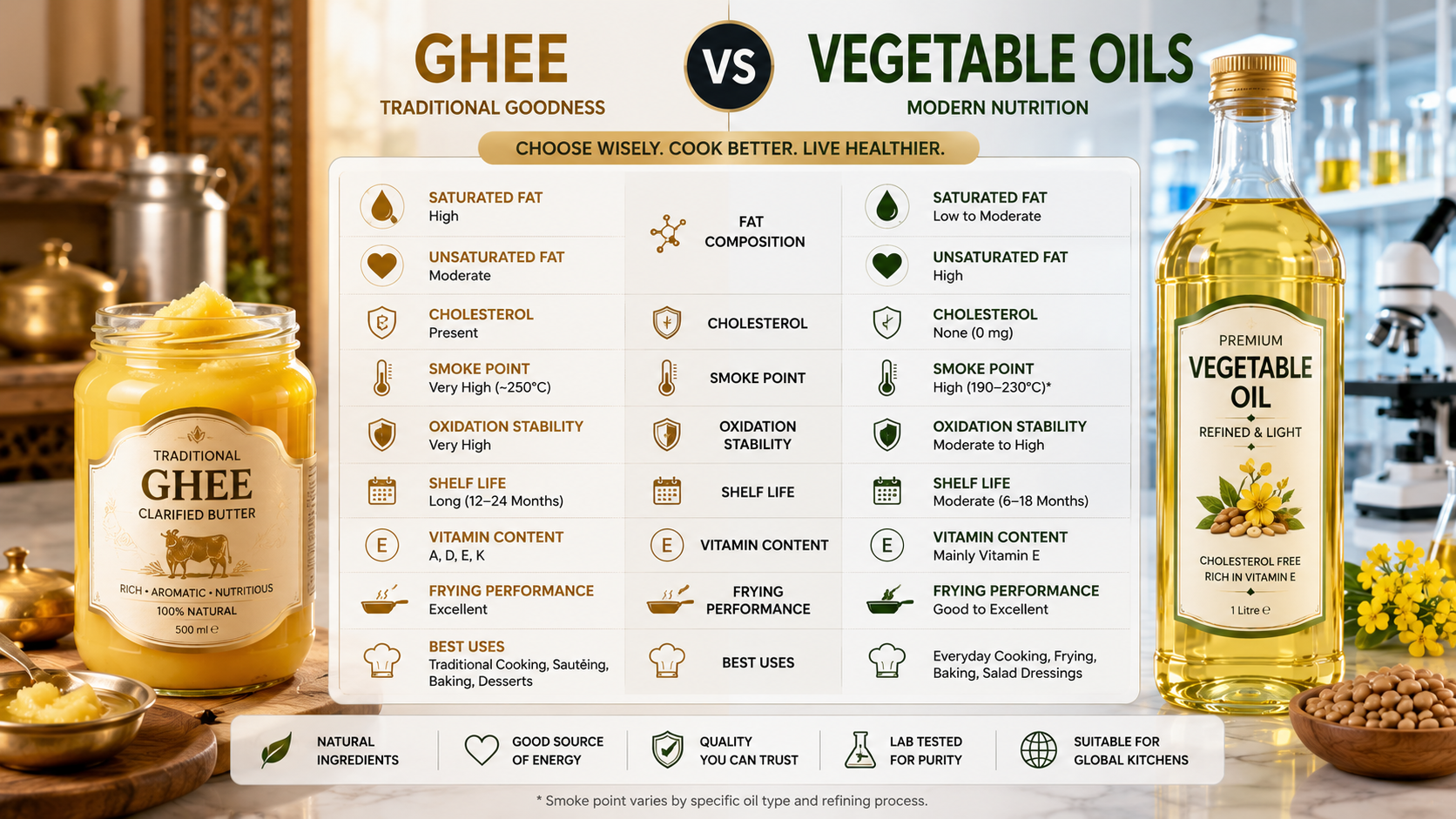
| Nutrient (Approximate) | Ghee | Refined Vegetable Oils |
|---|---|---|
| Calories | ~884 kcal | ~884 kcal |
| Total Fat | 100 g | 100 g |
| Saturated Fat | High | Usually Low to Moderate |
| Monounsaturated Fat | Moderate | Moderate to High |
| Polyunsaturated Fat | Low | Moderate to High |
| Cholesterol | Present | None |
| Vitamin E | Low | Often Higher (depending on oil) |
Fat Composition
The largest nutritional difference is the balance between saturated and unsaturated fats.
Ghee
Contains relatively high amounts of:
- Saturated fat
- Monounsaturated fat
Also contains naturally occurring cholesterol because it is an animal-derived product.
Vegetable Oils
Most vegetable oils contain predominantly:
- Monounsaturated fats
- Polyunsaturated fats
They are naturally cholesterol-free because they come from plants.
Smoke Point
Smoke point determines how well a fat performs during high-temperature cooking.
Approximate values:
| Fat | Smoke Point |
|---|---|
| Ghee | ~250°C |
| Refined Sunflower Oil | ~225°C |
| High Oleic Sunflower Oil | ~230°C |
| Canola Oil | ~205–230°C |
| Corn Oil | ~230°C |
Both ghee and many refined vegetable oils are suitable for high-heat cooking.
Flavor Profile
Ghee
Offers:
- Rich buttery flavor
- Nutty aroma
- Deep savory notes
It adds distinctive taste to traditional recipes.
Vegetable Oils
Most refined vegetable oils provide:
- Neutral flavor
- Light aroma
- Minimal influence on the food’s natural taste
This makes them highly versatile.
Frying Performance
Ghee performs well because of its:
- High smoke point
- Low moisture content
- Stable cooking characteristics
Refined vegetable oils also perform exceptionally well, particularly:
- Refined Sunflower Oil
- High Oleic Sunflower Oil
- Corn Oil
The best choice depends on flavor preference and recipe requirements.
Baking
Both options can be used successfully.
Ghee
Provides:
- Rich flavor
- Moist texture
- Traditional taste
Vegetable Oils
Offer:
- Neutral flavor
- Soft texture
- Consistent baking performance
Oxidation Stability
Oxidation stability depends on fatty acid composition.
General comparison:
- Ghee → Very High
- High Oleic Sunflower Oil → Excellent
- Olive Oil → Very Good
- Refined Sunflower Oil → Moderate
- Corn Oil → Moderate
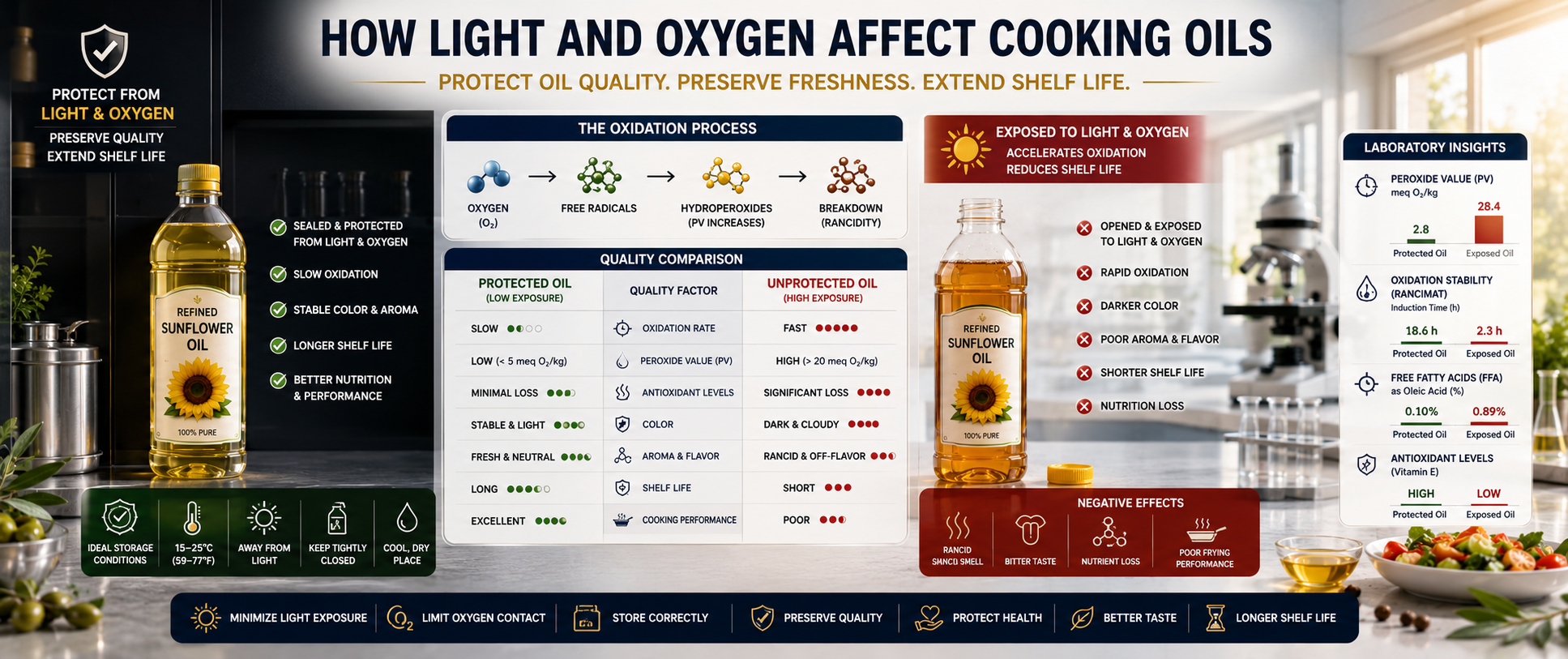
Proper storage remains important regardless of fat type.
Shelf Life
Unopened ghee generally has a long shelf life because it contains very little water.
Refined vegetable oils also have excellent shelf life when stored correctly.
For both products:
- Protect from heat.
- Avoid direct sunlight.
- Keep containers tightly sealed.
Nutritional Considerations
Ghee naturally contains:
- Fat-soluble vitamins in varying amounts
- Conjugated fatty acids (depending on production methods)
Vegetable oils commonly provide:
- Vitamin E
- Unsaturated fatty acids
Nutritional composition varies considerably among different vegetable oils.
Heart Health Considerations
Most dietary guidelines recommend emphasizing unsaturated fats in place of excessive saturated fat intake as part of an overall balanced diet.
Many vegetable oils are naturally rich in unsaturated fats, while ghee contains a higher proportion of saturated fat.
Overall dietary pattern, lifestyle, and total fat intake are more important than any single cooking fat.
Culinary Applications
Ghee
Best suited for:
- Traditional Indian dishes
- Middle Eastern cuisine
- High-heat sautéing
- Rich sauces
- Baking requiring buttery flavor
Vegetable Oils
Ideal for:
- Everyday cooking
- Deep frying
- Stir-frying
- Baking
- Salad dressings (depending on oil type)
- Commercial food production
Price Comparison
Prices vary depending on:
- Production method
- Quality
- Region
- Brand
Premium ghee often costs more than common refined vegetable oils because dairy production is generally more resource-intensive.
Which Should You Choose?
Choose Ghee if you prefer:
- Rich buttery flavor
- Traditional recipes
- High smoke point
- Authentic regional cuisine
Choose Vegetable Oils if you prefer:
- Neutral taste
- Cholesterol-free plant oils
- Everyday versatility
- Wide variety of nutritional profiles
Many households successfully use both depending on the recipe.
Comparison Table
| Feature | Ghee | Vegetable Oils |
|---|---|---|
| Origin | Animal | Plant |
| Flavor | Rich & Buttery | Neutral (Most Refined Oils) |
| Cholesterol | Present | None |
| Saturated Fat | High | Usually Lower |
| Unsaturated Fat | Moderate | Generally Higher |
| Smoke Point | Very High | High (Varies by Oil) |
| Frying | Excellent | Excellent |
| Baking | Excellent | Excellent |
| Everyday Cooking | Good | Excellent |
Frequently Asked Questions (FAQ)
Is ghee healthier than vegetable oil?
Neither is universally healthier. The best choice depends on dietary preferences, cooking method, and overall eating habits.
Which has the higher smoke point?
Ghee generally has a very high smoke point, although several refined vegetable oils also perform well at high temperatures.
Does ghee contain cholesterol?
Yes. Ghee is an animal-derived fat and naturally contains cholesterol.
Are vegetable oils cholesterol-free?
Yes. Vegetable oils naturally contain no cholesterol because they are plant-based.
Can both be used for frying?
Yes. Both ghee and many refined vegetable oils are suitable for frying when used appropriately.
Related Articles
- Butter vs Vegetable Oils
- Sunflower Oil vs Olive Oil
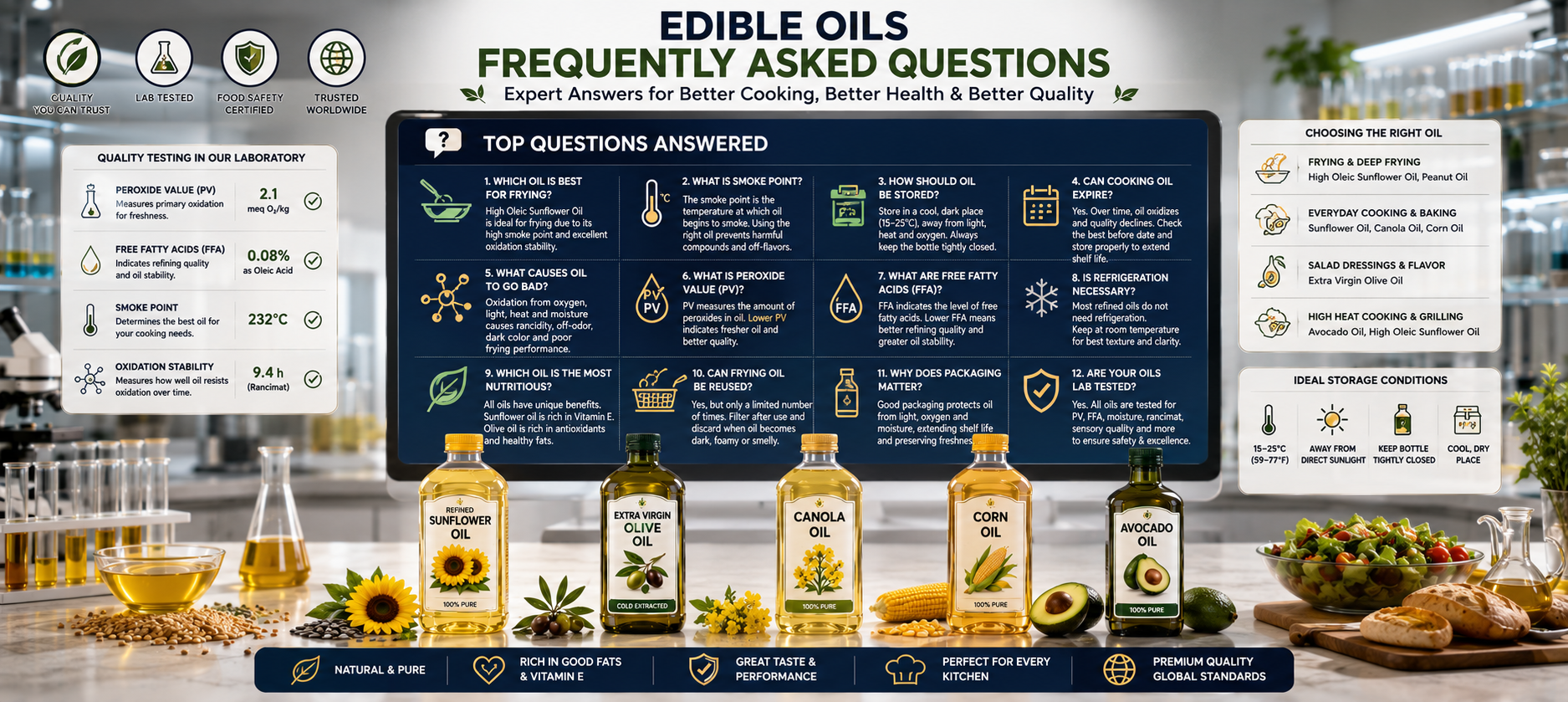
- Which Oil Is Best for Frying?
- Which Oil Is Best for Everyday Cooking?
- Smoke Point of Cooking Oils
- Oxidation Stability of Cooking Oils
Conclusion
Ghee and vegetable oils each offer distinct advantages in the kitchen. Ghee provides a rich traditional flavor, excellent heat tolerance, and long shelf life, while vegetable oils offer versatility, neutral taste, and a wide range of fatty acid profiles to suit different cooking methods. Rather than choosing one exclusively, many cooks benefit from selecting the most appropriate fat based on the recipe, desired flavor, and nutritional goals.
Call to Action
Explore our premium range of refined vegetable oils, including high-quality sunflower oils designed for home kitchens, food manufacturers, and international markets. Produced under internationally recognized food safety standards, our oils deliver exceptional quality, reliable performance, and consistent results in every application.
Leave a Reply