



Frying is one of the most popular cooking techniques worldwide. Whether preparing crispy French fries, fried chicken, seafood, vegetables, or traditional dishes, choosing the right cooking oil significantly influences food quality, flavor, texture, and even the lifespan of the oil itself.
Many consumers assume that any vegetable oil is suitable for frying. In reality, different oils perform very differently when exposed to high temperatures.
The ideal frying oil combines high heat tolerance, oxidative stability, neutral flavor, and consistent performance, making it suitable for repeated use while maintaining food quality.
What Makes a Good Frying Oil?
A high-quality frying oil should possess several important characteristics.
These include:
- High smoke point
- Excellent oxidation stability
- Neutral flavor
- Low foaming tendency
- Good thermal stability
- Long frying life
- Consistent cooking performance
No single property determines frying quality. The best oils combine all of these characteristics.
Why Smoke Point Matters
The smoke point is the temperature at which an oil begins to produce visible smoke.
Once this point is exceeded:
- Flavor deteriorates.
- Nutritional quality decreases.
- Oxidation accelerates.
- Unpleasant compounds may develop.
Selecting an oil with an appropriate smoke point helps maintain cooking performance during frying.
Why Oxidation Stability Is Equally Important
Smoke point alone does not determine frying quality.
An oil with a high smoke point but poor oxidative stability may still deteriorate rapidly during prolonged frying.
Oxidation stability measures an oil’s ability to resist chemical degradation during heating.
Higher oxidative stability generally means:
- Longer frying life
- Better flavor retention
- Lower oil degradation
- Improved commercial performance
Fatty Acid Composition
Fatty acid composition strongly influences frying performance.
General heat stability:
- Saturated fats → Highest stability
- Monounsaturated fats → High stability
- Polyunsaturated fats → Lower stability
High Oleic oils contain more monounsaturated fats, making them particularly suitable for repeated frying.
Best Oils for Frying
Several refined oils perform exceptionally well under high temperatures.
High Oleic Sunflower Oil
Advantages:
- Excellent oxidation stability
- High smoke point
- Long frying life
- Neutral taste
- Excellent commercial performance
Widely used in:
- Restaurants
- Snack manufacturing
- Fast-food chains
- Industrial food production
Refined Sunflower Oil
Advantages:
- High smoke point
- Neutral flavor
- Excellent food appearance
- Affordable
Ideal for:
- Household frying
- Everyday cooking
- Shallow frying
Peanut Oil
Advantages:
- High smoke point
- Good thermal stability
- Mild flavor
Commonly used for:
- Asian cuisine
- Deep frying
- Commercial kitchens
Canola Oil
Advantages:
- Mild flavor
- Good smoke point
- Balanced fatty acid profile
Suitable for:
- Frying
- Baking
- Everyday cooking
Corn Oil
Advantages:
- High smoke point
- Reliable frying performance
- Widely available
Often used in:
- Restaurant frying
- Snack production
- Industrial food manufacturing
Avocado Oil
Advantages:
- Extremely high smoke point
- High monounsaturated fat content
Typically chosen for:
- Premium cooking
- High-temperature sautéing
- Specialty applications
Oils Less Suitable for Deep Frying
Some oils are better reserved for cold or low-temperature applications.
Examples include:
- Flaxseed Oil
- Walnut Oil
- Unrefined Sesame Oil
These oils contain delicate compounds that deteriorate rapidly under intense heat.
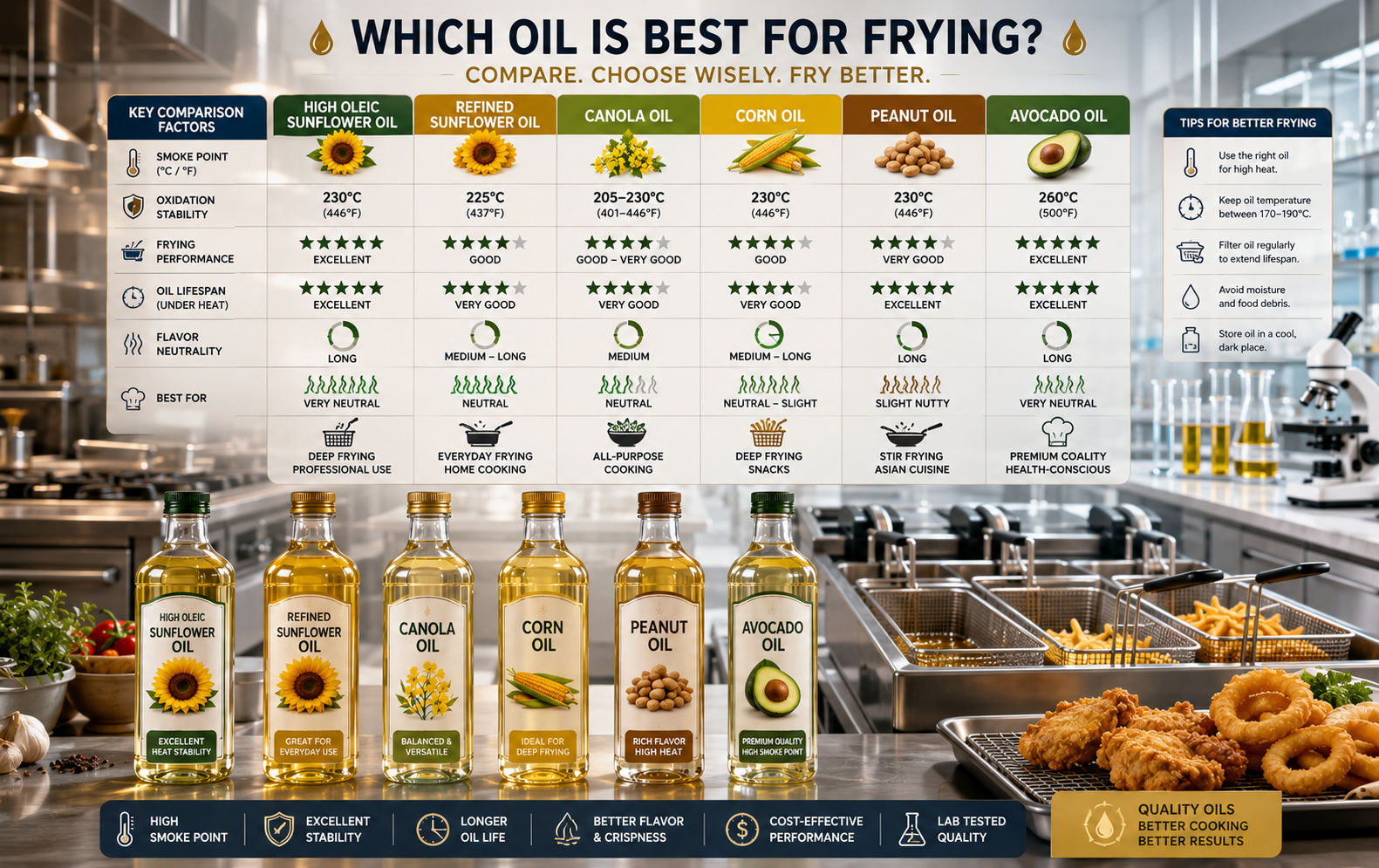
Comparison Table
| Oil | Smoke Point | Oxidation Stability | Frying Performance |
|---|---|---|---|
| High Oleic Sunflower Oil | ~230°C | Excellent | Excellent |
| Refined Sunflower Oil | ~225°C | Good | Excellent |
| Peanut Oil | ~230°C | Very Good | Excellent |
| Corn Oil | ~230°C | Good | Very Good |
| Canola Oil | ~205–230°C | Good–Very Good | Very Good |
| Avocado Oil | ~260°C | Excellent | Excellent |
Approximate values vary by refining method and manufacturer.
Choosing Oil for Home Frying
For everyday household use, ideal frying oils should offer:
- Neutral flavor
- High smoke point
- Easy availability
- Good value
- Stable performance
Refined sunflower oil remains one of the most popular choices worldwide for these reasons.
Choosing Oil for Commercial Frying
Commercial kitchens require oils with:
- Long frying life
- Low foaming
- Stable color
- Consistent quality
- Excellent oxidation resistance
High Oleic sunflower oil is widely preferred because it withstands repeated heating better than many conventional vegetable oils.
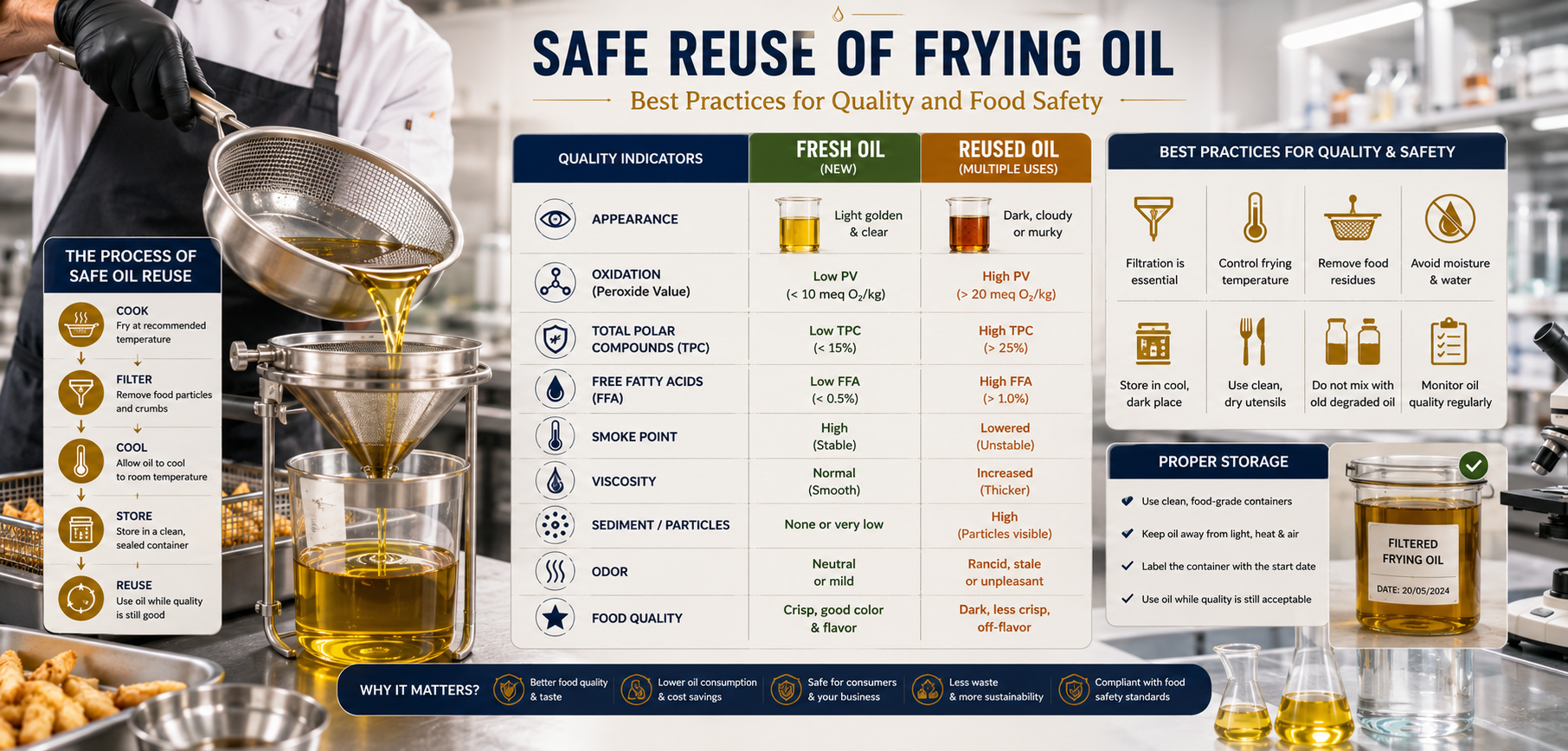
Reusing Frying Oil
Reusing frying oil is common in commercial food preparation, but repeated heating gradually reduces quality.
Oil should be replaced when it develops:
- Dark color
- Strong odor
- Excessive smoke
- Persistent foaming
- Increased viscosity
- Burnt flavor
Proper filtration extends oil life but does not prevent eventual deterioration.
Factors That Shorten Frying Oil Life
Several conditions accelerate degradation:
- Excessive frying temperature
- Water contamination
- Food particles
- Frequent reheating
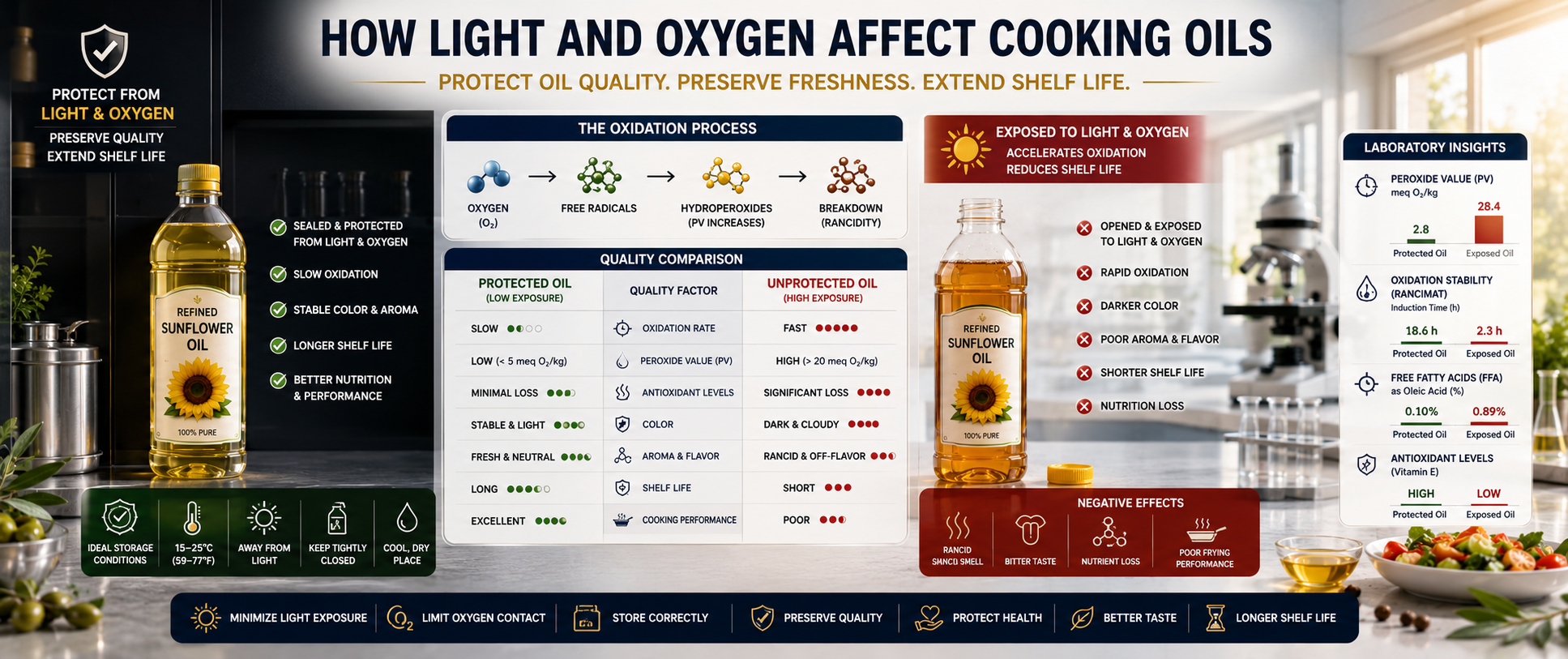
- Oxygen exposure
- Poor filtration
Good frying practices help maximize oil performance.
Common Myths
“The highest smoke point always means the best frying oil.”
False.
Oxidation stability is equally important.
“All vegetable oils perform the same.”
False.
Fatty acid composition significantly influences heat resistance.
“Oil can be reused indefinitely.”
False.
Every frying cycle gradually reduces oil quality.
“Dark oil is always better.”
False.
Darkening often indicates oil degradation rather than improved quality.
Best Frying Oils at a Glance
| Application | Recommended Oil |
|---|---|
| Deep Frying | High Oleic Sunflower Oil |
| Everyday Frying | Refined Sunflower Oil |
| Commercial Kitchens | High Oleic Sunflower Oil |
| Stir Frying | Peanut Oil |
| Premium Cooking | Avocado Oil |
| General Household Cooking | Refined Sunflower Oil or Canola Oil |
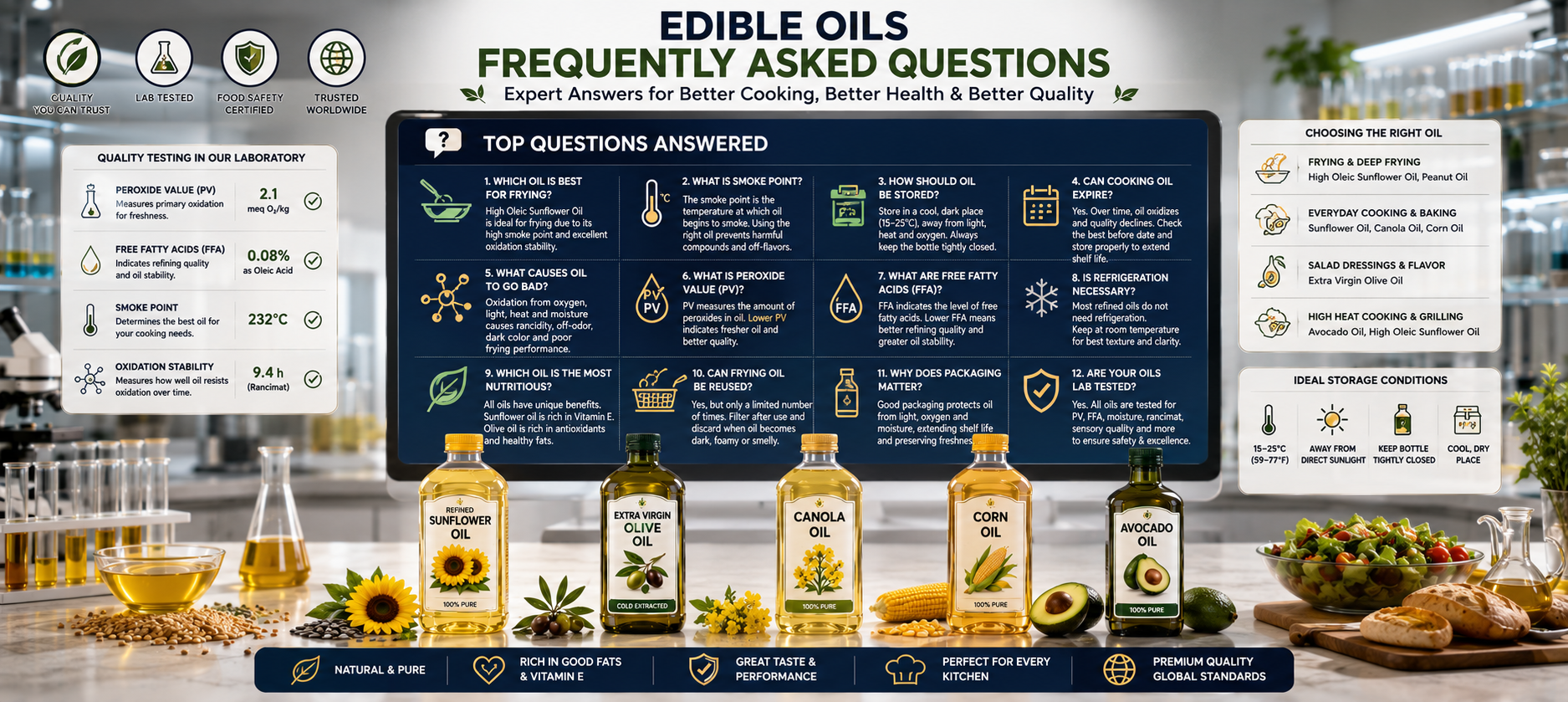
Frequently Asked Questions (FAQ)
Which oil is considered the best for deep frying?
High Oleic sunflower oil is widely regarded as one of the best choices due to its excellent oxidation stability and high smoke point.
Is refined sunflower oil suitable for frying?
Yes. Refined sunflower oil performs very well for household frying because of its neutral flavor and high smoke point.
Why is High Oleic sunflower oil preferred in restaurants?
Its higher monounsaturated fat content provides greater oxidation stability and longer frying life during repeated use.
Does smoke point determine everything?
No. Smoke point and oxidation stability should both be considered when selecting frying oils.
Can frying oil be reused?
Yes, but only if it remains in good condition and has not developed signs of significant degradation.
Related Articles
- Smoke Point of Sunflower Oil
- High Oleic vs Linoleic Sunflower Oil
- Oxidation Stability of Cooking Oils
- Sunflower Oil vs Corn Oil
- Sunflower Oil vs Canola Oil
- Signs That Oil Has Gone Bad
Conclusion
The best frying oil combines a high smoke point with excellent oxidation stability, neutral flavor, and long frying life. While several refined vegetable oils perform well, High Oleic sunflower oil consistently ranks among the best options for both commercial and household frying due to its outstanding heat resistance and stability. Choosing the appropriate frying oil not only improves food quality but also extends oil life and supports more efficient cooking.
Call to Action
Explore our premium range of refined sunflower oils and High Oleic sunflower oils, specially developed for exceptional frying performance, long-lasting stability, and international food safety standards. Whether for home kitchens, restaurants, or industrial food production, our oils deliver consistent quality and reliable results in every batch.
Leave a Reply