



Sunflower oil is one of the world’s most widely consumed edible oils, valued not only for its neutral flavor and versatility but also for its nutritional composition. Extracted from sunflower seeds (Helianthus annuus), it is naturally rich in unsaturated fatty acids and vitamin E, making it a popular choice in households, restaurants, and food manufacturing.
Understanding the nutritional profile of sunflower oil helps consumers choose the right type of oil for cooking while maintaining a balanced diet. Like all edible oils, sunflower oil is composed almost entirely of fat, but the type of fat it contains makes a significant difference in its nutritional quality and culinary performance.
This guide explores the complete nutritional value of sunflower oil, its major nutrients, fatty acid composition, health benefits, and how it compares with other commonly used cooking oils.
What Is Sunflower Oil Made Of?
Sunflower oil is produced by extracting oil from sunflower seeds through mechanical pressing or solvent extraction, followed by refining in most commercial applications.
Its nutritional composition mainly consists of:
- Unsaturated fatty acids
- Small amounts of saturated fat
- Natural vitamin E (tocopherols)
- Plant sterols
- Trace antioxidant compounds
Unlike butter or animal fats, sunflower oil contains no cholesterol because it is entirely plant-based.
Nutrition Facts (Per 100 g)
| Nutrient | Approximate Amount |
|---|---|
| Energy | 884 kcal |
| Total Fat | 100 g |
| Saturated Fat | 10–12 g |
| Monounsaturated Fat | 20–30 g (varies by type) |
| Polyunsaturated Fat | 60–70 g (traditional sunflower oil) |
| Trans Fat | 0 g |
| Cholesterol | 0 mg |
| Protein | 0 g |
| Carbohydrates | 0 g |
| Sugar | 0 g |
| Sodium | 0 mg |
| Vitamin E | Approximately 40–60 mg |
Values may vary slightly depending on sunflower variety and refining process.
Calories in Sunflower Oil
Like all edible oils, sunflower oil provides approximately 9 calories per gram, making it an energy-dense food.
One tablespoon (about 14 g) contains roughly:
- 120 calories
- 14 g total fat
- 0 g carbohydrates
- 0 g protein
Although calorie-rich, moderate consumption can fit well within a healthy dietary pattern because of its favorable fat composition.
Healthy Fat Composition
The nutritional quality of sunflower oil depends largely on the balance between different fatty acids.
Polyunsaturated Fat (PUFA)
Traditional sunflower oil contains high amounts of linoleic acid, an essential omega-6 fatty acid.
Benefits include:
- Supports normal cell function
- Essential for growth and development
- Contributes to healthy skin
- Plays a role in immune function
Since the body cannot produce linoleic acid, it must be obtained from the diet.
Monounsaturated Fat (MUFA)
High-oleic sunflower oil contains significantly more oleic acid.
This variety offers:
- Improved oxidative stability
- Better performance during cooking
- Longer shelf life
- Greater heat resistance
High-oleic sunflower oil has become increasingly popular for commercial food production.
Saturated Fat
Sunflower oil naturally contains relatively low levels of saturated fat compared with many animal fats.
Lower saturated fat intake is generally recommended as part of an overall balanced eating pattern, though total dietary context remains important.
Vitamin E: One of Sunflower Oil’s Greatest Strengths
Perhaps the most important micronutrient found in sunflower oil is vitamin E.
Vitamin E functions as a natural antioxidant that helps protect cells from oxidative stress.
Potential benefits include:
- Protection against free radicals
- Support for normal immune function
- Maintenance of healthy skin
- Protection of cell membranes
- Contribution to overall antioxidant defense
Among commonly used cooking oils, sunflower oil is considered one of the richest natural dietary sources of vitamin E.
Does Refining Reduce Nutritional Value?
Many consumers assume refined oils lose all nutrients, but this is not entirely accurate.
During refining:
Some naturally occurring compounds decrease.
However:
- Safety improves.
- Shelf life increases.
- Flavor becomes neutral.
- Color becomes consistent.
- Cooking stability improves.
Commercial refined sunflower oil still retains meaningful amounts of vitamin E while offering excellent performance for everyday cooking.
Essential Fatty Acids
Sunflower oil supplies linoleic acid, which is classified as an essential fatty acid.
Essential fatty acids are important because the human body cannot synthesize them.
They contribute to:
- Normal growth
- Skin integrity
- Cellular structure
- Hormone production
- Nervous system function
Does Sunflower Oil Contain Omega-3?
Traditional sunflower oil contains only very small amounts of omega-3 fatty acids.
Its fatty acid profile is dominated by omega-6.
For individuals seeking more omega-3 intake, foods such as fatty fish, flaxseed, walnuts, or canola oil can complement the diet.
Cholesterol-Free by Nature
Because sunflower oil comes from plants, it contains:
- No cholesterol
- No animal fat
- No lactose
- No dairy proteins
This makes it suitable for vegetarian and vegan diets.
Plant Sterols
Sunflower oil naturally contains plant sterols.
These naturally occurring compounds are structurally similar to cholesterol and are commonly studied for their role in supporting healthy cholesterol management as part of a balanced diet.
Different Nutritional Profiles of Sunflower Oil
Not all sunflower oils are identical.
Traditional Linoleic Sunflower Oil
Characteristics:
- High in polyunsaturated fat
- Rich in vitamin E
- Common household cooking oil
Best for:
- Everyday cooking
- Salad dressings
- Light frying
- Baking
High-Oleic Sunflower Oil
Characteristics:
- Higher monounsaturated fat
- Greater heat stability
- Longer shelf life
Best for:
- Deep frying
- Commercial food production
- High-temperature cooking
- Snack manufacturing
Comparison with Other Cooking Oils
| Oil | Vitamin E | Saturated Fat | Heat Stability |
|---|---|---|---|
| Sunflower Oil | Very High | Low | High |
| Olive Oil | Moderate | Low | High |
| Canola Oil | Moderate | Very Low | High |
| Corn Oil | Moderate | Low | Medium-High |
| Soybean Oil | Moderate | Low | Medium |
Is Sunflower Oil Good for Daily Cooking?
For most healthy adults, sunflower oil can be part of a balanced diet when used in moderation.
Advantages include:
- Neutral taste
- Excellent versatility
- Rich vitamin E content
- Low saturated fat
- Suitable for various cooking methods
As with any dietary fat, portion control remains important because edible oils are calorie-dense.
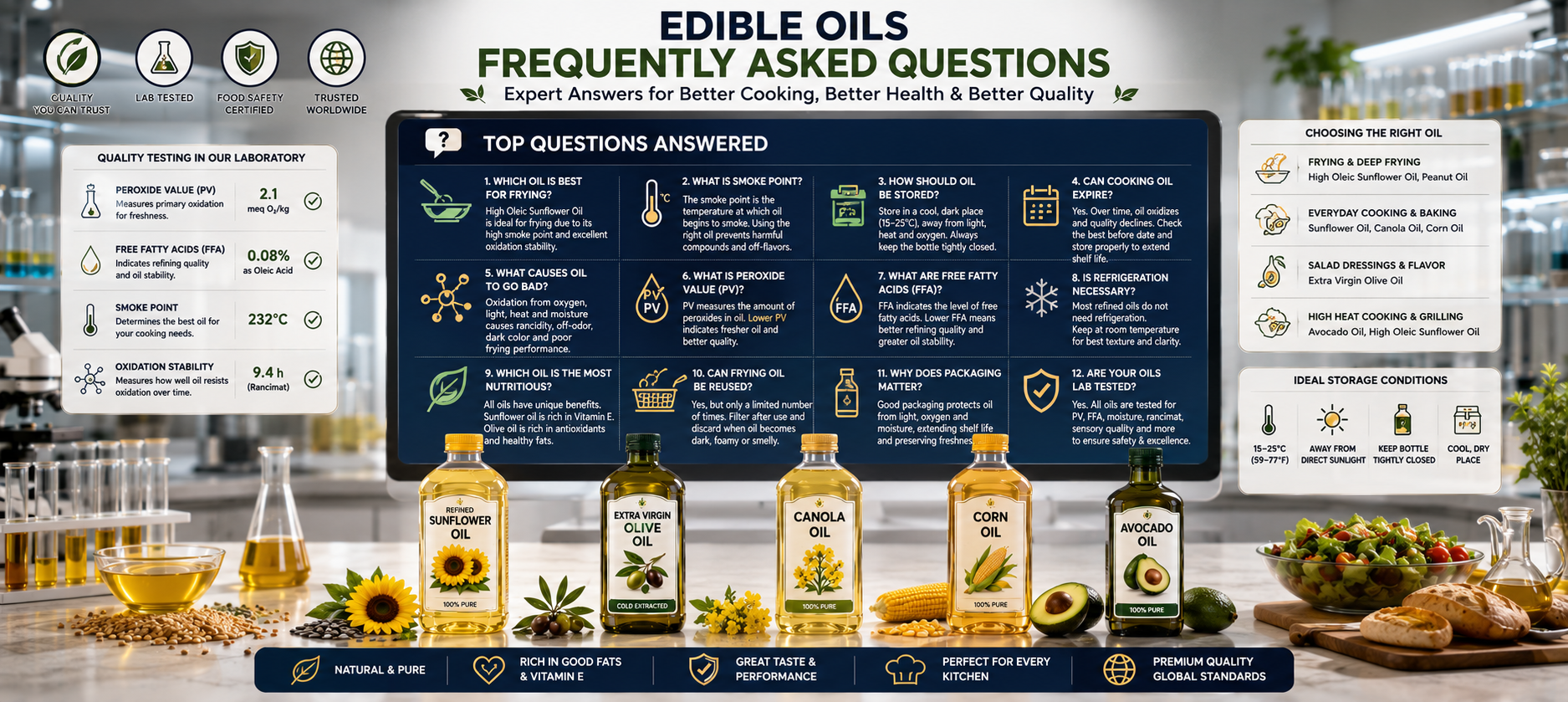
Storage Tips to Preserve Nutritional Quality
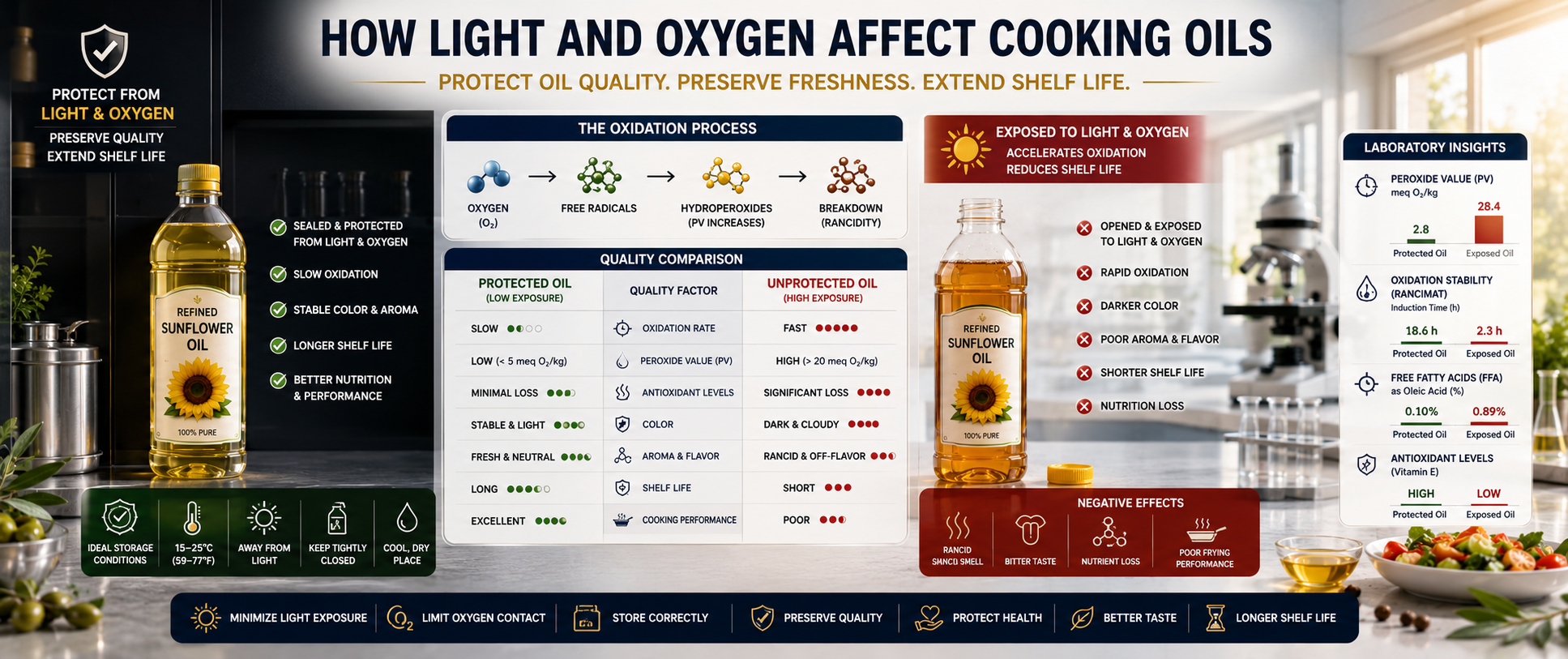
Proper storage helps maintain nutritional value.
Recommendations:
- Store in a cool, dry place.
- Keep away from direct sunlight.
- Close the bottle tightly after each use.
- Avoid repeated overheating.
- Use before the recommended expiry date.
Proper storage helps preserve both flavor and naturally occurring antioxidants.
Common Misconceptions
“Sunflower oil contains cholesterol.”
False. Plant oils naturally contain no cholesterol.
“Refined sunflower oil has no vitamins.”
False. Although some nutrients are reduced during refining, refined sunflower oil still contains valuable vitamin E.
“All sunflower oils are nutritionally identical.”
False. Linoleic and high-oleic sunflower oils differ significantly in fatty acid composition and cooking performance.
“More oil always means more health.”
False. Even healthy oils should be consumed in moderation due to their high calorie content.
Frequently Asked Questions (FAQ)
Is sunflower oil healthy?
When consumed in moderation as part of a balanced diet, sunflower oil provides healthy unsaturated fats and vitamin E.
Does sunflower oil contain protein?
No. It consists almost entirely of fat.
Is sunflower oil suitable for vegetarians?
Yes. It is 100% plant-based.
Does sunflower oil contain carbohydrates?
No.
Which sunflower oil contains more oleic acid?
High-oleic sunflower oil.
Is sunflower oil rich in vitamin E?
Yes. It is among the richest natural sources of vitamin E among commonly used cooking oils.
Related Articles
- Everything About Sunflower Oil
- Why Sunflower Oil Is Popular Worldwide
- High Oleic vs Linoleic Sunflower Oil
- Health Benefits of Sunflower Oil
- Is Sunflower Oil Good for Frying?
- Smoke Point of Sunflower Oil
Conclusion
Sunflower oil combines nutritional value, versatility, and excellent cooking performance. Rich in vitamin E and predominantly composed of unsaturated fats, it has become one of the most widely used edible oils worldwide. While different sunflower oil varieties offer distinct fatty acid profiles, both traditional and high-oleic types can play an important role in modern food preparation when selected appropriately and consumed as part of a balanced diet.
Call to Action
Looking for premium-quality refined sunflower oil for retail, food manufacturing, or international distribution?
ZAR1N supplies high-quality edible oils that meet international quality standards, offering reliable sourcing, consistent production, and flexible private label solutions for global markets. Contact our team to learn more about our sunflower oil products and export capabilities.

Leave a Reply