



Most edible oils consist primarily of triglycerides, molecules made from glycerol and three fatty acids.
During storage or improper processing, these triglycerides may break apart through a process known as hydrolysis.
When this occurs, individual fatty acids are released from the triglyceride molecule.
These free molecules are called Free Fatty Acids (FFA).
Unlike fatty acids that remain bound within triglycerides, FFAs indicate that degradation has already begun.
Why Do Free Fatty Acids Increase?
Several factors contribute to rising FFA levels.
1. Poor Quality Raw Materials
Damaged or overripe seeds contain higher enzyme activity, accelerating hydrolysis before extraction.
Examples include:
- Broken sunflower seeds
- Mold-damaged soybeans
- Poorly stored corn
- Aged oilseeds
2. Delayed Processing
Freshly harvested oilseeds should be processed as soon as possible.
Extended storage before extraction allows enzymes to break down triglycerides.
3. Moisture
Water accelerates hydrolysis.
Poor drying conditions during harvesting or storage significantly increase FFA formation.
4. High Temperature
Excessive heat speeds up chemical reactions that contribute to oil degradation.
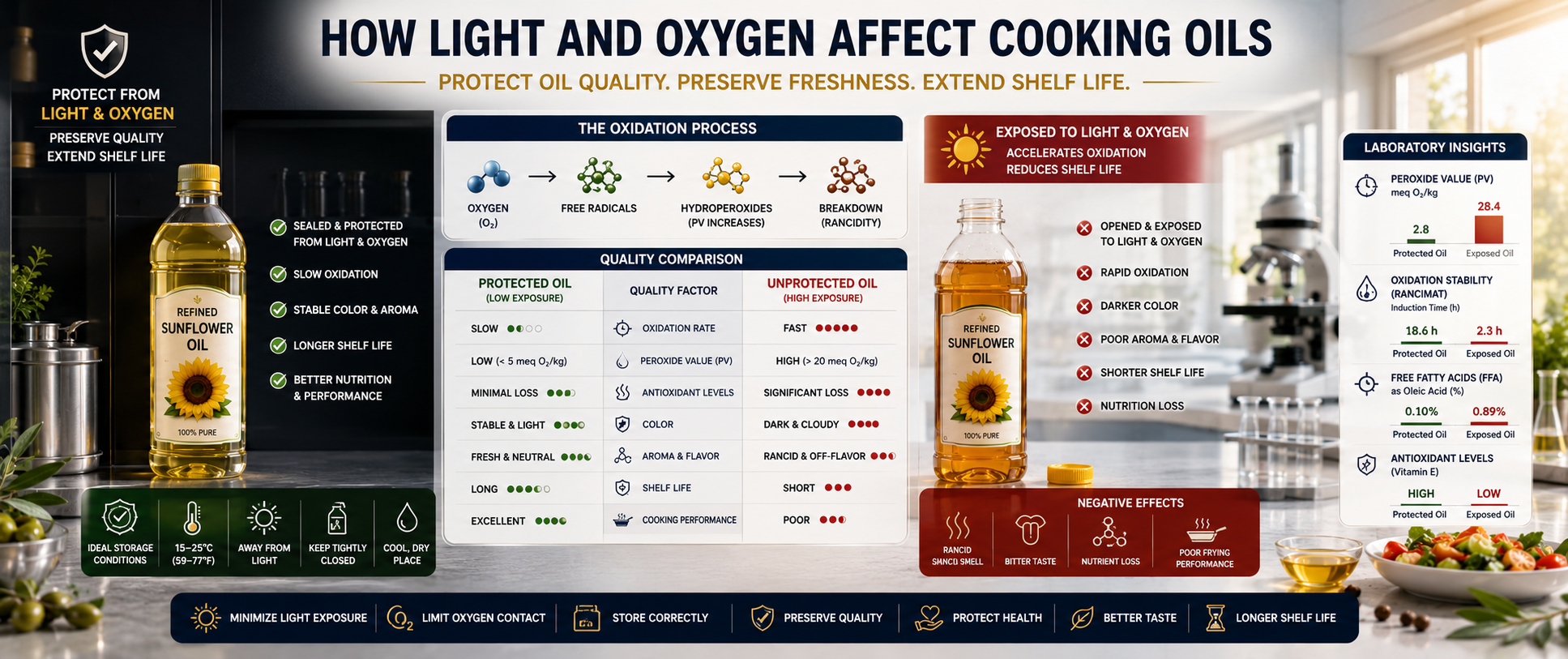
5. Improper Storage
Exposure to:
- humidity
- oxygen
- sunlight
can gradually increase FFA over time.
Why Is FFA Important?
High Free Fatty Acid levels negatively affect edible oils in several ways.
They may lead to:
- reduced shelf life
- faster oxidation
- unpleasant flavor
- rancid odor
- lower frying performance
- darker color
- reduced commercial value
Premium cooking oils therefore maintain very low FFA values.
FFA and Oil Refining
One major purpose of the refining process is reducing Free Fatty Acid content.
During neutralization, FFAs react with an alkaline solution and are removed from the oil.
Proper refining results in:
- improved flavor
- lighter color
- higher stability
- longer shelf life
Poor refining leaves excessive FFAs behind.
How Is FFA Measured?
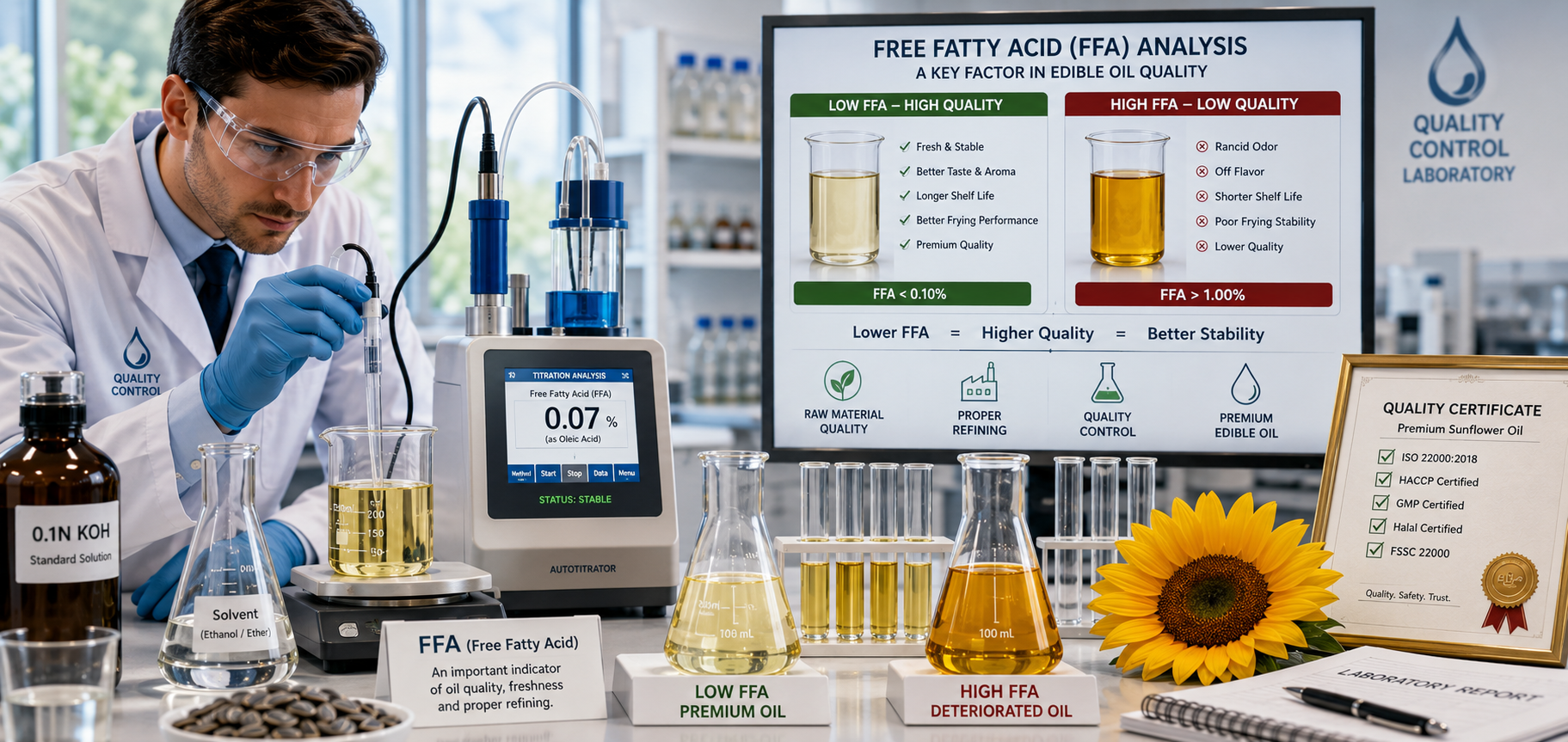
FFA is measured using laboratory titration.
The analysis typically involves:
- Dissolving an oil sample in solvent.
- Adding an indicator solution.
- Titrating with standardized alkali.
- Calculating the percentage of free fatty acids.
Results are usually expressed as:
- % Oleic Acid
- % Linoleic Acid (less common)
- Acid Value (AV)
For most vegetable oils, FFA is reported as percent oleic acid.
FFA vs Acid Value
Although closely related, they are not identical.
| Measurement | Description |
|---|---|
| FFA (%) | Percentage of free fatty acids |
| Acid Value | Milligrams of KOH required to neutralize acids in one gram of oil |
Both measurements describe the same phenomenon but use different units.
Typical FFA Levels
| Oil Quality | Typical FFA |
|---|---|
| Premium Refined Oil | Below 0.10% |
| High-Quality Refined Oil | 0.10–0.20% |
| Acceptable Refined Oil | Up to 0.30% |
| Crude Oil | Often 1–5% or higher |
Actual specifications vary depending on international standards and oil type.
FFA in Sunflower Oil
Premium refined sunflower oil generally contains extremely low FFA levels because:
- high-quality seeds are selected,
- refining removes free acids efficiently,
- modern production minimizes degradation.
Maintaining low FFA is essential for export-quality sunflower oil.
Does High FFA Mean Oil Is Unsafe?
Not necessarily.
FFA primarily reflects quality rather than immediate safety.
However, elevated FFA usually indicates that the oil has undergone deterioration and may oxidize more rapidly during storage or cooking.
For premium food products, low FFA is always preferred.
FFA and Frying Performance
Low FFA oils generally:
- produce less foam,
- generate less smoke,
- remain stable longer,
- resist breakdown at high temperatures.
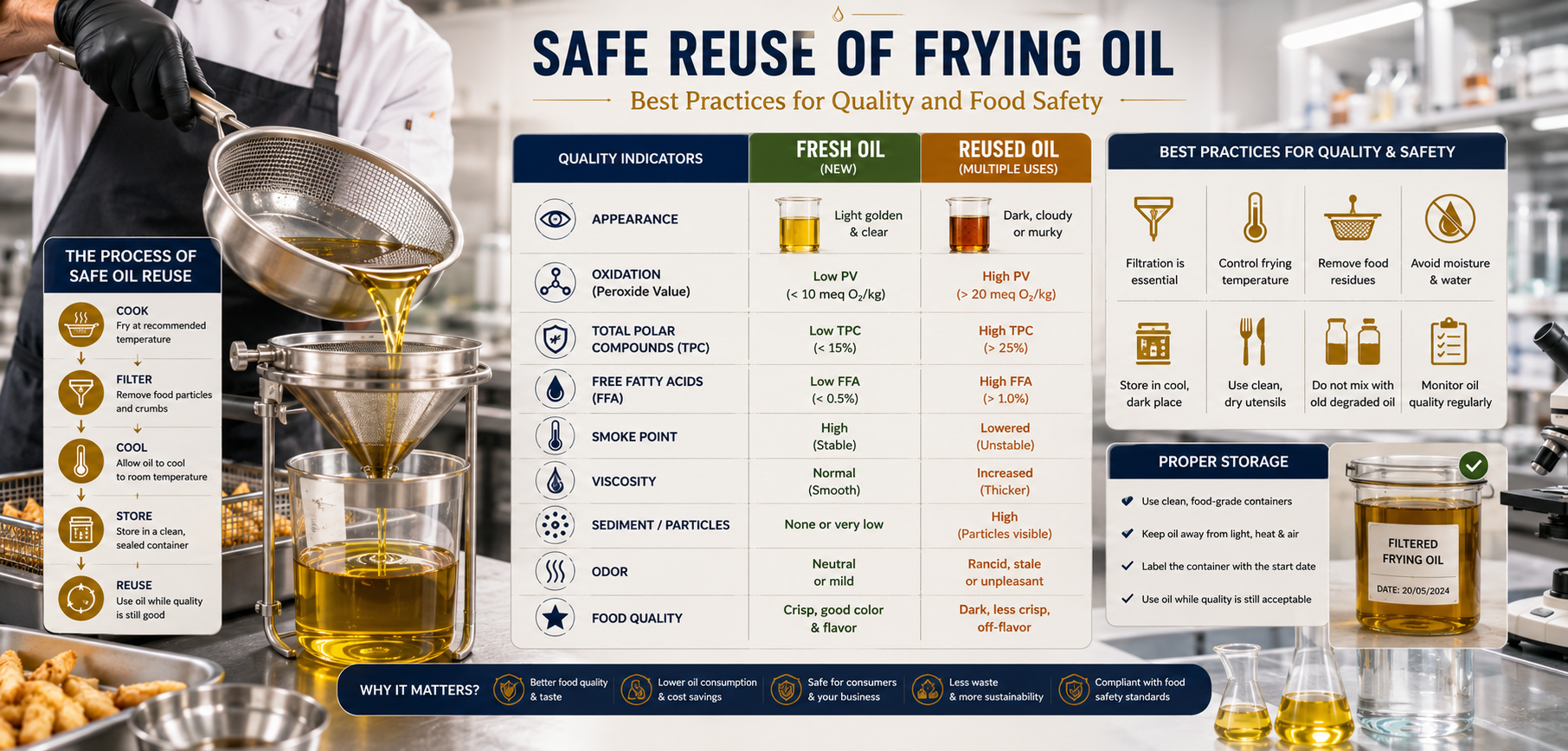
High FFA oils degrade much faster during repeated frying operations.
Relationship Between FFA and Oxidation
Although different parameters, FFA and oxidation are connected.
High FFA oils often become oxidized more rapidly because degraded oils are chemically less stable.
Quality laboratories therefore monitor both:
- Free Fatty Acid (FFA)
- Peroxide Value (PV)
to obtain a complete picture of oil quality.
International Standards
Organizations such as:
- Codex Alimentarius
- ISO
- National Food Authorities
define acceptable FFA limits for different edible oils.
Manufacturers exporting internationally must comply with these specifications.
How Consumers Can Recognize High-FFA Oil
Consumers cannot measure FFA directly, but oils with elevated FFA may show signs such as:
- rancid smell,
- unpleasant taste,
- darker appearance,
- reduced frying stability,
- shorter shelf life.
Laboratory testing remains the only accurate method.
Common Misconceptions
“Darker oil always has higher FFA.”
False. Color depends mainly on pigments, not FFA.
“Cold-pressed oils always have high FFA.”
False. High-quality cold-pressed oils can maintain low FFA when produced correctly.
“Refined oils contain no fatty acids.”
Incorrect. Refined oils still contain fatty acids, but very few are present in the free form.
Comparison Table
| Low FFA Oil | High FFA Oil |
|---|---|
| Better stability | Faster deterioration |
| Longer shelf life | Shorter shelf life |
| Cleaner flavor | Off-flavors |
| Better frying | Reduced frying performance |
| Premium quality | Lower commercial value |
| Better oxidation resistance | More susceptible to oxidation |
Frequently Asked Questions (FAQ)
What is an ideal FFA level?
Premium refined vegetable oils typically contain less than 0.1% FFA, depending on the oil type and applicable standards.
Does FFA affect taste?
Yes. Elevated FFA levels can contribute to undesirable flavors and reduced freshness.
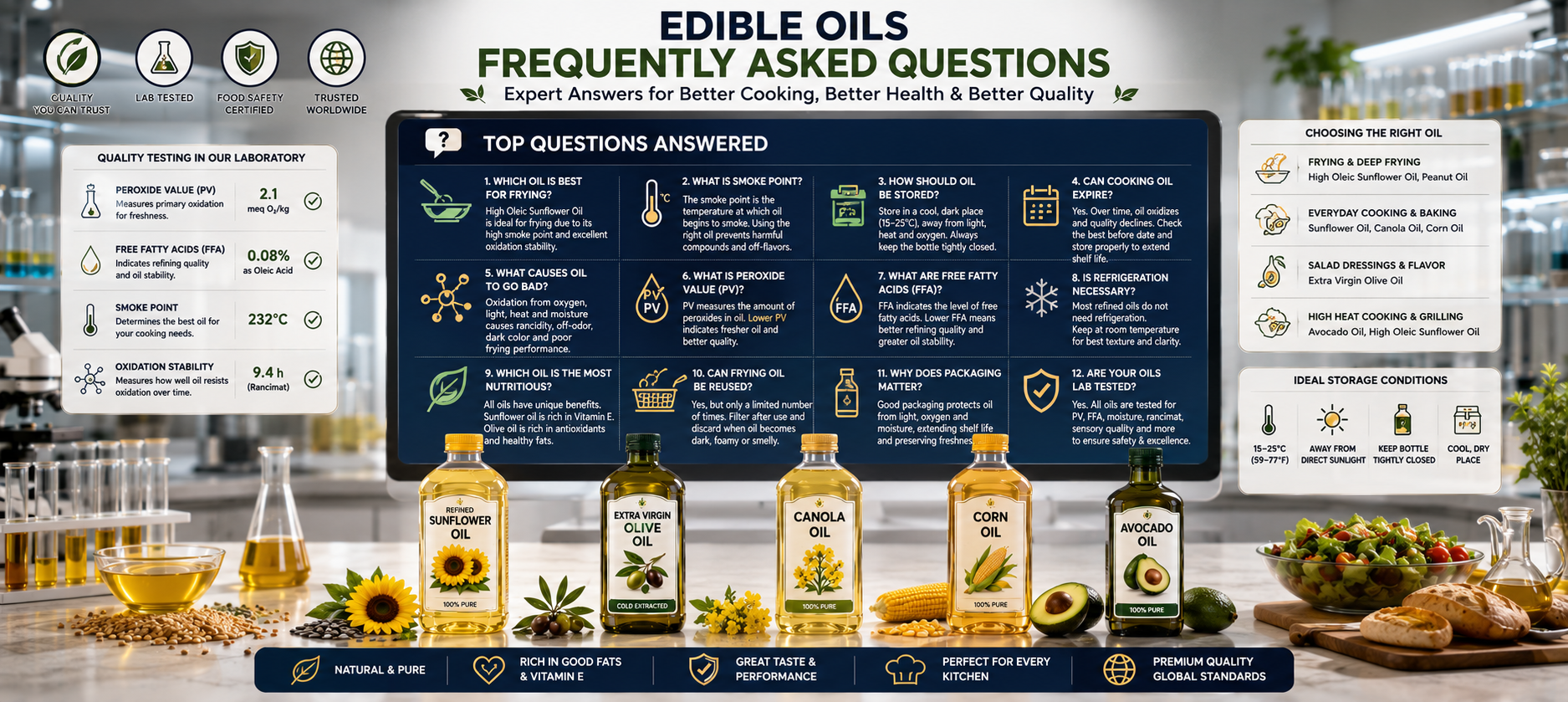
Can consumers measure FFA at home?
No. Accurate FFA measurement requires laboratory titration and standardized analytical methods.
Is FFA the same as oxidation?
No. FFA measures hydrolytic degradation, while peroxide value measures primary oxidation products. Both are important indicators of oil quality.
Why do exporters emphasize low FFA?
Because international buyers and food manufacturers require stable, high-quality oils with long shelf life and consistent performance.
Related Articles
- How to Identify High-Quality Cooking Oil
- Color, Aroma and Clarity of Edible Oils
- Peroxide Value Explained
- Oxidation Stability of Cooking Oils
- Shelf Life of Edible Oils
- Storage Conditions for Cooking Oils
Conclusion
Free Fatty Acids are one of the most reliable laboratory indicators of edible oil quality. While invisible to consumers, FFA levels reveal valuable information about raw material quality, production efficiency, storage conditions, and refining performance. Maintaining low FFA is essential for producing premium cooking oils that deliver superior stability, longer shelf life, and consistent cooking performance.
Call to Action
Choose edible oils produced under strict quality control systems where critical parameters such as Free Fatty Acids (FFA), oxidation stability, and purity are continuously monitored. Premium-quality oils begin with premium-quality testing.
Leave a Reply