



Freshness is one of the most important characteristics of edible oils. Although consumers often judge freshness by color or aroma, professional laboratories rely on scientific measurements to determine whether an oil has begun to deteriorate.
Among the most widely used quality indicators is the Peroxide Value (PV).
Peroxide Value measures the amount of primary oxidation products formed in edible oils. Because oxidation is the leading cause of quality deterioration during storage, transportation, and cooking, PV has become one of the most important laboratory parameters for producers, exporters, and food manufacturers worldwide.
Understanding Peroxide Value helps explain why some oils remain fresh for long periods while others develop unpleasant odors, off-flavors, and reduced nutritional value.
What Is Peroxide Value?
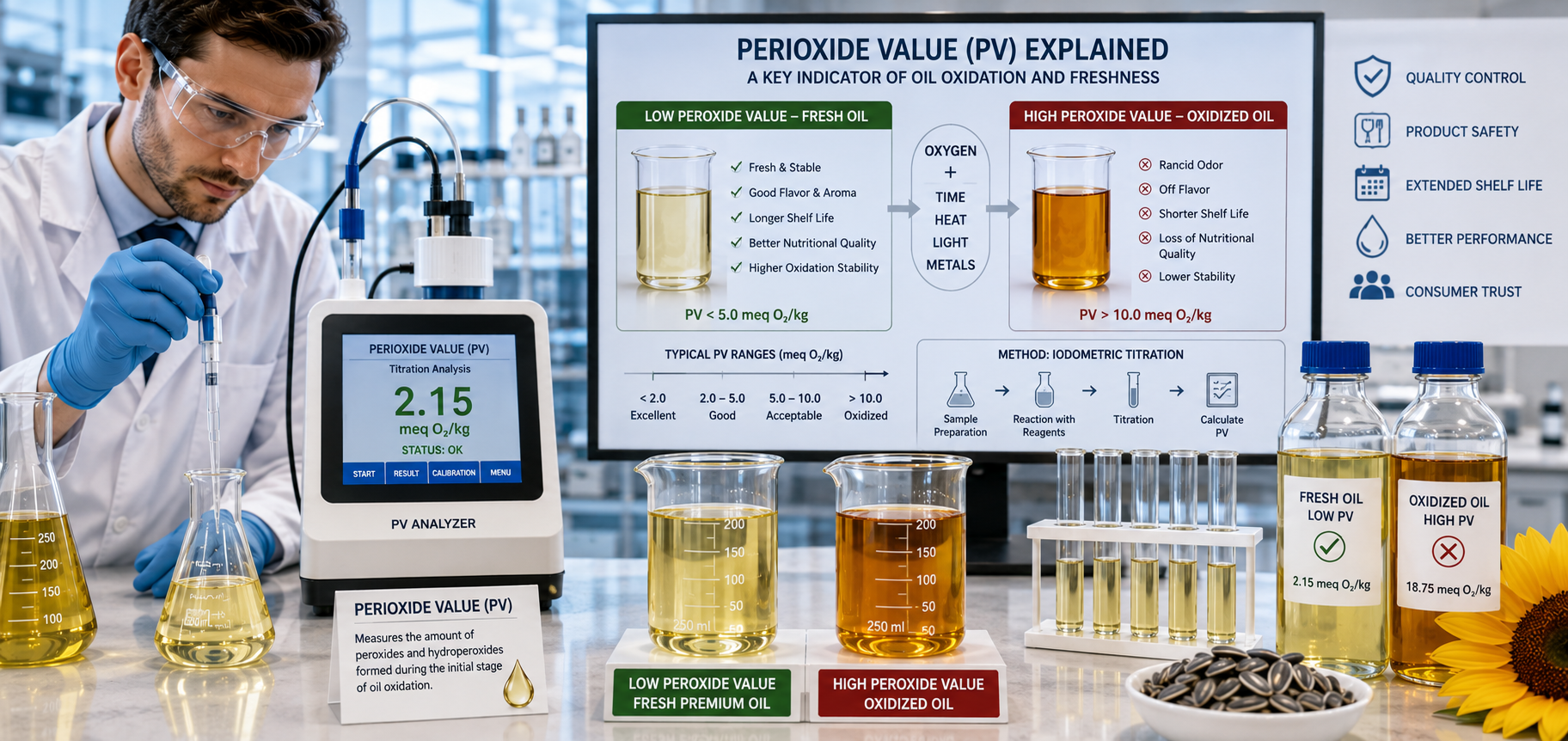
Peroxide Value (PV) measures the concentration of peroxides and hydroperoxides, which are the first compounds produced when edible oils react with oxygen.
These compounds are the earliest indicators that oxidation has begun.
PV is therefore considered a measure of initial oxidation, not advanced spoilage.
Fresh oil contains very low peroxide levels.
As oxidation progresses, PV gradually increases.
Why Does Oxidation Occur?
Edible oils naturally contain unsaturated fatty acids.
These molecules are chemically reactive and can combine with oxygen when exposed to unfavorable conditions.
Major causes of oxidation include:
- Oxygen exposure
- Sunlight
- High temperatures
- Metal contamination
- Long storage periods
- Repeated heating during frying
The more unsaturated an oil is, the more susceptible it generally becomes to oxidation.
What Happens During Oxidation?
Oxidation occurs in several stages.
Stage 1 – Initiation
Reactive oxygen molecules attack unsaturated fatty acids.
Stage 2 – Peroxide Formation
Hydroperoxides begin to form.
This is the stage measured by Peroxide Value.
Stage 3 – Secondary Oxidation
Hydroperoxides decompose into:
- Aldehydes
- Ketones
- Alcohols
- Organic acids
These compounds produce the unpleasant odors and flavors associated with rancid oil.
Why Is PV Important?
Peroxide Value provides an early warning before consumers can detect spoilage.
Maintaining a low PV indicates that an oil is:
- Fresh
- Properly refined
- Correctly packaged
- Stored under appropriate conditions
- Resistant to oxidation
Because peroxide formation begins long before noticeable changes in aroma or taste, PV testing plays a critical role in quality assurance.
How Is Peroxide Value Measured?
PV is determined using standardized laboratory methods.
The analysis typically involves:
- Mixing an oil sample with specific reagents.
- Allowing peroxides to react with potassium iodide.
- Measuring the released iodine through titration.
- Calculating peroxide concentration.
Results are expressed as:
milliequivalents of active oxygen per kilogram of oil (meq O₂/kg).
This is the internationally accepted unit.
Typical Peroxide Values
Although standards vary slightly by oil type and regulatory authority, typical ranges include:
| Oil Condition | Typical PV |
|---|---|
| Fresh Premium Refined Oil | Below 2 meq/kg |
| High-Quality Refined Oil | 2–5 meq/kg |
| Acceptable Commercial Oil | Up to 10 meq/kg |
| Oxidized Oil | Above acceptable limits |
Manufacturers often aim for values well below the regulatory maximum to ensure longer shelf life.
Peroxide Value in Sunflower Oil
Refined sunflower oil naturally contains a high proportion of polyunsaturated fatty acids.
While these fats provide nutritional benefits, they are also more susceptible to oxidation than saturated fats.
To maintain a low PV, premium sunflower oil manufacturers rely on:
- High-quality raw materials
- Efficient refining
- Controlled processing temperatures
- Oxygen-free storage systems
- Proper packaging
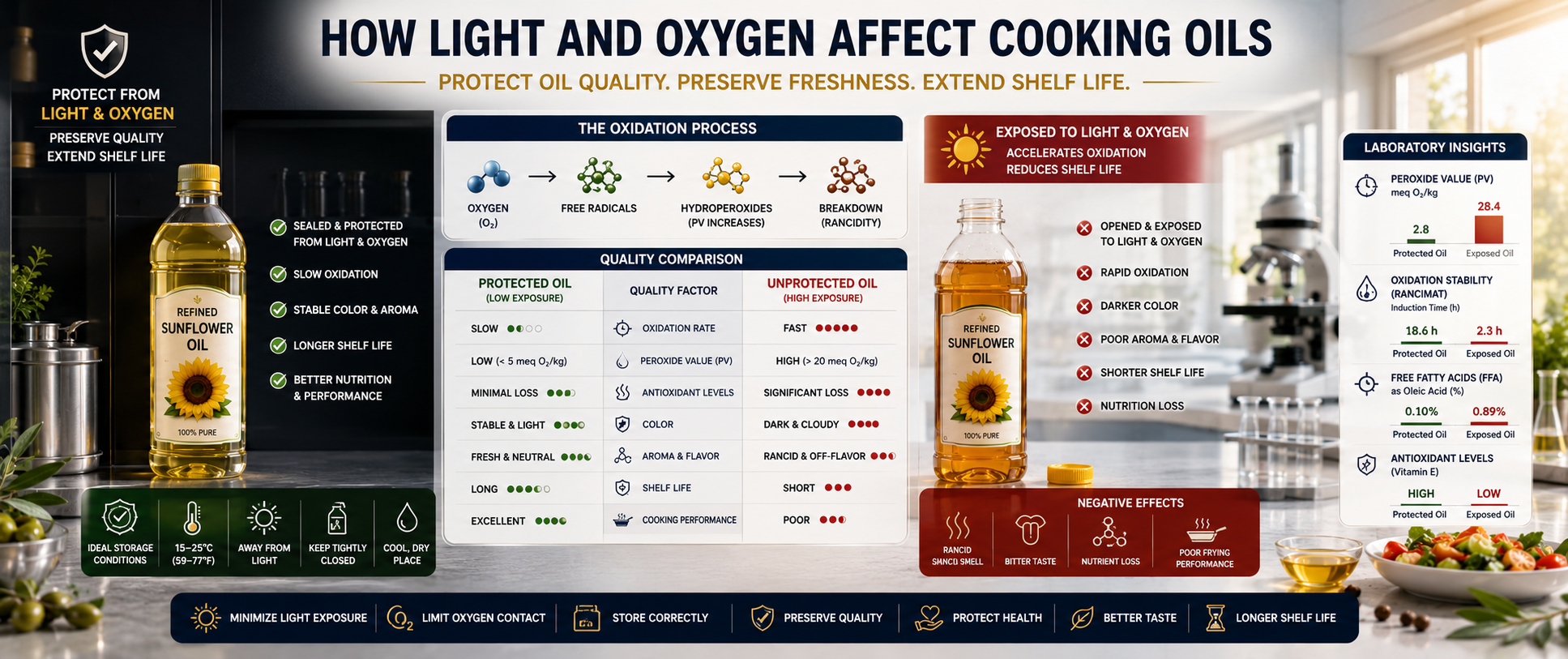
Factors That Increase Peroxide Value
Several conditions accelerate peroxide formation.
Heat
High temperatures speed up oxidation reactions.
Light
Ultraviolet light destroys natural antioxidants and promotes peroxide formation.
Oxygen
Continuous exposure to air gradually increases PV.
Metal Contamination
Trace amounts of iron or copper can significantly accelerate oxidation.
Moisture
Although water primarily contributes to hydrolysis, it may also indirectly promote deterioration.
Packaging and Peroxide Stability
Packaging has a direct influence on peroxide development.
Premium packaging helps reduce oxygen and light exposure.
Preferred packaging includes:
- Dark glass bottles
- UV-resistant PET bottles
- Tin containers
- Proper airtight sealing
Packaging quality is therefore an important component of oxidation control.
Relationship Between PV and Shelf Life
Shelf life depends heavily on oxidation rate.
Low PV oils generally exhibit:
- Better flavor retention
- Longer freshness
- Greater frying stability
- Improved nutritional preservation
As PV increases, shelf life decreases.
PV and Free Fatty Acids
Peroxide Value and Free Fatty Acids (FFA) measure different aspects of oil quality.
| Parameter | Indicates |
|---|---|
| FFA | Hydrolytic degradation |
| PV | Primary oxidation |
Quality laboratories routinely analyze both because they complement one another.
An oil may have low FFA but elevated PV if oxidation has occurred without significant hydrolysis.
Can Consumers Detect High PV?
Not reliably.
Early oxidation produces few noticeable sensory changes.
By the time consumers detect rancid odors, oxidation has often progressed beyond the initial peroxide stage.
This is why laboratory testing remains essential.
The Role of Antioxidants
Natural antioxidants slow peroxide formation.
Examples include:
- Vitamin E (tocopherols)
- Phenolic compounds
- Natural plant antioxidants
Proper refining preserves appropriate antioxidant levels while removing unstable impurities.
Some manufacturers may also use approved antioxidants in accordance with food regulations.
International Standards
Organizations such as:
- Codex Alimentarius
- ISO
- National Food Authorities
establish maximum peroxide limits for edible oils.
Exporters must ensure every production batch complies with these requirements before shipment.
Common Misconceptions
“Clear oil always has a low Peroxide Value.”
False. Appearance alone cannot determine oxidation.
“Peroxide Value and FFA are the same.”
No. They measure different degradation processes.
“A low PV guarantees perfect oil.”
Not entirely. PV should be evaluated alongside FFA, moisture, oxidative stability, sensory evaluation, and other laboratory analyses.
“Old oil always has a high PV.”
Not necessarily. Proper storage can significantly slow oxidation.
Comparison Table
| Low Peroxide Value | High Peroxide Value |
|---|---|
| Fresh oil | Oxidized oil |
| Better flavor | Off-flavors develop |
| Longer shelf life | Reduced shelf life |
| Better frying stability | Faster degradation |
| Lower oxidation | Advanced oxidation |
| Premium quality | Lower commercial value |
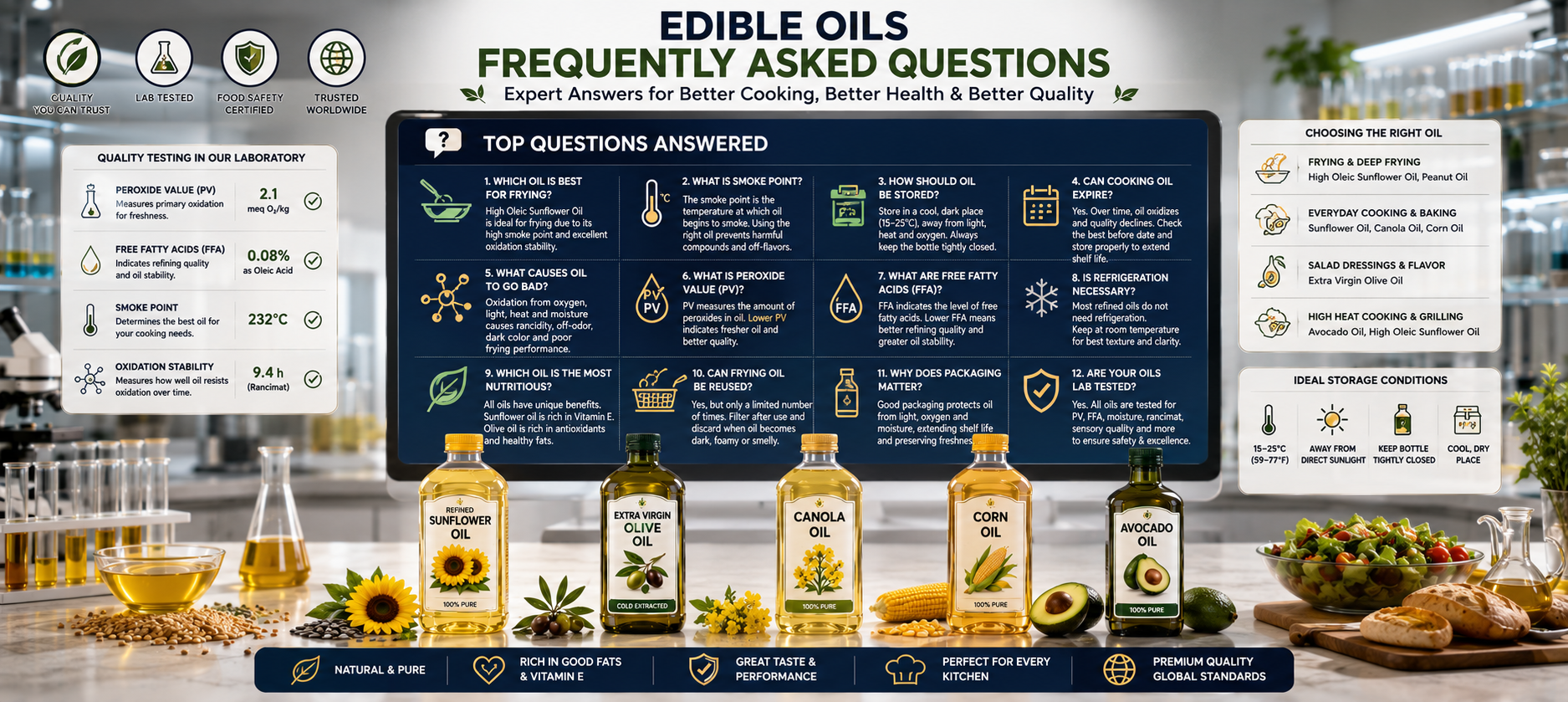
Frequently Asked Questions (FAQ)
What does Peroxide Value measure?
It measures the concentration of hydroperoxides, the primary products formed during the early stages of oxidation.
Is a low PV desirable?
Yes. Lower Peroxide Values generally indicate fresher and more stable edible oils.
Can oxidation be reversed?
No. Once oxidation has occurred, it cannot be reversed.
Proper storage only slows further deterioration.
Why is PV important for exporters?
International buyers often specify maximum PV limits as part of their quality requirements.
Maintaining low PV demonstrates product freshness and manufacturing quality.
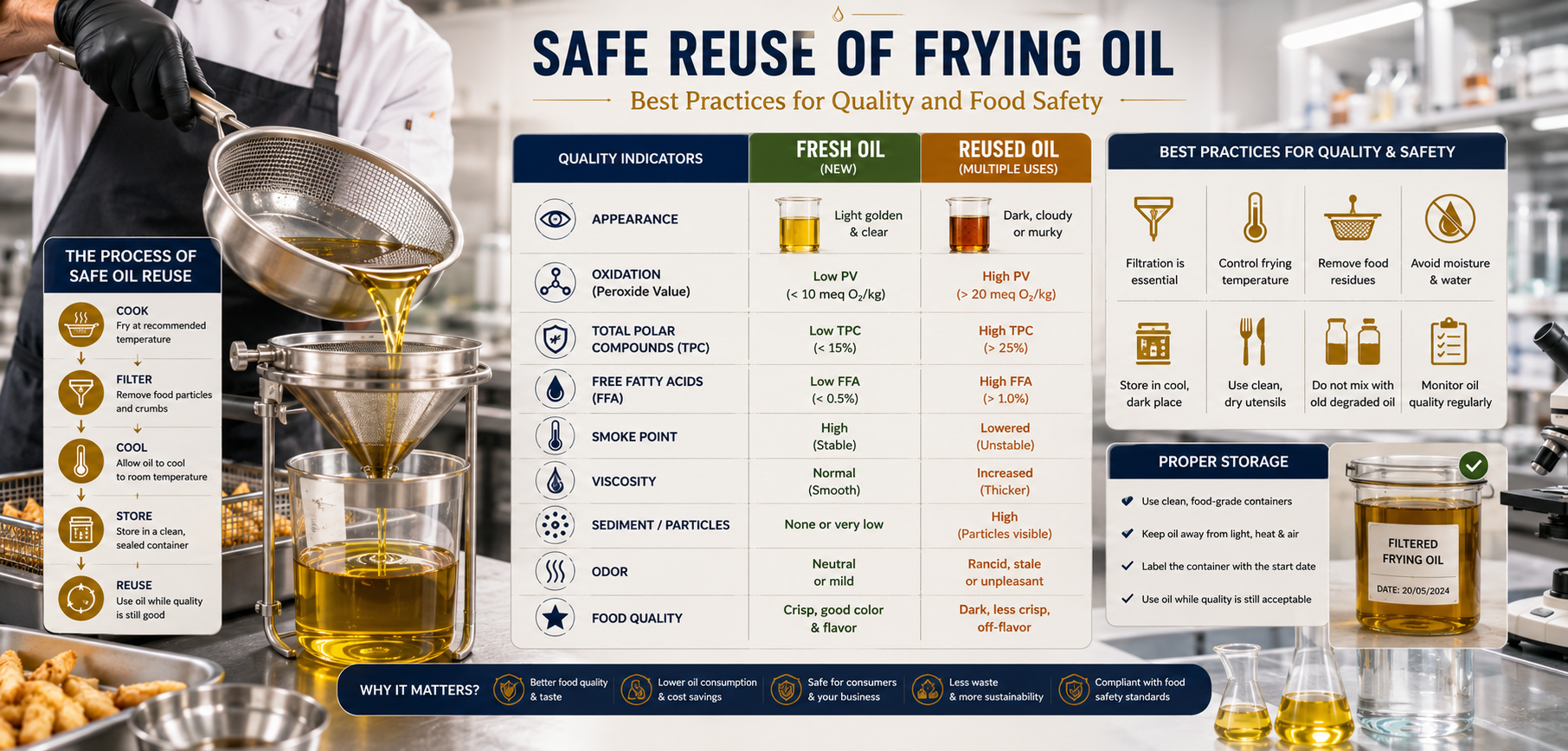
Does frying increase Peroxide Value?
Initially yes, but during prolonged heating, hydroperoxides decompose into secondary oxidation products, meaning PV may eventually decline while overall deterioration continues.
Related Articles
- Free Fatty Acids Explained
- Oxidation Stability of Cooking Oils
- Shelf Life of Edible Oils
- Storage Conditions for Cooking Oils
- How to Identify High-Quality Cooking Oil
- Color, Aroma and Clarity of Edible Oils
Conclusion
Peroxide Value is one of the most important laboratory indicators used to assess the freshness and oxidative condition of edible oils. By measuring the earliest products of oxidation, PV enables manufacturers to detect deterioration long before consumers notice visible or sensory changes. Maintaining a low Peroxide Value through high-quality raw materials, advanced refining, proper packaging, and controlled storage is essential for producing premium edible oils that meet international quality standards.
Call to Action
Select edible oils manufactured under rigorous quality control programs where Peroxide Value, Free Fatty Acids, oxidation stability, and other critical parameters are continuously monitored. Premium-quality oils begin with scientific testing and end with consistent performance, freshness, and confidence in every bottle.
Leave a Reply