



Cooking oil is one of the most frequently used ingredients in every kitchen. Whether it is used for frying, sautéing, baking, or salad dressings, the quality of cooking oil directly influences flavor, nutritional value, food safety, and even the shelf life of prepared meals.
With hundreds of edible oil brands available worldwide, consumers often face a simple but important question:
How can you tell whether a cooking oil is truly high quality?
Many people judge cooking oils only by price or color, while others rely solely on advertising. In reality, professional evaluation involves several measurable indicators ranging from production methods and refining quality to packaging, freshness, and laboratory testing.
This guide explains the most reliable ways to identify premium edible oils and helps consumers make informed purchasing decisions.
Why Oil Quality Matters
High-quality cooking oils provide more than pleasant taste.
They also offer:
- Better nutritional value
- Improved oxidative stability
- Longer shelf life
- Cleaner frying performance
- Lower formation of harmful degradation compounds
- Consistent flavor during cooking
- Higher food safety standards
Poor-quality oils, on the other hand, may oxidize quickly, develop unpleasant odors, produce excessive smoke during cooking, and lose nutritional value much faster.
Characteristics of High-Quality Cooking Oil
Premium edible oils share several common characteristics.
These include:
- Proper refining or processing
- High purity
- Low oxidation
- Fresh production
- Correct packaging
- Compliance with international food safety standards
- Stable chemical composition
No single characteristic determines oil quality by itself. Instead, professionals evaluate multiple indicators together.
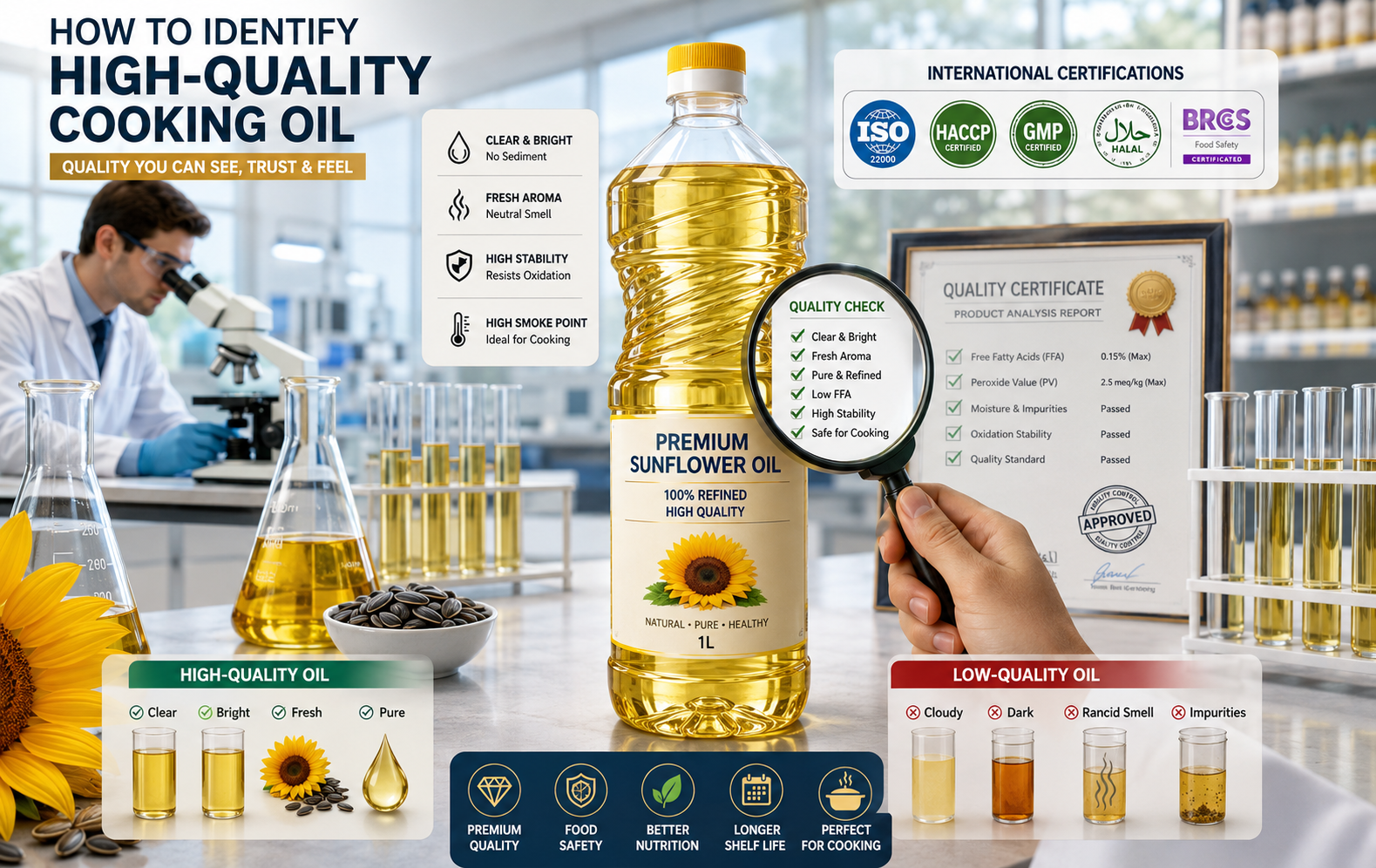
1. Check the Appearance
Visual inspection provides useful initial information.
For refined cooking oils such as refined sunflower oil:
- Bright and clear appearance
- No visible sediment
- No suspended particles
- Uniform color
- Excellent transparency
Cold-pressed oils naturally appear slightly darker or cloudier depending on the oil type.
Cloudiness is not always a defect, especially in minimally processed oils.
2. Evaluate the Color Carefully
Many consumers mistakenly believe darker oil is healthier.
In reality, color alone does not indicate quality.
Oil color depends on:
- Plant variety
- Harvest conditions
- Refining process
- Natural pigments
- Processing technology
For example:
- Refined sunflower oil is typically light golden.
- Olive oil ranges from golden yellow to deep green.
- Corn oil often has a deeper yellow tone.
- Canola oil is generally pale yellow.
Unexpected color changes may indicate aging or improper storage.
3. Smell the Oil
Fresh edible oils should have a clean and pleasant aroma.
Refined oils usually have:
- Mild smell
- Neutral aroma
- No bitterness
- No rancid odor
Cold-pressed oils often retain their natural seed or fruit aroma.
Avoid oils that smell:
- Paint-like
- Metallic
- Sour
- Moldy
- Bitter
- Stale
These odors often indicate oxidation.
4. Check for Clarity
Premium refined oils should be crystal clear.
Cloudiness in refined oils may result from:
- Poor filtration
- Water contamination
- Wax residues
- Improper storage temperatures
Cloudiness is acceptable only for certain cold-pressed oils under low temperatures.
5. Review the Label
A high-quality oil always provides detailed product information.
Look for labels that clearly mention:
- Oil type
- Production method
- Refining status
- Nutrition facts
- Ingredients
- Net weight
- Manufacturing date
- Expiration date
- Batch number
- Country of origin
- Storage instructions
Transparent labeling reflects professional manufacturing practices.
6. Look for International Certifications
Trusted manufacturers usually comply with recognized food safety standards.
Common certifications include:
| Certification | Purpose |
|---|---|
| ISO 22000 | Food Safety Management |
| FSSC 22000 | Advanced food safety system |
| HACCP | Hazard Analysis & Critical Control Points |
| Halal Certification | Compliance with Halal production standards |
| GMP | Good Manufacturing Practices |
| BRCGS | Global food safety standard |
These certifications demonstrate that production follows internationally recognized quality systems.
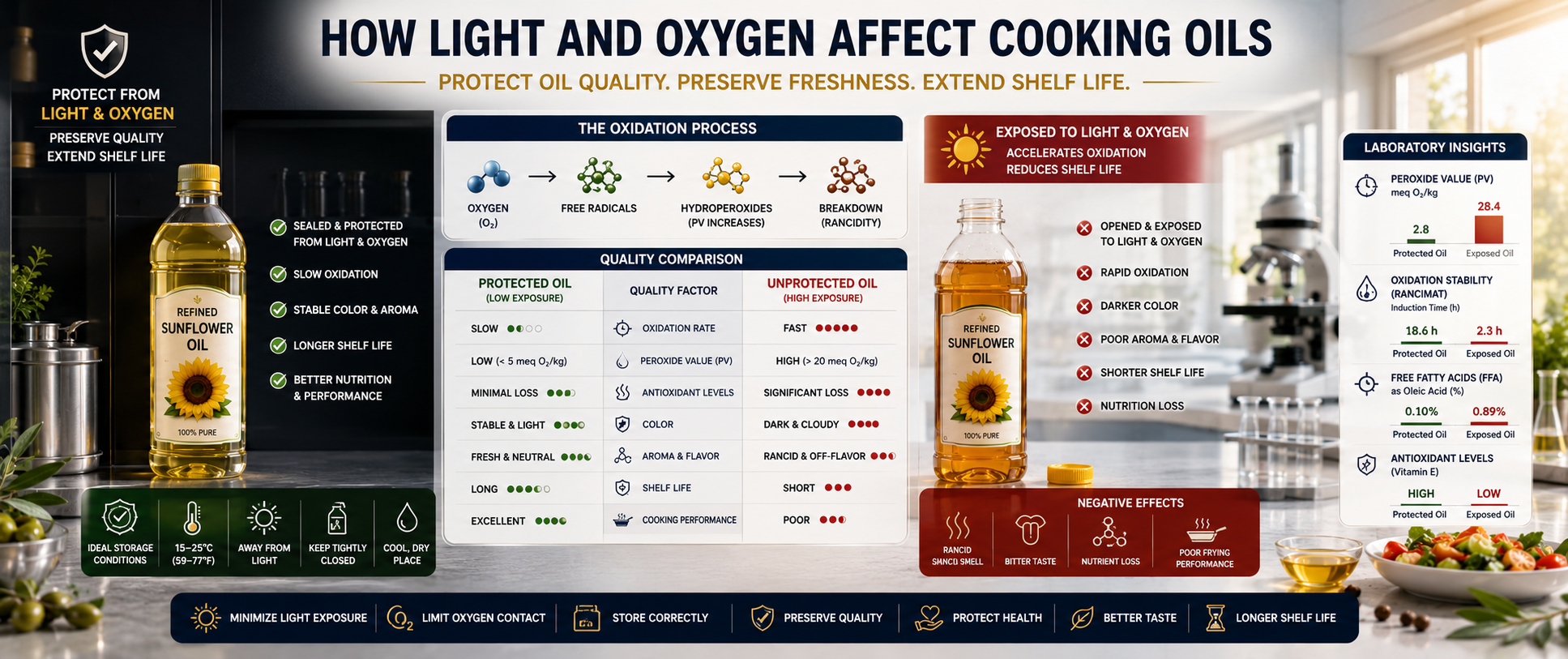
7. Packaging Quality Matters
Packaging protects oil from its biggest enemies:
- Oxygen
- Heat
- Light
Premium manufacturers invest in high-quality packaging materials.
Preferred packaging includes:
- Dark glass bottles
- High-quality PET bottles
- Food-grade containers
- Proper sealing
- Tamper-evident caps
Avoid damaged or leaking containers.
8. Consider the Production Date
Freshness is essential.
Unlike wine, cooking oil does not improve with age.
Choose products with:
- Recent production date
- Long remaining shelf life
- Proper storage conditions
Fresher oil generally retains more antioxidants and better flavor.
9. Evaluate Smoke Performance
When heated, premium oils:
- Produce less smoke
- Maintain stability
- Resist rapid oxidation
- Preserve flavor
Poor-quality oils often begin smoking early because degradation products have already formed.
10. Check Nutritional Information
Quality oils provide complete nutritional information.
Typical information includes:
- Total fat
- Saturated fat
- Monounsaturated fat
- Polyunsaturated fat
- Vitamin E (when applicable)
- Energy value
The nutritional panel should match recognized food standards.
11. Examine the Ingredients
Pure edible oils should contain very simple ingredient lists.
Example:
Ingredients: 100% Refined Sunflower Oil
No unnecessary additives should appear unless clearly stated.
12. Brand Reputation
Well-established manufacturers usually invest in:
- Better raw materials
- Advanced refining technology
- Quality laboratories
- Traceability systems
- Food safety audits
Brand reputation should support—not replace—objective quality evaluation.
Laboratory Indicators of Oil Quality
Consumers may not see laboratory results on every bottle, but quality manufacturers continuously monitor several chemical parameters.
These include:
- Free Fatty Acid (FFA)
- Peroxide Value (PV)
- Moisture content
- Insoluble impurities
- Oxidative stability
- Fatty acid profile
These measurements determine whether oil meets international quality specifications.
Common Signs of Low-Quality Cooking Oil
Consumers should avoid oils showing:
- Strong unpleasant odor
- Cloudiness (for refined oils)
- Sediment
- Leaking packaging
- Missing production information
- Broken seal
- Extremely faded label
- Very old production date
- Exposure to direct sunlight on store shelves
Mistakes Consumers Often Make
Many buyers incorrectly assume that:
- Expensive means better.
- Darker color means healthier.
- Imported oils are always superior.
- Larger bottles are better value regardless of storage time.
- Advertising guarantees quality.
Professional evaluation requires looking beyond marketing claims.
Comparison Table
| Quality Indicator | High-Quality Oil | Low-Quality Oil |
|---|---|---|
| Appearance | Clear | Cloudy |
| Aroma | Fresh & Neutral | Rancid |
| Packaging | Well sealed | Damaged |
| Label | Complete information | Missing details |
| Production Date | Recent | Old |
| Storage | Protected from light | Poorly stored |
| Smoke Stability | High | Low |
| Certifications | Available | None |
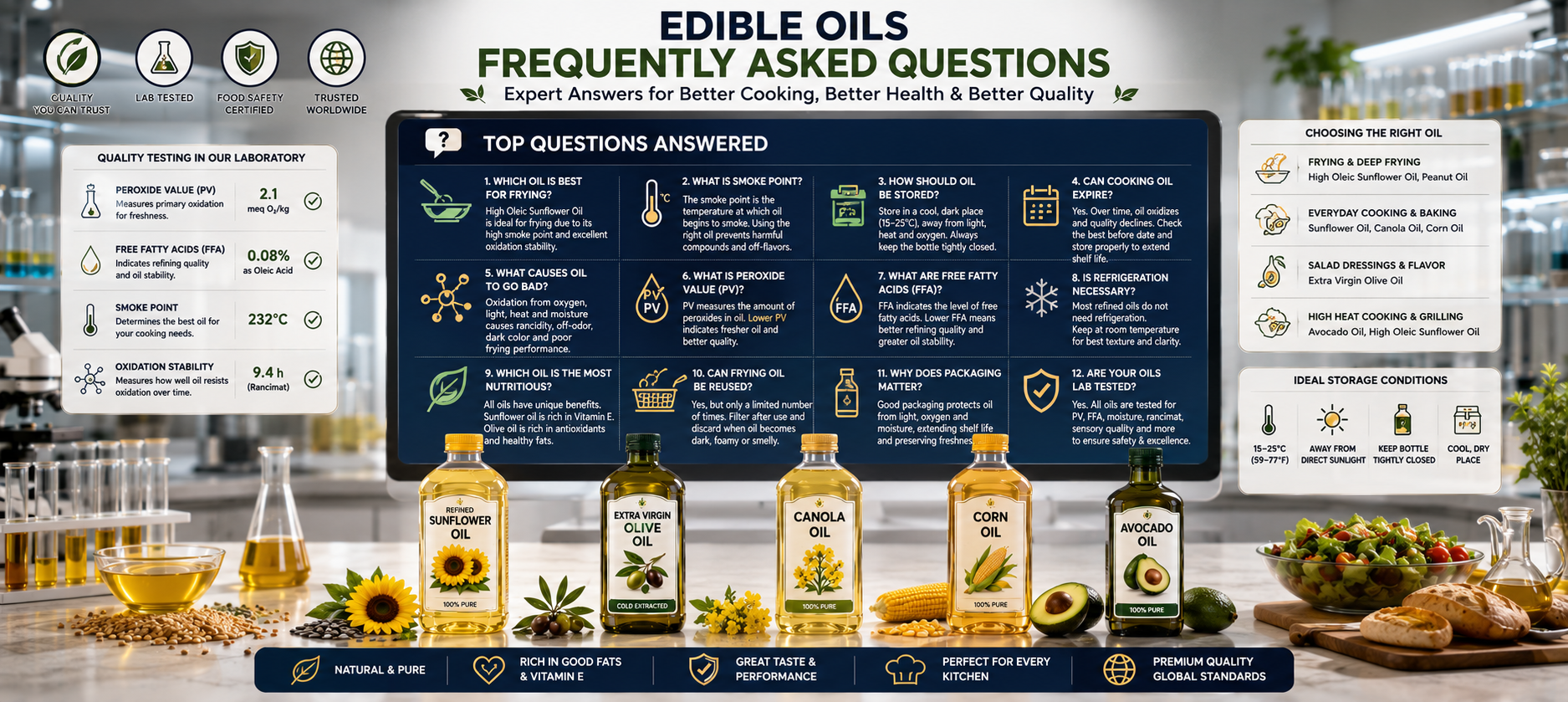
Frequently Asked Questions (FAQ)
Does a darker oil always mean higher quality?
No. Oil color depends mainly on the type of oil and processing method.
Is refined oil lower quality than cold-pressed oil?
Not necessarily. Each serves different purposes. Properly refined oils often provide superior stability for high-temperature cooking.
Can clear oil still be low quality?
Yes. Visual appearance alone cannot confirm quality. Freshness, refining quality, packaging, and laboratory parameters are equally important.
Why is packaging important?
Packaging protects oil from oxygen, moisture, and light, helping preserve freshness and nutritional quality.
Should consumers only buy certified products?
Certification provides additional confidence that the oil has been produced under recognized food safety systems, although local regulatory compliance is also important.
Related Articles
- Color, Aroma and Clarity of Edible Oils
- Free Fatty Acids Explained
- Peroxide Value Explained
- Oxidation Stability of Cooking Oils
- How to Choose Premium Sunflower Oil
- Common Mistakes When Buying Sunflower Oil
- Reading an Oil Label Correctly
Conclusion
Selecting high-quality cooking oil involves much more than comparing prices or choosing a familiar brand. Factors such as clarity, aroma, packaging integrity, freshness, certification, refining quality, and proper labeling all contribute to identifying a premium product.
Consumers who understand these quality indicators can make more informed purchasing decisions, enjoy better cooking performance, and benefit from safer, more stable edible oils in everyday use.
Call to Action
Looking for premium-quality edible oils produced under internationally recognized food safety standards?
Explore our range of carefully refined edible oils, manufactured with advanced quality control systems to deliver purity, consistency, and reliable performance for households, food manufacturers, and international markets.
Leave a Reply